

The Moon's Buried Treasure
For decades, the Moon was thought to be a completely dry, desolate world. Samples returned by the Apollo missions seemed to confirm this. However, subsequent orbital missions have rewritten the book on lunar geology. We now know that the Moon’s South
Pole contains a treasure of immense value: water ice. This isn’t a vast, skating-rink-style glacier. Instead, it is locked within the lunar soil, or regolith, inside what are known as Permanently Shadowed Regions (PSRs). These are the floors of deep craters that have not seen a single ray of sunlight in billions of years, making them some of the coldest locations in our entire solar system. Estimates suggest that these polar regions could hold hundreds of millions, or even billions, of tons of water ice, deposited over eons by comets and asteroids.
More Than Just a Drink
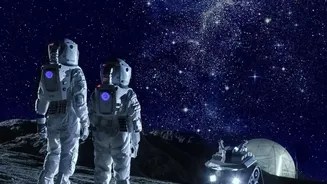
The most obvious use for lunar water is for astronauts to drink. But its value extends far beyond basic hydration. For a sustainable lunar base, water is essential for sanitation, hygiene, and even growing food in hydroponic farms. More critically, water (H2O) can be split into its component parts: hydrogen and oxygen. The oxygen can be used to create breathable air inside habitats and astronaut suits, drastically reducing the amount of life support supplies that need to be ferried from Earth. This process, known as electrolysis, is a foundational technology for long-term survival off-world. By living off the land, or 'In-Situ Resource Utilization' (ISRU), astronauts can establish a self-sustaining foothold on another celestial body for the first time.
The Solar System's Gas Station
The true game-changer for space exploration is water’s role as rocket fuel. The same hydrogen and oxygen produced by splitting water are the primary components of the most powerful and efficient rocket propellants. Launching materials from Earth is incredibly expensive, with every kilogram costing thousands of dollars to escape our planet's gravity. By manufacturing rocket fuel on the Moon, we can turn it into a cosmic refueling station. A spacecraft assembled in Earth orbit could launch with minimal fuel, travel to the Moon, top up its tanks, and then journey onward to Mars or elsewhere in the solar system. This single capability drastically cuts the cost and complexity of deep space missions, making humanity a multi-planetary species a tangible reality rather than a distant dream.
The Challenge of the Big Thirst
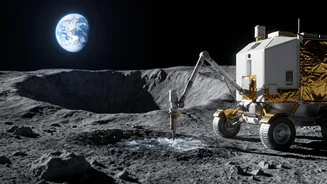
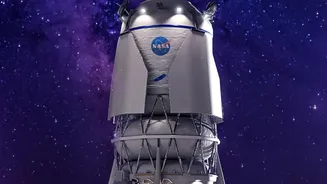
Harnessing this resource is a monumental engineering challenge. The ice is located in extremely cold, perpetually dark craters, making access difficult for solar-powered robotic miners. NASA is developing specialized missions to tackle this problem. The Volatiles Investigating Polar Exploration Rover, or VIPER, is a golf-cart-sized robot designed specifically to map these ice deposits. After being canceled in 2024 due to budget and timeline concerns, the mission was revived in late 2025, with Blue Origin now tasked with delivering the crucial rover to the Moon in 2027. VIPER will drill into the lunar soil to understand exactly how much water is there and how easy it is to extract. This data is vital for planning where to establish the Artemis Base Camp and what kind of mining and processing hardware will be needed to turn frozen regolith into liquid assets.
Building a New Lunar Economy
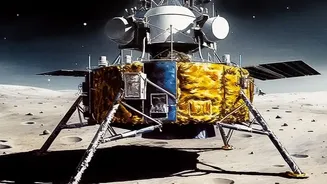
The presence of water transforms the Moon from a temporary scientific outpost into a strategic asset with immense economic potential. It is the foundational resource that could enable a future lunar economy, supporting not just government missions but also commercial enterprise. The Artemis Accords, an international agreement outlining principles for space cooperation, helps pave the way for this. Private companies are already developing the landers and technologies needed to access and utilize these resources. Water is the resource that makes all other activities, from building habitats with lunar concrete to advanced scientific research, possible. With the successful crewed flyby of Artemis II in April 2026, humanity is another step closer to unlocking this potential.