






More Than Just Pretty Lights
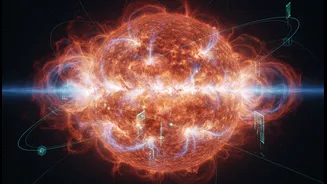
When we think of solar storms, the first image that might come to mind is the aurora borealis, the beautiful curtains of light that dance in the polar skies. But these lights are merely the gentle, visible evidence of a powerful phenomenon. A solar storm occurs
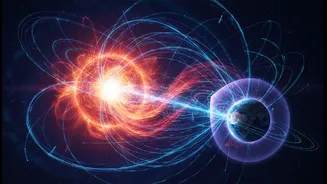
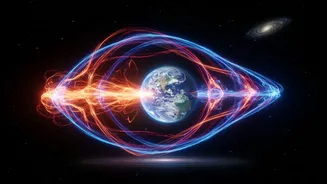
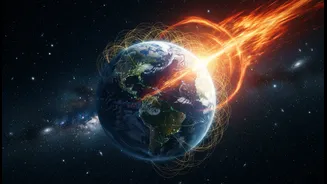
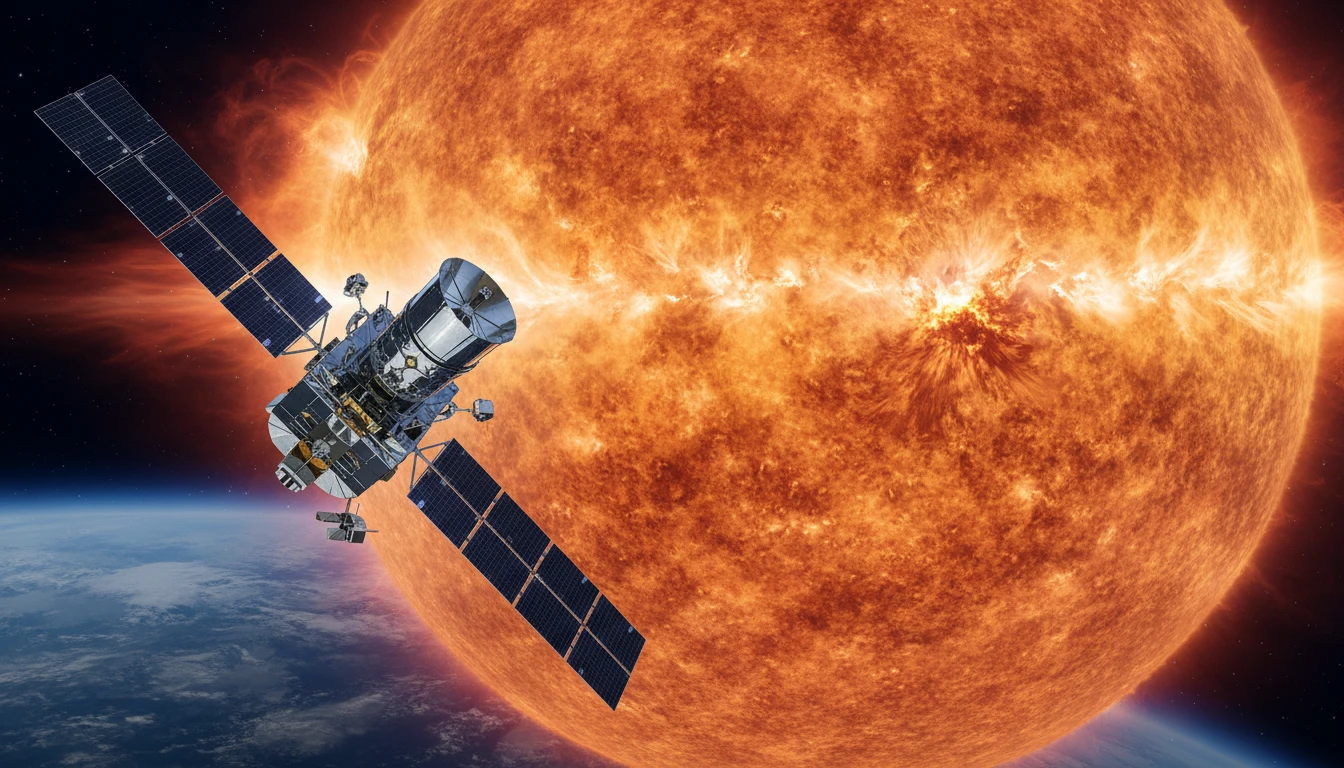
when the Sun emits a massive burst of energy in the form of solar flares or coronal mass ejections (CMEs). These events send charged particles hurtling through space. If Earth is in the path of one of these CMEs, our planet's magnetic field is buffeted, triggering geomagnetic storms. While our atmosphere protects us from the direct radiation, our technological infrastructure is highly vulnerable.
Our High-Tech Achilles' Heel
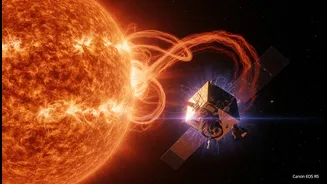
In the 21st century, our global economy runs on systems that are exquisitely sensitive to space weather. Geomagnetic storms can induce powerful electrical currents in power grids, potentially damaging transformers and causing widespread blackouts that could last for weeks. They can also disrupt or disable satellites, which are essential for everything from GPS navigation and financial transactions to television broadcasts and everyday communication. Aviation is also at risk; flights may need to be rerouted to avoid communication blackouts and increased radiation at high altitudes. As our world becomes ever more connected and automated, the potential damage from a severe solar storm—estimated in the trillions of dollars—is a risk governments and industries can no longer ignore.
The Rise of the Space Weather Forecaster
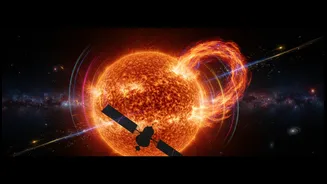
Just as we have meteorologists to predict terrestrial weather, a new and crucial field is emerging: space weather forecasting. These professionals analyse data from solar observatories and satellites to predict when solar storms might occur and what their impact on Earth might be. This isn't just an academic exercise; it's a vital service for industries like aviation, energy, telecommunications, and even construction, where GPS accuracy is paramount. The demand is growing for experts who can bridge the gap between pure science and practical risk management, interpreting complex solar data and communicating it clearly to stakeholders who need to make critical decisions.
India's Stake in the Cosmos
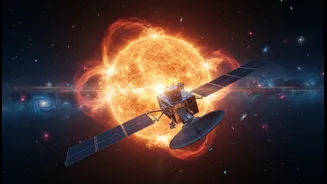
India is rapidly becoming a major player in the global space economy, which means it also has a significant stake in understanding and mitigating space weather. With the Indian Space Research Organisation's (ISRO) Aditya-L1 mission, India's first dedicated solar observatory, the country is positioned at the forefront of solar research. This ambitious scientific endeavour is not just for national prestige; it's a critical investment in protecting our infrastructure and fostering a new generation of experts. The growth of India's space sector, which is expected to create over 200,000 jobs in the next decade, is driving demand for specialists in fields like data science, engineering, astrophysics, and space policy. Once seen as a niche field dominated by government agencies, space science in India is now a burgeoning industry with a thriving ecosystem of private startups.
Your Path into the New Space Age
A career in space weather and applied space science is no longer limited to those with a PhD in astrophysics. The field is becoming increasingly interdisciplinary. A strong foundation in physics, mathematics, and computer science is essential. Proficiency in programming languages like Python and MATLAB for data analysis is highly sought after. Opportunities exist for engineers, data scientists, software developers, and communication specialists. For students in India, paths are opening up through internships at ISRO, research positions at institutes like the Aryabhatta Research Institute of Observational Sciences (ARIES), and roles within the hundreds of new private space companies. These roles require not just technical skill but also strong analytical and communication abilities to translate complex solar phenomena into actionable intelligence.