


Why This Question Matters
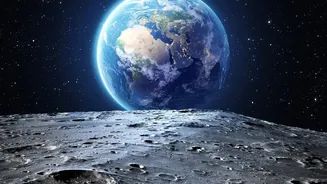
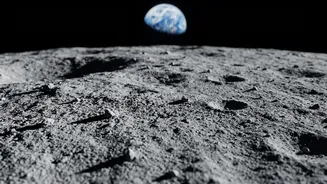
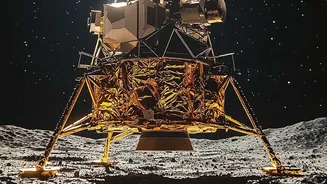
The Moon is an extremely hostile place, with no air, wild temperature swings, and relentless radiation. For decades, it was assumed to be completely inhospitable to Earth life. But as humanity, through programs like NASA's Artemis, prepares to establish
a long-term presence, the question of contamination becomes critical. Scientists need to know if microbes carried by astronauts could survive and potentially interfere with the search for the Moon's pristine chemistry or signs of ancient, non-terrestrial life. This concept, known as planetary protection, is crucial for ensuring that when we search for life elsewhere, we are not just finding a reflection of ourselves.
Simulating the Lunar South Pole
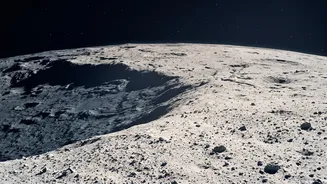
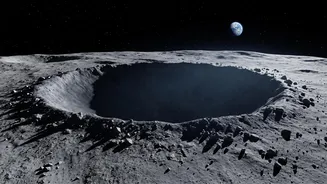
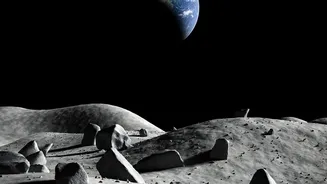
To find answers, a team of NASA scientists didn't go to the Moon, but brought the Moon to their models. They focused on the lunar south pole, a region of great interest for future missions due to its unique lighting conditions. Because of the Moon's minimal tilt, some deep craters and ridges in this area are permanently shadowed, creating ultra-cold traps shielded from direct, lethal solar radiation. Using detailed environmental maps from NASA's Lunar Reconnaissance Orbiter, the researchers simulated the conditions across three potential Artemis landing sites. They tested how five common microbes, often found on human skin and in spacecraft, would fare against the simulated threats of UV radiation, vacuum, and extreme temperatures.
The Hardy Survivors
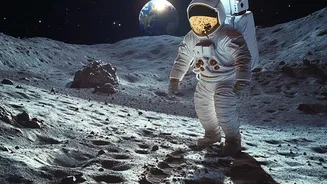
The results, published in August 2026, were surprising. The models showed that some microbes could indeed survive, at least temporarily. While none could grow or reproduce, they could enter a dormant state called cryptobiosis. The most resilient of the group was a fungus called Aspergillus niger, commonly known as black mould. This fungus, which has been found on the International Space Station, proved so tough it could even withstand some exposure to sunlight, outperforming microbes famous for their radiation resistance. The simulations showed that survivable niches could be found in various locations, from wide crater floors to something as small as an astronaut's bootprint.
Implications for Future Missions
This discovery has significant implications for how we explore the Moon and, eventually, Mars. Knowing that our microbes can persist, even for a few weeks or months in a dormant state, means that contamination is an even greater concern. It complicates the scientific goal of studying the Moon in its natural state. Lead planetary scientist Prabal Saxena noted that these findings highlight the need to meticulously document the lunar environment before human missions arrive, to prevent Earth life from muddying the scientific waters. However, Saxena and his colleagues also see an opportunity: the Moon could serve as a unique natural laboratory to test the absolute limits of life in an environment that cannot be perfectly replicated on Earth.
Not Thriving, Just Surviving
It is crucial to understand the distinction between surviving and thriving. The NASA study confirms that while some microbes might not die immediately, the Moon does not provide the conditions needed for them to grow, reproduce, and establish colonies. They would remain in a dormant state. The primary threat they pose is not biological, but informational. Their presence could contaminate geological samples, leading scientists to misinterpret the Moon's history or its potential for holding resources like water ice. As a result, future exploration efforts by all space-faring nations will need to incorporate even more stringent contamination control measures to preserve the scientific integrity of our nearest celestial neighbour.