



Why Rolling Reigns Supreme
The debate between rolling and folding clothes has been a long-standing one among seasoned travellers, but for carry-on luggage, rolling often emerges as the superior technique. Tightly rolled garments are more compact than folded ones, allowing you to
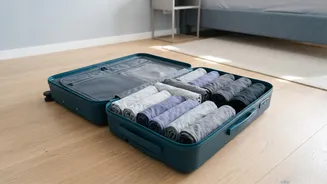
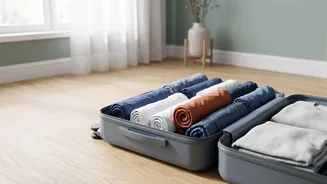
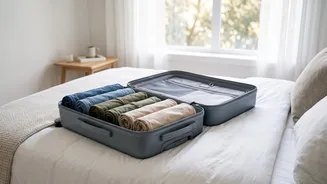
fit more items into a limited space. This method creates dense, cylindrical bundles that can be arranged like a puzzle, filling every corner of your bag and leaving no dead space. Beyond just saving space, rolling helps minimise hard creases that often come with folding. While a few wrinkles might be unavoidable, rolling generally prevents the deep-set lines that can ruin an outfit upon arrival.
The Art of the Perfect Roll
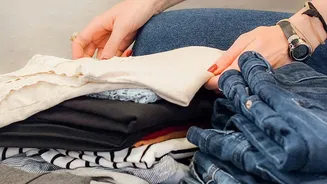
Mastering the basic roll is simple. For a t-shirt, lay it flat and smooth out any wrinkles. Fold the sleeves inward toward the middle of the shirt. Then, starting from the bottom hem, roll the shirt upwards as tightly as possible. The tighter the roll, the more compact it will be and the less likely it is to wrinkle. This same principle applies to shorts, casual dresses, swimsuits, and sweatpants. For trousers or jeans, lay them flat, fold one leg over the other, and then roll tightly from the cuff upwards. The goal is to create a firm, consistent cylinder.
To Roll or Not to Roll
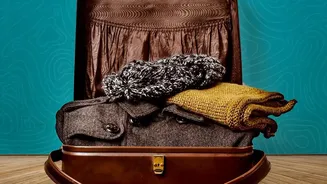
While rolling is a fantastic space-saver, it’s not suitable for every garment. Bulky items like thick sweaters or heavy jackets don't roll well and can actually take up more space. These are often better folded flat and placed at the bottom of your suitcase. Similarly, structured items like blazers, dress shirts, and clothes made from delicate fabrics like silk or linen can be damaged or severely creased by tight rolling. For these pieces, careful folding is the better approach. Some experts even suggest using a garment folder for dressier items to keep them pristine.
The Power of Packing Cubes
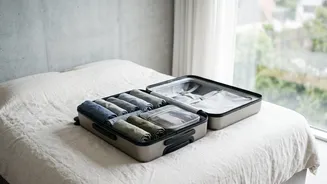
To elevate your packing game, combine rolling with packing cubes. These zip-up pouches are a game-changer for organisation, allowing you to categorise your clothes by type or outfit. Place your rolled t-shirts in one cube, your rolled trousers in another, and smaller items like socks and underwear in a smaller cube. This not only keeps your suitcase tidy but also makes everything immediately visible and accessible, so you don't have to rummage through your entire bag to find one item. The cubes also add a layer of compression, ensuring your rolled clothes stay tight and secure in transit.
Assembling Your Carry-On
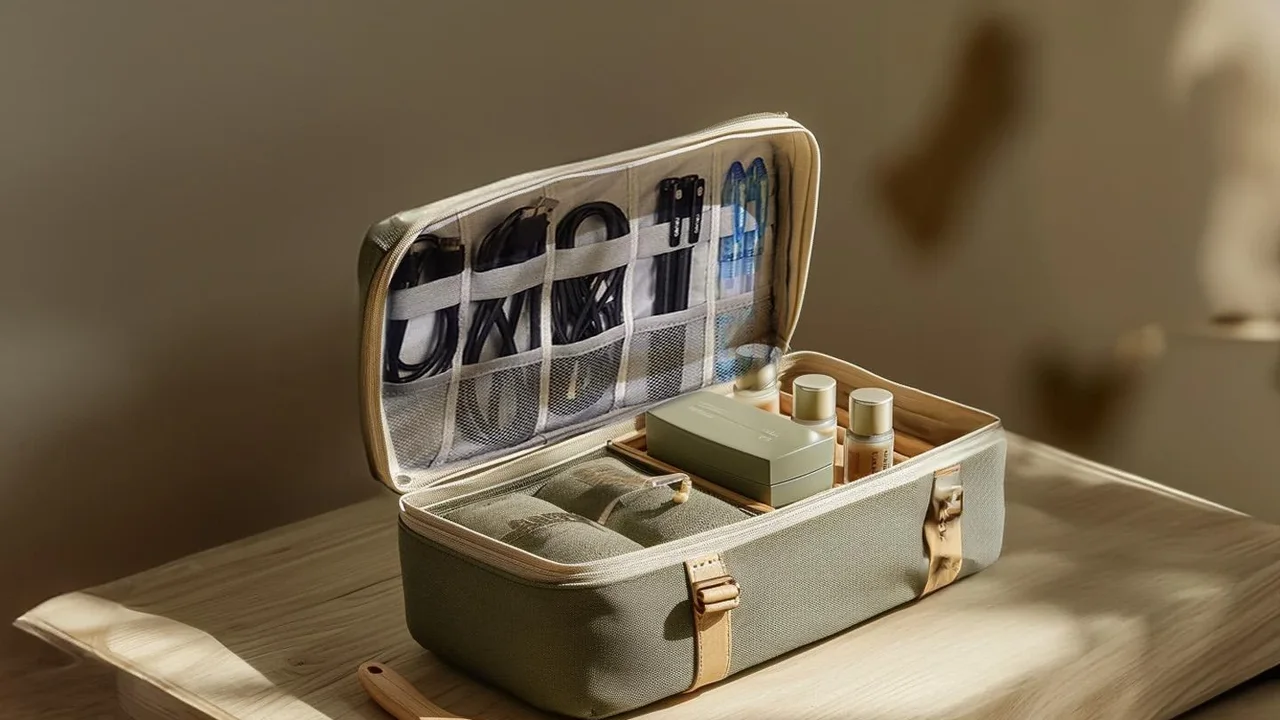
Once your clothes are rolled and cubed, it's time to assemble your carry-on. A common strategy is to place heavier items, like shoes or a toiletry bag, at the bottom of the suitcase near the wheels. This creates a stable base and prevents the bag from tipping over. Next, arrange your packing cubes, fitting them together snugly. You can place rolled items directly into the bag, using them to fill any gaps. Keep any essentials you might need during your flight, like electronics or a change of clothes, in an easily accessible pocket or personal item.