





The Unseen Environmental Threat
Much of the dialogue around pollution conjures images of smog-filled cities or plastic-choked waterways. While serious, these visible problems are only part of the story. Some of the most potent environmental threats are gases that are completely invisible
to the naked eye. Methane (CH4), for instance, is a greenhouse gas over 80 times more powerful at trapping heat than carbon dioxide (CO2) in the short term. Other culprits like nitrogen dioxide (NO2) and sulfur dioxide (SO2) contribute to respiratory illnesses and acid rain. These gases are often released from industrial sites, oil and gas facilities, landfills, and large-scale agriculture. Because they are invisible, proving their source and quantity has historically been a monumental challenge for regulators and a point of plausible deniability for polluters.
A New Eye in the Sky
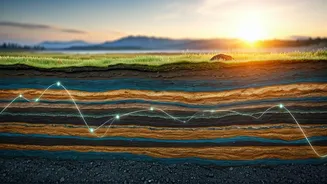
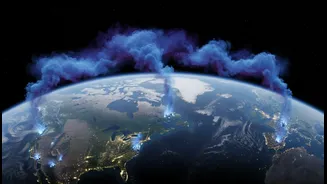
The game is changing thanks to a growing constellation of specialized satellites. Organizations like Canada-based GHGSat, and public-private partnerships like Carbon Mapper, are deploying satellites equipped with advanced hyperspectral imaging spectrometers. These instruments are a far cry from the cameras on our phones. They operate by measuring the specific signature of sunlight that is absorbed and reflected by different gas molecules in the atmosphere. By analysing light in hundreds of narrow wavelengths, these satellites can pinpoint not just the presence of a gas like methane, but its concentration, and trace it back to a specific facility on the ground, sometimes to an area as small as 25 meters.
From Complex Data to Compelling Proof
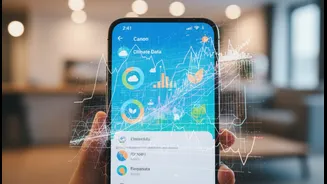
Detecting a plume of methane from 500 kilometres up is one thing; making that information useful is another. This is where the “shareable” aspect becomes revolutionary. The raw satellite data is incredibly complex, but these organizations process it into easily understandable—and shareable—visuals. A massive, ongoing methane leak can be transformed into a colour-coded plume overlaid on a map, showing exactly which oil well, pipeline, or landfill is responsible. These images, often made publicly available through online data portals, can be screenshot and shared on social media, included in news reports, or presented to policymakers. What was once an abstract scientific measurement becomes a simple, damning picture that tells an undeniable story.
Accountability from Orbit
This new era of transparency is already having a real-world impact. Groups like the Environmental Defense Fund (EDF), which launched its own MethaneSAT, use this data to push for stronger regulations and hold companies to their emission-reduction promises. MethaneSAT was specifically designed to provide a complete picture of methane pollution, capturing emissions from millions of smaller sources that were previously overlooked. Similarly, Carbon Mapper makes its data on methane and CO2 super-emitters public to help governments and researchers drive mitigation efforts. In California, regulators are already collaborating with Carbon Mapper for an ongoing satellite monitoring program. This allows for a level of verification that was impossible when relying on self-reported data from industry, which is often incomplete or inaccurate. It's a fundamental shift from a system of trust to one of verification.
The Democratisation of Environmental Watchdogs
Perhaps the most profound impact of this technology is its ability to empower citizens and local communities. Before, a community living near a polluting facility had limited options to prove the source of their concerns. Now, armed with data from a free online portal, journalists, local activists, and even concerned citizens can point to specific evidence. Coalitions like Climate TRACE use satellite data and AI to track emissions from over 660 million sources, providing an interactive map that anyone can use to see pollution in their own neighbourhood. This access to information levels the playing field, enabling grassroots movements to build a case, demand action, and hold both corporations and governments accountable for the air they breathe. The invisible has been made visible, and now it can be shared with the world.