





Build a Strong Foundation
The first step into the world of space science begins in the classroom. A strong command of Physics, Chemistry, and Mathematics (PCM) during your 10+2 education is non-negotiable. These subjects form the bedrock of aerospace engineering and astrophysics.
Focus on understanding core concepts rather than rote learning. Complement this with developing crucial skills like computer programming, particularly in languages such as Python or C++, which are widely used for data analysis and simulations in space missions. Building this solid academic foundation is essential for qualifying for entrance exams like the JEE for engineering colleges and for handling the complex challenges of the field later on.
Engage with ISRO's Student Programs
The Indian Space Research Organisation (ISRO) actively encourages young talent through several outreach initiatives. The most prominent among these is the "Young Scientist Programme," or YUVIKA, a two-week residential program designed to give school students basic knowledge of space technology and applications. This initiative aims to 'catch them young,' giving preference to students from rural areas to spark their interest in STEM careers. The program includes talks by eminent scientists, lab visits, and hands-on activities. Keep an eye on the ISRO website for announcements regarding YUVIKA and other student-centric activities like online courses and workshops available on its STEM portal.
Participate in University Satellite Projects
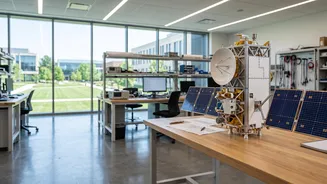
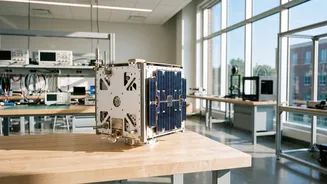
For undergraduate engineering students, one of the best ways to get practical experience is by joining a student satellite project. Several Indian universities and institutes, such as IIT Bombay, have programs where students design, build, and test their own satellites. IIT Bombay's 'Pratham' satellite, which was successfully launched by ISRO, was entirely planned and executed by students. These projects provide invaluable hands-on experience in satellite design, fabrication, and mission operations. ISRO actively supports such initiatives by offering guidance and launch opportunities, helping bridge the gap between academic theory and real-world space engineering.
Seek Internships in the Growing Private Sector
While ISRO is a primary goal for many, India's burgeoning private space sector offers exciting internship opportunities. Companies like Dhruva Space, India's first private satellite-building startup, and other non-government entities are increasingly looking for young talent. IN-SPACe, the agency set up to promote private participation, is actively working with companies to create internship roles for students. Online programs, like the India Space Lab Summer Internship, also offer training in high-demand areas like drone technology, CubeSat design, and rocketry, providing crucial skills for the modern space industry.
Join Amateur Astronomy Clubs
Passion for space often starts with gazing at the stars. Joining an amateur astronomy club is an excellent way to nurture this interest. Cities across India have active clubs, such as the Bangalore Astronomical Society, Delhi Astronomy Club, and Jyotirvidya Parisanstha in Pune, that organize stargazing sessions, workshops, and public outreach events. These clubs provide a community of like-minded individuals, access to telescopes, and guidance on observational astronomy and astrophotography. Some virtual clubs like Astrophiler's Club also offer year-long programs for students across the country, making astronomy accessible even without a local chapter.