


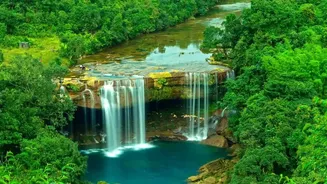

An Emerald Blanket Across the Land
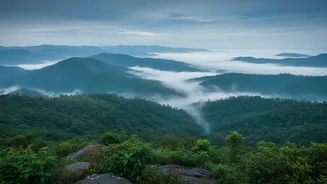
From June to September, the monsoon washes over Assam, breathing new life into every corner of the state. The dust of the dry season settles, replaced by the fresh, intoxicating scent of rain-soaked earth. Landscapes transform into a brilliant tapestry
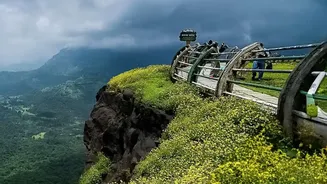
of countless shades of green. The mighty Brahmaputra River swells, its waters carrying the rich silt that nourishes the plains. This is a season for the senses: the rhythmic drumming of rain on tin roofs, the chorus of frogs in the evening, and the sight of mist clinging to rolling hills and vast paddy fields. It is a period of rejuvenation, where the entire state slows down, embracing a quieter, more reflective pace of life.
The Verdant Glory of the Tea Gardens
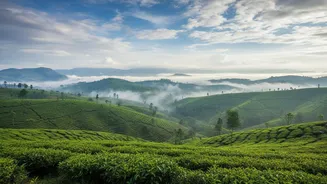
Assam's iconic tea estates are never more beautiful than during the monsoon. The rains are the lifeblood of the tea industry, plumping the leaves that produce the state's world-famous robust, malty brew. A drive through estates in Jorhat or Dibrugarh reveals an endless expanse of vibrant green, glistening with raindrops under dramatic grey skies. The cooler temperatures make for pleasant walks along the plantation trails, offering a chance to witness the surreal beauty of the gardens. This season showcases the deep connection between Assam's climate and its most famous export, a relationship that defines the region's economy and culture.
Majuli: The River Island's Monsoon Story
The world's largest river island, Majuli, has a powerful and complex relationship with the monsoon. While the rains can bring challenges like flooding, they also underscore the incredible resilience and unique lifestyle of its inhabitants. During this time, the island becomes a vision of lush greenery, with its rice paddies full and its wetlands teeming with life. Life adapts to the water; boats become the primary mode of transport, and homes built on stilts stand as a testament to generations of coexistence with the river. For a traveller, visiting Majuli in the monsoon is a profound cultural immersion, offering a glimpse into a community that lives in deep harmony with the rhythm of the Brahmaputra.
A Time of Spiritual Fervour
The monsoon season is also deeply woven into the spiritual fabric of Assam. In June, the Kamakhya Temple in Guwahati hosts the Ambubachi Mela, one of the most significant Tantric festivals in India. Often called the 'Mahakumbh of the East', this festival celebrates the fertility of the earth and the divine feminine energy of the goddess. Despite the heavy rains, lakhs of devotees and ascetics gather, creating an atmosphere of intense devotion and spiritual energy. The timing is no coincidence; the festival aligns with the monsoon, a period that symbolizes nature's own cycle of regeneration and creation.
A Note on National Parks
It is crucial for travellers to know that major wildlife sanctuaries like Kaziranga National Park and Manas National Park remain closed to tourists during the monsoon months, typically from May or June through October. The heavy rains and subsequent flooding of the Brahmaputra make safari operations unsafe and inaccessible. This annual closure is a vital period for the parks, allowing the floodwaters to naturally rejuvenate the grasslands and the entire ecosystem to heal without human interference, ensuring its health and vibrancy for the coming year. While wildlife safaris are not possible, the periphery of these areas still offers stunning green landscapes.