





An Autumn Sky Primed for Viewing
Autumn in India, particularly the post-monsoon period from October onwards, brings some of the best stargazing conditions of the year. The atmosphere is clearer and drier, and the longer nights provide an extended window to explore the cosmos. This season,
the celestial stage is set with prominent guidepost constellations and two of the most rewarding targets for any sky-watcher: one incredibly near, in cosmic terms, and one almost unimaginably far.
Jupiter: A Beacon in the Predawn Sky
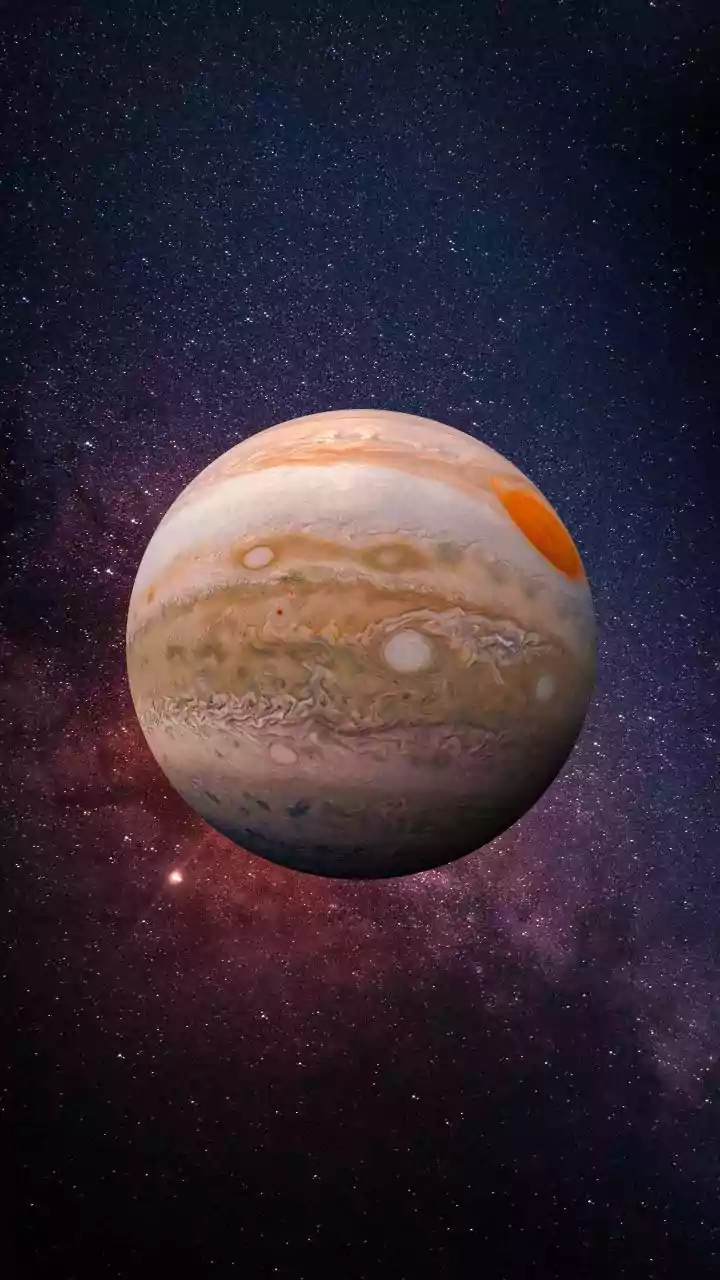
While Jupiter reached its peak brightness for 2026 earlier in the year, it remains a dominant and unmissable object in the sky. Currently, you can find the gas giant shining brightly in the eastern sky in the hours before sunrise. On some mornings in early October, the Moon will pass near Jupiter, creating a beautiful pairing. What makes Jupiter so compelling is its sheer brilliance; it shines with a steady, powerful light that doesn't twinkle like distant stars. This steady glow is because we are seeing reflected sunlight from a planetary disk, not a single point of light. Even modest binoculars are enough to transform Jupiter from a bright dot into a tiny disk, potentially revealing its four largest moons—Io, Europa, Ganymede, and Callisto—as faint pinpricks of light huddled close by.
The Andromeda Galaxy: A Glimpse Across Space and Time
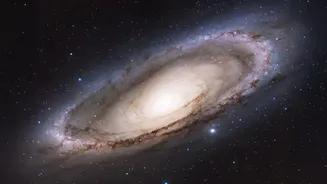
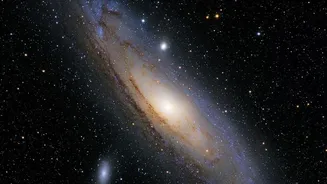
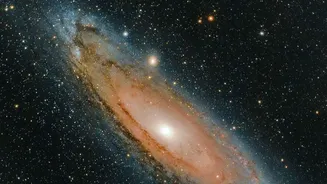
Shifting your gaze from a neighbour in our solar system to a neighbour in our galactic local group, the Andromeda Galaxy (M31) is the other star of the autumn show. At 2.5 million light-years away, it is the most distant object the human eye can see without aid. Every photon of light from Andromeda that reaches your eye tonight began its journey when early human ancestors roamed the Earth. During October and November, the galaxy is perfectly positioned high in the evening sky, making it an ideal time to search for it. To the naked eye from a dark location, it appears as a faint, elongated smudge of light—a whisper of a cloud against the black. This fuzzy patch is not a star or a nebula, but an entire city of an estimated one trillion stars.
How to Find These Celestial Wonders
Finding Jupiter is simple: look east before sunrise for the brightest non-twinkling object. It will be prominent throughout the autumn months. Finding Andromeda requires a bit more patience and, ideally, a dark sky away from city lights. The easiest way to locate it is by using nearby constellations as guides. Look for the distinctive 'W' shape of Cassiopeia, which is high in the northern sky during autumn evenings. The right-hand 'V' of the W acts like an arrow, pointing roughly in the direction of the galaxy. Alternatively, you can use the Great Square of Pegasus. Once you're in the right area, scan with your eyes or, even better, a pair of binoculars to pick up the faint, oval glow.
Making the Most of Your Night Out
You don't need expensive equipment to enjoy these autumn highlights. Jupiter's brilliance is obvious to the naked eye, and its moons can be spotted with basic binoculars. While Andromeda is technically a naked-eye object, binoculars are highly recommended to truly appreciate it, as they make its faint glow much easier to distinguish from the blackness of space. The key to a successful viewing is finding a location with as little light pollution as possible. Even a short drive away from city centres can make a huge difference. Allow your eyes at least 20 minutes to fully adapt to the darkness; this will dramatically increase your ability to see faint objects like Andromeda. So grab a blanket, find a clear spot, and enjoy the show.