






The Prestigious Scientist/Engineer 'SC' Role
The Scientist/Engineer 'SC' is the entry-level position for fresh engineering graduates at ISRO. It is one of the most sought-after government jobs, offering a chance to work on cutting-edge space missions, satellite technology, and space exploration
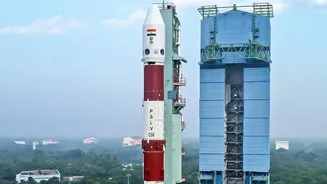
projects. From developing launch vehicles like the GSLV to working on missions to the Moon and Mars, this role places you at the forefront of India's technological ambitions. The job promises a dynamic work environment, immense learning opportunities, and the pride of contributing to national progress.
Key Eligibility Criteria
To be eligible for the Scientist/Engineer 'SC' post, candidates must be Indian citizens and meet specific academic and age requirements. A Bachelor's degree in Engineering (B.E./B.Tech) or an equivalent qualification in disciplines like Electronics, Mechanical, or Computer Science is mandatory. Candidates are typically required to have secured a minimum aggregate of 65% marks or a CGPA of 6.84 on a 10-point scale. The general age limit is usually 28 years, though relaxations are provided for candidates from OBC, SC, and ST categories as per government norms.
The Main Gateway: ICRB Recruitment
The primary method for recruitment is through the ISRO Centralised Recruitment Board (ICRB). Historically, this involved a written test followed by an interview. The written test is an objective-type paper designed to rigorously assess a candidate's core technical knowledge in their specific engineering discipline. However, in recent years, ISRO has also adapted its process. For some recruitment cycles, the initial shortlisting of candidates for the interview is done based on valid GATE (Graduate Aptitude Test in Engineering) scores instead of a separate written test.
Navigating the GATE-Based Selection
In the GATE-based recruitment process, which has been common in recent notifications, candidates with a valid GATE score in their respective engineering paper can apply online through the ISRO careers portal. ISRO then shortlists candidates for the interview round based on these scores. It is important to note that ISRO considers the GATE score, not the rank or marks, for shortlisting. The final selection is often based on a combination of the GATE score and performance in the interview. For some recent recruitments, a 50% weightage has been given to the GATE score and 50% to the interview marks.
The All-Important Interview
Regardless of whether you are shortlisted through a written test or your GATE score, the personal interview is a critical final step. The ISRO interview is renowned for being conceptually demanding. Instead of just testing textbook knowledge, the panel assesses your fundamental understanding of engineering principles, your practical application skills, and your problem-solving abilities. Your academic achievements and projects also play a role in the evaluation. Strong basics and clear communication are key to succeeding in this stage.
Salary and Career Progression
A career at ISRO is financially rewarding. A Scientist/Engineer 'SC' is appointed at Level 10 of the 7th Central Pay Commission matrix, with a starting basic pay of ₹56,100 per month. Including allowances like Dearness Allowance (DA), House Rent Allowance (HRA), and Transport Allowance (TA), the gross monthly salary can be between ₹75,000 and ₹90,000, depending on the posting location. ISRO also offers a robust Merit Promotion Scheme, allowing scientists to progress to higher grades, potentially reaching the level of 'Distinguished Scientist', based on performance and contributions over their career.