





A Major Shift in Lunar Strategy
In a significant overhaul of its lunar ambitions, NASA has restructured the Artemis program to prioritize safety and risk reduction. The most substantial change involves redesigning the Artemis III mission. Instead of being the flight that lands humans
on the Moon for the first time since 1972, it will now be an extended test flight in low-Earth orbit, planned for 2027. This new mission will allow astronauts to practice crucial procedures, including rendezvous and docking with test versions of the commercial human landing systems (HLS) being developed by SpaceX and Blue Origin. The actual lunar landing is now slated for Artemis IV in 2028. This step-by-step approach was adopted after an independent safety panel raised concerns about the number of unproven technologies required for the original landing plan.
Tackling the In-Space Refueling Challenge
A primary risk identified by NASA's Aerospace Safety Advisory Panel (ASAP) is the complex process of refueling landers in space. SpaceX's massive Starship lander, for example, requires its propellant tanks to be filled in orbit before it can travel to the Moon. This involves a series of tanker flights to an orbital depot—a concept that has never been executed on this scale. Estimates for the number of refueling flights have varied wildly, with an ASAP member suggesting it could be as high as 22, a figure SpaceX disputes. By dedicating Artemis III to testing rendezvous and docking, NASA aims to master these basic maneuvers in the relative safety of Earth orbit before attempting the far more difficult cryogenic propellant transfers needed for a lunar journey.
Strengthening Commercial Partnerships
The Artemis program relies heavily on commercial partners, particularly SpaceX and Blue Origin, for its landing systems. To mitigate risks associated with these new vehicles, NASA recently updated its contracts to increase oversight and add key development milestones. Under the new agreements, both companies will provide NASA with more insight into their development efforts. For instance, SpaceX is adding two demonstrations of its Starship crew cabin, while Blue Origin is incorporating new 'human-in-the-loop' testing to streamline training and operations. These measures are designed to enhance astronaut safety and ensure the lander systems are thoroughly vetted before they carry a crew to the lunar surface. The Artemis III orbital mission will be the first time astronauts interact with this new hardware in space.
Learning From Every Flight
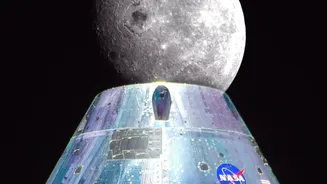
Each phase of the Artemis program is designed to build upon the last. The successful uncrewed Artemis I flight provided crucial data on the performance of the Orion capsule's heat shield during reentry. The recently completed Artemis II mission, which flew four astronauts around the Moon, further tested life support, navigation, and radiation protection systems in deep space. NASA is now incorporating lessons from these flights into its future plans. The Artemis III mission will test an upgraded heat shield on the Orion capsule and give astronauts their first chance to test new spacesuits in microgravity. According to NASA officials, everything done on Artemis III is intended to reduce risk for the subsequent lunar landing missions.