








The City as a Giant Storage Heater
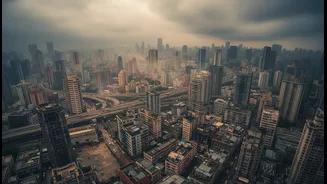
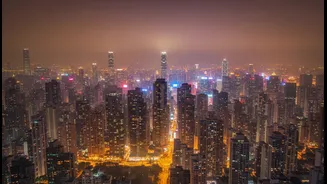
The primary reason our cities stay warm is a phenomenon called the Urban Heat Island (UHI) effect. Think of a city as a giant storage heater. During the day, surfaces like concrete buildings, asphalt roads, and steel structures absorb and store huge amounts
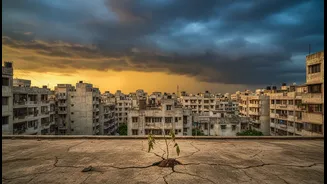
of solar radiation. Unlike rural areas with soil and vegetation that have a natural cooling effect, these man-made materials release the stored heat slowly throughout the evening and night. This process prevents cities from cooling down effectively after sunset, leading to warmer nights and a higher baseline temperature for the next day. As Indian cities expand, replacing natural landscapes with dense construction, this effect becomes more pronounced.
Humidity: The Real 'Feels-Like' Culprit
While urban design lays the groundwork for trapping heat, humidity is the key factor that makes monsoon weather feel so oppressive. Rainfall, while briefly cooling the air, pumps a large amount of moisture into the atmosphere, causing humidity levels to spike. Our bodies have a natural air-conditioning system: sweating. As sweat evaporates from our skin, it takes heat with it, cooling us down. However, when the air is already saturated with moisture (high humidity), it's much harder for our sweat to evaporate. The cooling process becomes inefficient, and the sweat simply sits on our skin, making us feel hot, sticky, and uncomfortable. This is why meteorologists refer to a 'heat index' or 'feels-like' temperature, which combines air temperature with humidity to give a more accurate sense of how hot it feels to the human body.
A Design That Blocks the Breeze
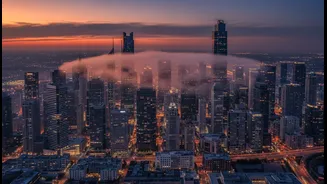
The very layout of many Indian cities contributes to this heat trap. Densely packed tall buildings can create urban canyons that block wind flow, reducing natural ventilation that would otherwise help dissipate heat. The lack of green spaces like parks and the disappearance of water bodies such as lakes and ponds remove crucial, natural cooling elements from the urban environment. Trees provide shade and cool the air through a process called evapotranspiration, while water bodies have a significant local cooling effect. Furthermore, waste heat from vehicle engines and air conditioning units constantly pumps more warmth into the immediate surroundings, adding another layer to the problem. Studies show this combination of factors is leading to a significant increase in dangerously humid days across many Indian cities.
Can We Design Cooler Cities?
Fortunately, this urban heat problem is not irreversible. Urban planners and policymakers are exploring several strategies to mitigate the UHI effect. One popular solution is increasing 'blue-green infrastructure'—this means planting more trees, creating parks, and restoring water bodies. Another effective approach involves using 'cool' materials in construction. This includes painting roofs white or using reflective materials that absorb less solar energy, which can significantly lower building temperatures. Some cities are experimenting with permeable pavements that allow water to seep through, which can help in cooling. These solutions not only help in reducing temperatures but also improve air quality and make cities more liveable for their residents.