

Venus, The Unmistakable Evening Star
The most brilliant point of light in the evening sky this month will be the planet Venus. Look to the west shortly after sunset to see it shine with a steady, silvery light. Its brightness is so intense that it can often be seen even from light-polluted
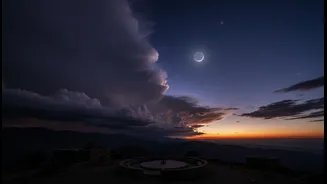
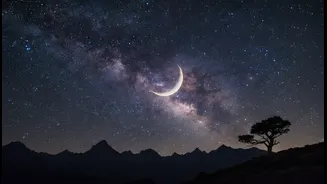
cities before any other stars appear. Around July 8th and 9th, Venus will have a close encounter with Regulus, the brightest star in the constellation Leo, making for a striking pair. Later in the month, on the evenings of July 16th and 17th, a slender crescent Moon will pass near Venus, creating a beautiful and easily photographed scene just after dusk.
A Morning Parade of Planets
If you are an early riser, the pre-dawn hours offer their own planetary rewards. The red planet, Mars, can be found rising in the eastern sky, continuing its journey across the constellation of Taurus. On July 11th and 12th, a waning crescent Moon will create a picturesque grouping with Mars. Not far away, you can also spot Saturn. The ringed planet will be visible from after midnight until dawn. This year offers a special, subtle view of Saturn; its famous rings are tilted at a very narrow angle to us, making them appear incredibly thin through a telescope. This is a cyclical event that only happens roughly every 15 years, offering a different perspective on the gas giant.
The Glowing Heart of the Milky Way
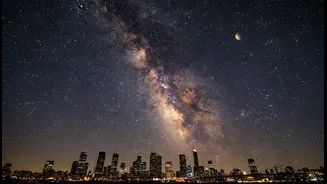
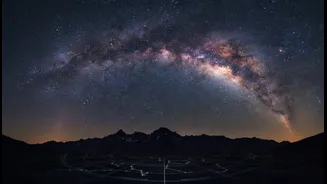
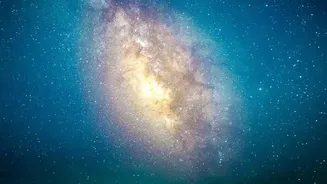
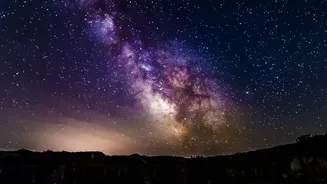
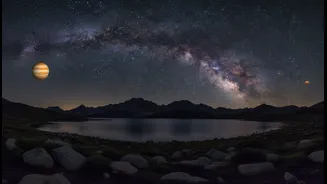
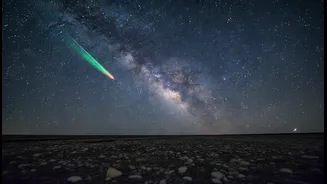
July provides the best opportunity of the year to witness the majestic sweep of our own galaxy, the Milky Way. To see it, you need to be in a location with dark skies, far from city lights. The best viewing window will be in the two weeks surrounding the New Moon on July 14th, when the sky is darkest. Look towards the southern sky for the constellations Scorpius, with its bright, reddish star Antares, and Sagittarius, which famously resembles a teapot. This region marks the direction of the galactic centre, the most dense and luminous part of the Milky Way, appearing as a hazy, glowing band of light stretching across the sky. Scanning this area with even a simple pair of binoculars can reveal countless stars and faint smudges of distant star clusters.
Navigate with the Summer Triangle
One of the easiest patterns to spot in the July sky is the Summer Triangle. This is not a constellation, but an asterism—a simple shape made from three bright stars from different constellations. Look high overhead for the three brightest stars in that part of the sky. They are Vega, in the constellation Lyra; Deneb, in Cygnus the Swan; and Altair, in Aquila the Eagle. This giant triangle is a fantastic landmark for navigating the summer sky. Once you can find it, you can easily begin to trace out the constellations around it. Its position high in the sky makes it a prominent feature of warm July nights.
A Whisper of Shooting Stars
July marks the return of meteor activity, with the Southern Delta Aquariid and Alpha Capricornid showers becoming active. These showers are known for producing a steady, if not dramatic, stream of meteors, with the Alpha Capricornids occasionally producing a bright, slow-moving fireball. However, it's important to set expectations for 2026. The peak of these showers occurs around July 30th and 31st, which unfortunately coincides with a nearly Full Moon. The bright moonlight will wash out all but the brightest meteors, making this a poor year for a spectacular show. While you might still catch a stray shooting star, it won't be the kind of event worth losing sleep over, perfectly fitting the month's theme of finding beauty in the quieter moments.
The Stargazer's Best Friend: The New Moon
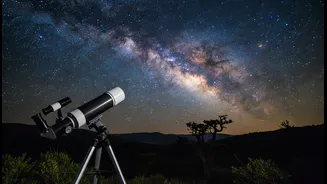
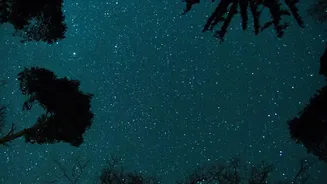
The single most important date for any stargazing enthusiast this month is Tuesday, July 14th. This is the date of the New Moon. On this night, the Moon is positioned between the Earth and the Sun, so its illuminated side faces away from us, leaving the night sky completely free of moonlight. This natural darkness dramatically improves the visibility of fainter objects like the Milky Way, distant nebulae, and star clusters. If you have been waiting for the perfect opportunity to travel to a dark-sky location, the nights around July 14th offer the ideal window. Plan a night out with a telescope or binoculars, or simply lie back and take in the sheer number of stars that become visible when the Moon is away.