






Artemis: Humanity's Return to the Moon
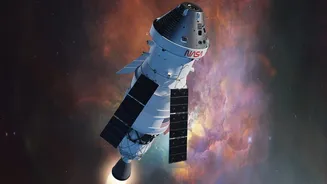
More than half a century after the last Apollo astronaut left footprints on the Moon, humanity is going back. The Artemis program is NASA’s ambitious plan to establish a sustainable human presence on and around our lunar neighbour. After a successful
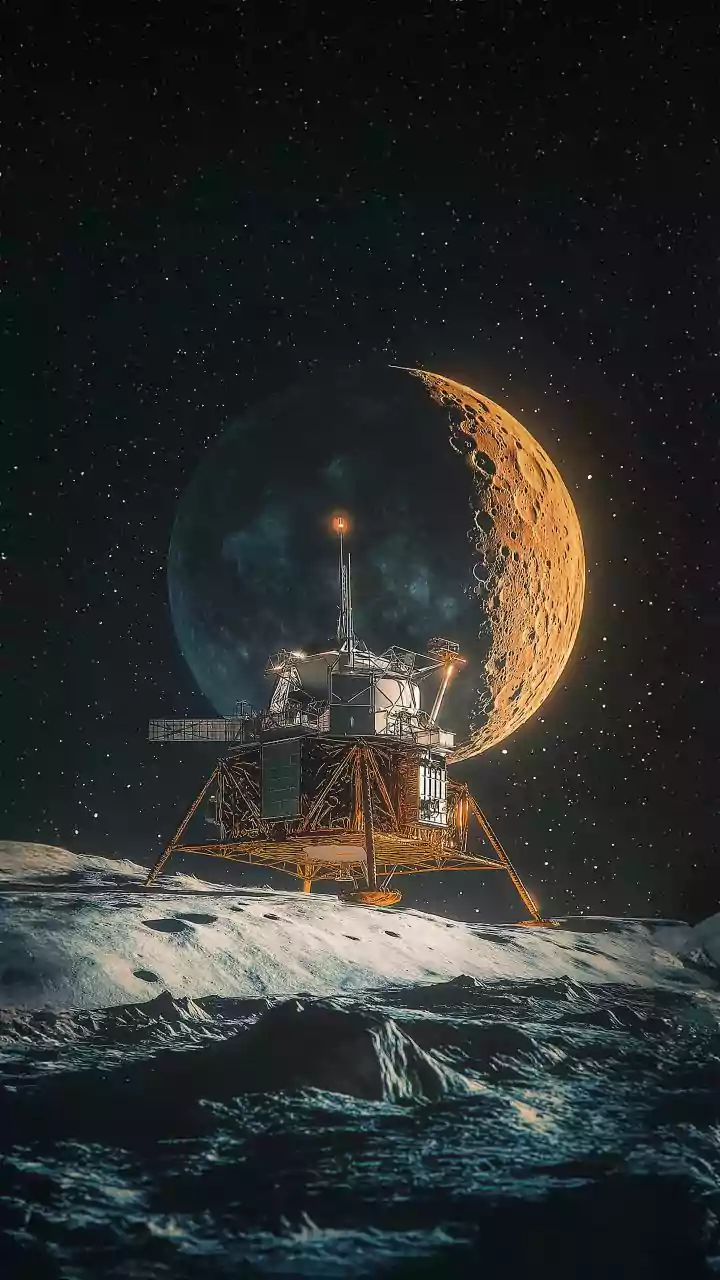
uncrewed test flight (Artemis I) and a crewed lunar flyby in April 2026 (Artemis II), all eyes are on the next steps. Artemis III, a demonstration mission planned for 2027, will test the critical spacecraft systems in Earth orbit that will eventually land astronauts on the Moon. The actual landing is now targeted for 2028 with Artemis IV. For India, which celebrated the historic landing of Chandrayaan-3 near the lunar south pole, the Artemis program is more than just a spectator sport. It represents the next chapter in lunar exploration, focused on building a permanent outpost and unlocking the Moon's resources—a goal that aligns with the global scientific community's aspirations.
Europa Clipper: Searching for Life's Ingredients
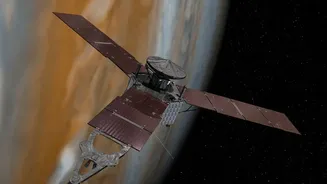
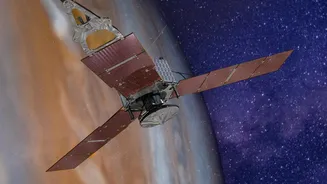
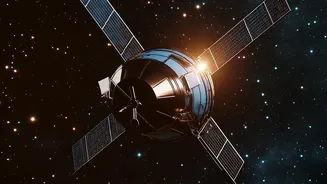
Is there life beyond Earth? NASA's Europa Clipper mission is on a journey to find out if one of Jupiter’s moons, Europa, has the right conditions. Launched in October 2024, the spacecraft is currently on a long voyage to the Jupiter system. A key milestone is coming up in December 2026, when it will fly by Earth for a crucial gravity assist, slinging it on its final path toward the gas giant. Europa is a tantalising target because scientists are almost certain it hides a global saltwater ocean beneath its icy shell—an ocean that may contain more than twice the water of all of Earth's oceans combined. While Clipper won't detect life directly, it will perform dozens of close flybys upon its arrival in 2030, using its instruments to analyse the moon's ice, scan its surface, and confirm if this distant world is habitable. It's a fundamental question that drives science everywhere.
Nancy Grace Roman Space Telescope: A New Window on the Cosmos
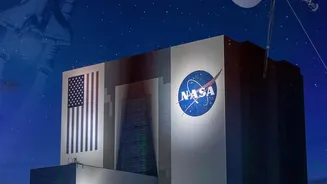
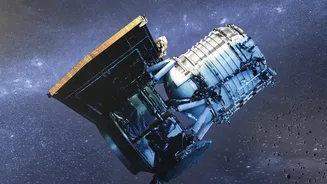
Get ready for a new flood of breathtaking cosmic images. The Nancy Grace Roman Space Telescope, NASA’s next-generation observatory, is scheduled to launch as soon as late August 2026. Often seen as a successor to Hubble with a field of view 100 times wider, Roman is set to revolutionize our understanding of the universe. Its primary goals are to investigate the mysteries of dark energy and dark matter, the enigmatic forces that shape our universe. But for many space fans, the most exciting part will be its exoplanet hunt. Roman is expected to discover thousands of new planets orbiting other stars, giving us an unprecedented census of alien worlds. As launch preparations enter their final stages at Kennedy Space Center, the scientific community is buzzing with anticipation for the data this powerful telescope will provide.
Dragonfly: A Flying Robot on an Alien Moon
Perhaps one of the most futuristic missions on NASA’s slate is Dragonfly. This car-sized, nuclear-powered drone is being built to fly through the thick, hazy atmosphere of Saturn’s largest moon, Titan. Scheduled for launch in July 2028, Dragonfly will arrive at Titan in 2034 for a multi-year science mission. What makes Titan so special is that it’s an incredibly complex world, with a chemical environment that might resemble early Earth before life began. It has rivers, lakes, and seas, but they are filled with liquid methane and ethane instead of water. Dragonfly will be the first vehicle to perform powered flight on another moon, hopping from one location to another to sample materials and study whether the building blocks of life could exist there. Recent tests on the lander's structure in mid-2026 have been successful, moving this sci-fi concept closer to reality.
Mars Sample Return: A Mission in Flux
The ultimate prize in Mars exploration is bringing pieces of the Red Planet back to Earth. Since 2021, the Perseverance rover has been collecting and caching rock and soil samples that could answer whether life ever existed on Mars. However, the mission to retrieve them, known as Mars Sample Return, has faced significant challenges. Citing soaring costs and technical complexity, the U.S. Congress did not provide funding for the mission in its current form in the 2026 budget. NASA has not officially cancelled the program but is re-evaluating its approach, with a decision on a new path forward not expected until mid-2026 at the earliest. For now, the precious samples remain on Mars. While this ambitious project is on pause, the scientific community remains hopeful that a redesigned, more affordable mission will eventually bring these invaluable Martian relics home for study.