






The Official Freeze in Relations
Official trade between India and Pakistan has been largely frozen since 2019. Following the Pulwama terror attack, India withdrew Pakistan's Most Favoured Nation (MFN) status, and Pakistan responded by suspending almost all trade with India. These restrictions
were tightened further, with land borders like the Wagah-Attari crossing—once a key artery for commerce—effectively closed to most trade. On paper, the commercial relationship came to an abrupt halt, with the exception of a few critical items like essential medicines. However, the official data only tells part of the story. The demand for Indian goods in Pakistan, built over decades of proximity and economic logic, did not simply vanish.
The Dubai Detour
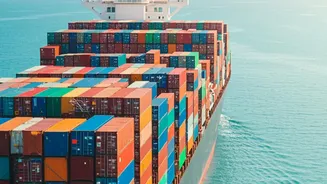
In the world of international trade, when a direct path is blocked, goods often find a detour. For India-Pakistan trade, this detour frequently runs through third countries, most notably the United Arab Emirates. According to a report by the Global Trade Research Initiative (GTRI), a significant volume of Indian merchandise, potentially worth over $10 billion annually, reaches Pakistan via intermediary ports like Dubai, Singapore, and Colombo. The process is straightforward: Indian companies ship goods to these hubs, where they are stored in bonded warehouses. Here, documents and labels can be altered to show a new country of origin, such as 'Made in UAE', before the products are re-exported to Pakistan. This grey-area strategy allows businesses to bypass direct trade restrictions and satisfy persistent market demand, albeit at a higher cost.
What Is Being Traded?
The flow of goods is not random; it is dictated by Pakistan's specific industrial and consumer needs. Pharmaceuticals are a critical component, as Pakistan's drug manufacturing industry has historically relied on raw materials and active pharmaceutical ingredients (APIs) from India. Recent data shows that even with restrictions, pharmaceuticals and organic chemicals make up the vast majority of recorded imports from India. Beyond medicine, the list of items finding their way through these indirect channels includes chemicals, cotton, auto parts, tea, coffee, sugar, and steel. This reflects Pakistan's dependence on India for key industrial inputs that are either unavailable or much more expensive to source from more distant markets.
The Economic Imperative
The persistence of this indirect trade underscores a powerful economic logic. For many Pakistani industries, sourcing materials from India is cheaper and faster due to geographical proximity. The trade suspension has forced Pakistani businesses to import from faraway markets, leading to higher freight costs and longer delivery times. The Chairman of the Pak-India Business Council estimated that the suspension has resulted in staggering economic losses for Pakistan, potentially as high as $40 billion since 2019. The pharmaceutical sector alone could save billions annually if it could import directly from India. This economic pressure creates a powerful incentive for businesses on both sides to find ways, official or otherwise, to keep supply chains moving.
A Complicated Future
The latest trade figures highlight this ongoing complexity. In the first quarter of the 2026-27 fiscal year, Pakistan's recorded imports from India saw a nearly 70% increase compared to the previous year, reaching over $61 million, while Pakistan's exports to India were negligible. This growing imbalance shows that while political tensions remain high, the economic needs of a nation of over 240 million people cannot be easily switched off. The informal and indirect trade routes are a testament to the deep-seated economic ties that political conflicts have failed to sever completely. While a formal resumption of trade seems unlikely without a significant political thaw, the continued flow of goods through third countries suggests that commerce, driven by necessity and mutual benefit, will continue to find a way.