



The Sheer Scale of Operations
To understand the challenge, consider the Kumbh Mela. It's not just a festival; it's the largest human gathering on Earth, attracting hundreds of millions over several weeks. For the 2025 Maha Kumbh Mela in Prayagraj, preparations were made for an estimated
400 million pilgrims. This involves transforming vast tracts of fallow land into a functioning, temporary city with its own grid of roads, pontoon bridges, hospitals, police stations, and sanitation facilities. Similarly, the annual Rath Yatra in Puri sees the city's population swell by millions for a few days, requiring an immense logistical response to provide water, sanitation, and safety for all attendees.
A Symphony of Coordination
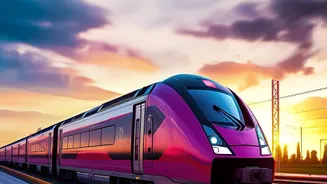
No single entity can manage such an event. Success hinges on a coordinated effort between dozens of government departments and agencies. For any large festival, a standing committee is often formed months in advance, chaired by senior officials. This brings together the railways, state road transport corporations, municipal bodies, police, health departments, and sanitation workers. For example, during the Rath Yatra, specific officers are assigned to every major responsibility, from security to sanitation, ensuring clear accountability. Indian Railways plays a crucial role, running hundreds of special trains from various states to clear the festive rush, a plan that is decided far in advance.
Building Temporary Cities
For sprawling events like the Kumbh, a temporary city is meticulously planned and built. This includes laying down electrical grids, water pipelines, and thousands of temporary toilets. In Puri, for the Rath Yatra, the administration installed 1,700 bio-toilets and established eight temporary hospitals to provide immediate medical aid. Over 68 million litres of drinking water were supplied daily through a network of kiosks and tankers. These pop-up infrastructures are designed not just for convenience but as a critical public health measure to prevent the spread of disease in such dense gatherings.
The Critical Role of Technology
Modern crowd management relies heavily on technology. At major events, a central command and control room is set up to monitor a vast network of CCTV cameras and drone surveillance feeds. Organisers use artificial intelligence (AI) to analyse this footage in real-time, monitoring crowd density and flow. This allows police to predict potential bottlenecks or dangerous overcrowding and intervene before a critical situation, like a stampede, can develop. Digital tools also enhance the pilgrim experience. Dedicated mobile apps, QR-code-based queue management systems, and real-time traffic updates help visitors navigate the crowded environment safely and efficiently.
Managing Mobility and Transport
Getting millions of people to and from a festival venue is one of the biggest hurdles. During Durga Puja in Kolkata, traffic restrictions are common, and the Metro runs extended hours to cope with the demand. For the Kumbh Mela, thousands of special buses are deployed, and large-scale parking facilities are created on the city's outskirts to reduce congestion. However, even with extensive planning, the sheer volume of people means attendees often have to walk several kilometres. Planners use clever spatial design, creating one-way pedestrian routes and multiple dispersal points to ensure crowds can move smoothly and avoid dangerous counter-flows.