






The Dual Problem of Noise and Waste
Noise pollution is more than just an annoyance; it's a persistent environmental stressor that can affect health and well-being. In our increasingly dense urban and residential spaces, the demand for effective soundproofing is at an all-time high. Traditionally,
the go-to materials for acoustic control have been synthetic products like fibreglass and foam. While effective, these materials come with an environmental cost, often involving chemical-intensive manufacturing processes and creating non-biodegradable waste at the end of their life. Simultaneously, the agricultural sector generates billions of tonnes of waste globally every year, including straw, coconut husks, and other fibrous materials. Much of this is either burned, contributing to air pollution, or left to decompose, releasing greenhouse gases. This has created a pressing need for sustainable waste management solutions, particularly in agriculturally rich nations like India, which is one of the world's largest producers of coir from coconuts.
An Innovative Solution from Nature's Leftovers
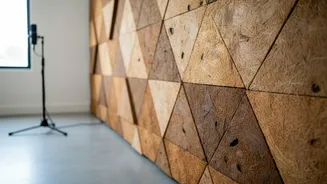
Enter the next generation of acoustic panels, made not in a chemical plant but from the fields and farms. Researchers and pioneering companies are now transforming agricultural waste like wheat straw and coconut coir into high-performance sound-absorbing panels. These plant-based materials offer a compelling, eco-friendly alternative to their synthetic counterparts. The concept is simple yet powerful: take fibrous, porous materials that would otherwise be discarded and use their natural properties to trap and deaden sound waves. Studies have shown that materials like coconut coir have excellent sound absorption capabilities, particularly for higher frequency sounds. By compressing these natural fibres into dense boards, innovators are creating building materials that are not only effective but also fully biodegradable and part of a circular economy.
How Natural Fibres Control Sound
The secret to the acoustic performance of these materials lies in their physical structure. Natural fibres from sources like coconut husks and straw are inherently porous. When sound waves—which are essentially vibrations travelling through the air—encounter these panels, they enter the maze of microporous cell structures within the material. As the waves travel through these tiny channels, friction converts the sound energy into a minuscule amount of heat, effectively dampening the noise. The more porous the material, the better its ability to absorb sound. The manufacturing process often involves cleaning the raw materials, shredding them, and then using heat and pressure to press them into solid panels. Some processes use natural, bio-based resins as a binder, while others rely on the inherent binding properties of the fibres themselves, resulting in a product free from harmful chemicals. The thickness and density of the final panel can be adjusted to target specific sound frequencies, making them highly versatile for different applications.
Beyond Soundproofing: The Green Advantage
The benefits of these plant-based panels extend far beyond just creating quieter spaces. Their biggest advantage is their sustainability. By upcycling agricultural waste, this technology reduces the burden on landfills and provides farmers with a new revenue stream for their byproducts. The manufacturing process is often cleaner, with some companies boasting zero toxic waste and no chemical additives. Furthermore, these natural materials contribute to healthier indoor environments. Unlike fibreglass, which can release harmful microfibres if damaged, or foams treated with flame retardants, panels made from straw and coir are non-toxic. They also have excellent thermal insulation properties, helping to keep buildings cooler and reducing energy consumption for air conditioning. As biogenic materials, they effectively store carbon that was captured from the atmosphere during the plant's growth, making them a carbon-negative building solution.
The Future of Sustainable Construction
Plant-based acoustic panels are part of a larger, exciting shift toward sustainable and bio-based construction materials. They are being used in a wide range of applications, from high-end recording studios and luxury homes to airports and residential buildings. Companies like Australia's Durra Panel are already using compressed straw to create walls and ceilings, while others are focusing on the unique aesthetic and performance of coconut fibre. As architects and builders increasingly prioritize carbon reduction and indoor environmental quality, these materials are poised for mass adoption. For a country like India, with its vast agricultural output and growing construction sector, leveraging resources like coconut coir and rice straw for building materials presents a massive opportunity. It represents a perfect synergy: turning a domestic waste problem into a high-value, sustainable solution for modern living.