








What Exactly Is a Mega Food Park?
The Mega Food Park scheme is a Government of India initiative designed to create a direct link between farms, processing facilities, and the consumer market. Think of it as a large, centralized campus for food processing, built on a 'hub-and-spoke' model.
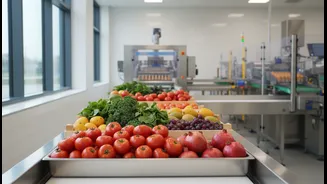
The main campus, or Central Processing Centre (CPC), has shared infrastructure like cold storage, warehouses, and quality control labs. This hub is then connected to several Primary Processing Centres (PPCs) and Collection Centres (CCs) located in different villages. Farmers bring their produce to these local centres, where it undergoes initial sorting, grading, and packing before being sent to the main park for advanced processing. This structure aims to streamline the supply chain, reduce wastage, and give farmers better access to processing facilities.
Arunachal's Agri-Industrial Hub
Arunachal Pradesh's lone Mega Food Park, named the Rongoge Mega Food Park, is located at Dolikoto, near Banderdewa. Developed under the Ministry of Food Processing Industries, the project is a significant step towards industrialisation for the state. The park is being built on a 75-acre site and is designed to process the region's abundant horticultural produce, such as pineapple, kiwi, ginger, and turmeric. The project, which faced delays due to the pandemic and other hurdles, is now moving forward, with its administrative block inaugurated on July 11, 2026. The central government provides significant financial assistance for such projects, offering grants that cover up to 75% of the costs in hilly regions like the North East. The vision is to attract around 30-35 food processing units to set up shop within the park, with major companies like Haldiram and Varun Beverages reportedly expected to establish units there.
The Impact on Farmer Income
One of the primary goals of the Mega Food Park is to double farmers' income, a long-standing national objective. By creating a direct link to processors, the park aims to eliminate middlemen who often take a significant share of the final price. This direct market access should ensure farmers receive better remuneration for their produce. Furthermore, the park's ability to process a wide range of local crops provides farmers with an assured buyer for their harvest, reducing market uncertainty. The government has also launched complementary schemes like the Atma Nirbhar Krishi and Bagwani Yojanas to boost productivity. The park's infrastructure allows for value addition—turning raw pineapple into juice or ginger into powder—which means the final product fetches a higher price, a benefit intended to be passed back to the farmers.
A Strategy to Cut Down Food Waste
In a hilly state like Arunachal Pradesh, post-harvest losses are a major challenge. Lack of storage facilities and difficult transportation routes mean a significant portion of perishable produce like fruits and vegetables can spoil before it reaches the market. The Mega Food Park is designed to tackle this head-on. Its network of Collection Centres and Primary Processing Centres allows for immediate collection and pre-cooling of produce near the farms. The Central Processing Centre is equipped with large-scale cold storage, warehouses, and advanced processing lines that can quickly convert raw materials into products with a longer shelf life. This farm-to-fork ecosystem is crucial for minimizing wastage and ensuring that more of what is grown makes it to the consumer's table, turning potential waste into wealth.
Generating Regional Employment
Beyond agriculture, the food park is a significant source of local employment. The project is expected to generate thousands of jobs, both direct and indirect. As of July 2026, the park already employed 45 people, including engineers and nutritionists, even before becoming fully operational. Once the 35 planned food processing units are established, this number is projected to grow substantially. These jobs range from factory workers and technicians to quality control specialists, logistics managers, and administrative staff. This creation of non-farm employment is vital for the region's economy, offering new opportunities to the local youth and helping to reduce unemployment.
Challenges and the Road Ahead
While the potential is immense, the journey hasn't been without its obstacles. The project, which began in 2019, has faced delays due to the COVID-19 pandemic, bureaucratic slowdowns, and even forest clearance hurdles. The promoter has also pointed to the need for uninterrupted electricity and adequate water supply as crucial for the park's smooth functioning. Despite these challenges, there is a renewed push from both the state and central governments to accelerate its implementation. With the administrative block now open and a promise of full operation by 2027, the focus is on attracting investors and ensuring the park lives up to its promise of becoming an economic engine for Arunachal Pradesh and a benchmark for industrial development in the state.