






Gear Up: Your Wet-Weather Armour
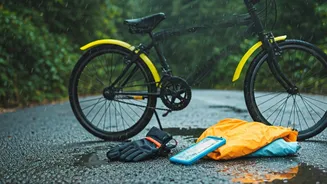
Staying comfortable is key to enjoying a ride in the rain, and that starts with what you wear. A reliable waterproof jacket is your most important investment. Look for one with a high waterproof rating (often measured in millimetres), taped seams, and good
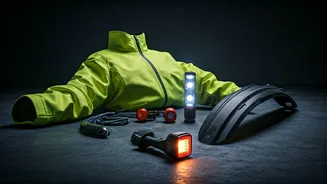
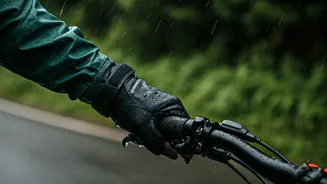
breathability to prevent sweat from building up inside. [5, 21] A jacket with a dropped tail provides extra protection from road spray. [2] Waterproof trousers are also essential for keeping your legs dry and warm. [5] Your extremities are often the first to feel the cold. Waterproof gloves will keep your hands dry and ensure you maintain a good grip on the handlebars, while waterproof overshoes or socks prevent your feet from getting soaked. [1, 22] A simple cycling cap worn under your helmet can work wonders by keeping rain out of your eyes. [6, 4]
Equip Your Bike: Fenders, Lights, and Tyres
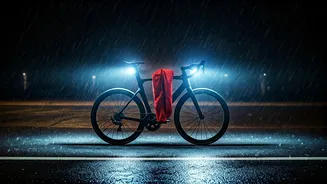
Your bike needs a few adjustments for wet conditions too. Full-length mudguards, or fenders, are non-negotiable. They will significantly reduce the amount of water and grime that sprays up from the road, keeping you and your bike's components much cleaner and drier. [6] Visibility is drastically reduced in the rain, for both you and drivers. It's crucial to use bright front and rear lights, even during the day, to ensure you can be seen. [7, 13] While you don't necessarily need special tyres, consider using a wider, more durable set with a bit less pressure than you'd use on a dry day. This increases the contact patch with the road, improving traction. [2, 6]
Ride Smart: Adjust Your Technique
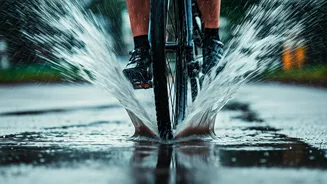
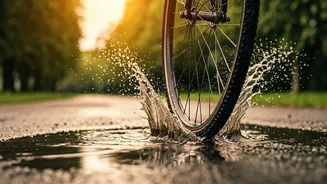
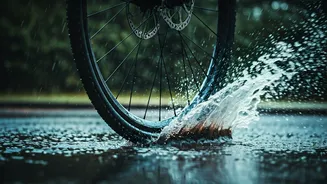
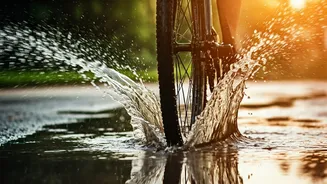
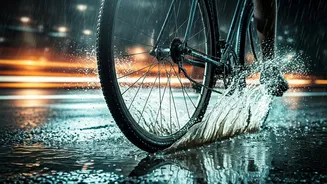
Riding in the rain requires a more cautious and defensive approach. Road surfaces become slick, especially right after it starts raining when oils rise to the surface. [7] Painted lines, manhole covers, and piles of wet leaves can be incredibly slippery, so try to avoid them. [7] It's tempting to splash through puddles, but you should steer clear; you never know what hazards like potholes might be hidden underneath. [1, 8] Your braking distance will also increase on wet roads. Whether you have rim or disc brakes, it takes longer to stop, so brake earlier and more gently than you normally would. [4] Avoid braking hard while turning; instead, reduce your speed before the corner and take it slowly. [5]
The Aftermath: Essential Post-Ride Care
What you do after your ride is just as important as what you do during it. Rainwater, mixed with road grit and grime, can be corrosive and cause significant wear to your bike's components if left unattended. [1] As soon as you get home, give your bike a quick rinse with a gentle spray of water to remove the worst of the muck; avoid using a high-pressure hose, which can force water into sensitive bearings. [3, 11] Pay special attention to the drivetrain. Use a degreaser to clean the chain, cassette, and chainrings before drying them thoroughly. [9, 15] Once clean and dry, lubricate your chain with a 'wet' lube, which is specifically designed to resist being washed off in rainy conditions. [2, 3] Wiping down the frame and other components will prevent rust and keep your bike running smoothly for your next ride. [16]