






The Green Festival of the Hills
Harela, which literally translates to “Day of Green,” is a festival deeply woven into the agricultural and cultural fabric of Uttarakhand, especially the Kumaon region. Celebrated on July 16th in 2026, it marks the onset of the monsoon and the beginning
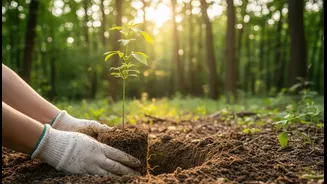
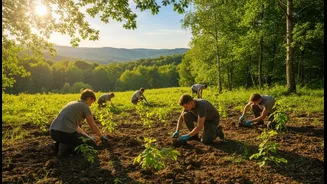
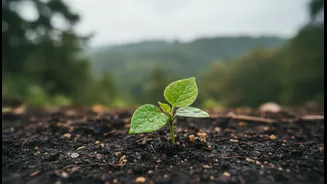
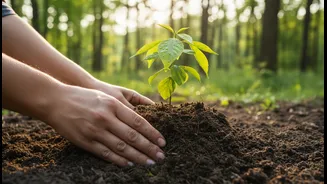
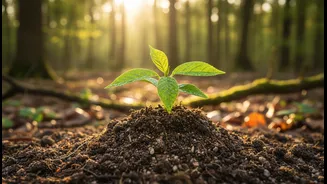
of the sowing season, tying cultural traditions to the rhythms of nature. For generations, the festival has symbolised hope for a bountiful harvest and prosperity, often commemorating the divine union of Lord Shiva and Goddess Parvati. A key tradition is planting saplings, an act that has evolved from a household ritual into a massive environmental campaign. This year, the state plans to plant millions of saplings, with the Uttarakhand forest department announcing a target of 59 lakh saplings as part of the celebration. This transforms a deeply personal, cultural moment into one of the state's largest annual afforestation drives, involving government departments, schools, and local communities.
India’s Plantation Paradox
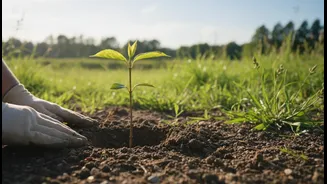
Across India, mass tree plantation drives are a common sight, launched with ambitious targets and significant fanfare. Yet, a critical gap exists between the number of saplings planted and the number that actually survive to become established trees. This is the country's plantation paradox. National data reveals a stark reality: survival rates can be alarmingly low. Some government-led drives report survival rates as low as 30-40%, meaning more than half the effort and resources are lost within the first few years. The reasons are systemic and recurring: a lack of post-plantation care, poor selection of species that are not native to the local ecology, community disengagement, and insufficient long-term monitoring. The focus often remains on the one-day event of planting rather than the multi-year commitment of nurturing a sapling into a tree. This turns many well-intentioned greening initiatives into mere photo opportunities, failing to deliver the intended ecological benefits of carbon sequestration, improved air quality, and biodiversity.
From Ritual to Responsibility
This is where the Harela model offers a compelling alternative. Unlike top-down directives, the festival’s sapling drive is rooted in cultural significance and community ownership. For the people of Uttarakhand, planting a tree during Harela is not just a government target; it is a tradition imbued with reverence for nature. This intrinsic motivation is a powerful driver for success. The state's long history of community-led forest management, particularly through institutions like Van Panchayats (village forest councils), provides a framework for this success. These local bodies empower villagers to manage and protect their surrounding forests, fostering a sense of stewardship that is often missing in externally-managed projects. Studies show that community-led conservation programs consistently report higher sapling survival rates, sometimes exceeding 80%, because the local population has a vested interest in the outcome. When a community plants a forest as part of a celebration, it is more likely to protect it. The focus naturally shifts from a day of planting to a lifetime of growth.
Beyond the Numbers Game
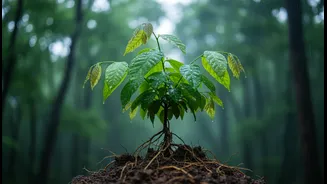
The spirit of Harela aligns with a crucial, emerging shift in environmental policy: prioritising quality over quantity. A sapling in the ground is a statistic; a thriving tree is an ecosystem. Recognizing this, officials in Uttarakhand are now stressing the importance of post-plantation care to improve survival rates. For the 2026 drive, district administrations are being directed to treat the event as a mass movement for conservation rather than a routine exercise. There's an increased focus on planting native and fruit-bearing species suited to local conditions and implementing real-time monitoring. In Dehradun district, for example, a special Green Control Room is being set up to conduct regular and strict monitoring of the month-long drive, ensuring the campaign's success is not limited to the act of plantation alone. This represents a move away from simply chasing large numbers and towards ensuring that each planted sapling contributes meaningfully to increasing the state’s green cover.