



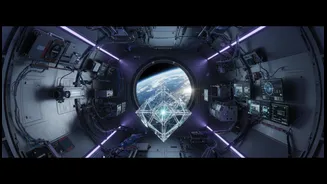


The Coolest Experiment in Space
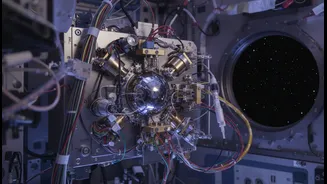
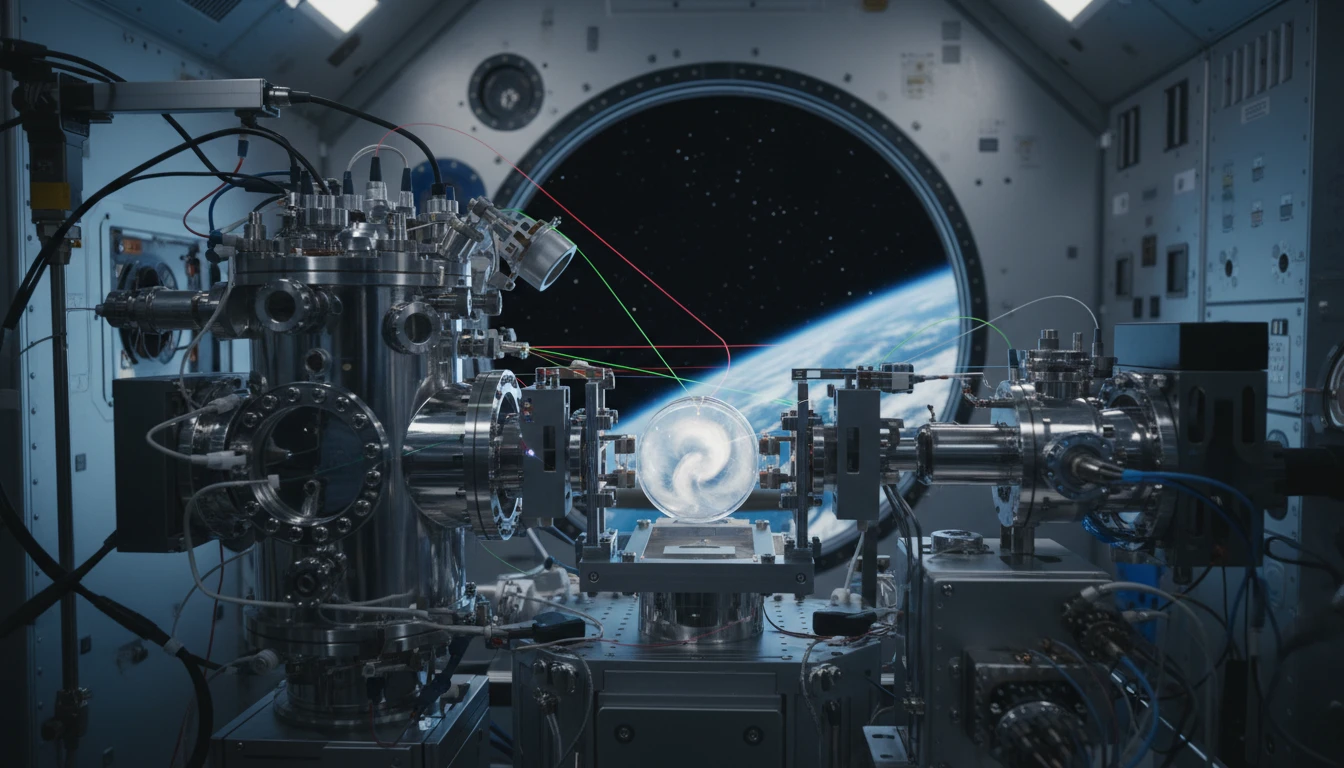
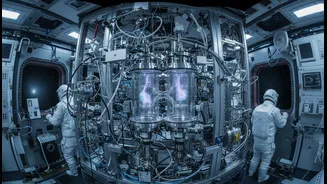
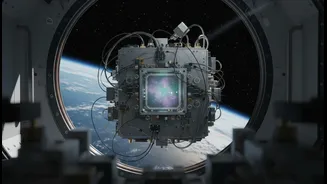
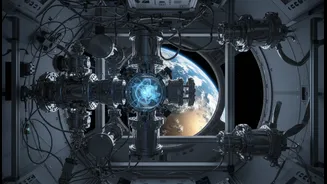
Inside the International Space Station (ISS) is a mini-fridge-sized box that is home to some truly extreme science. It's called the Cold Atom Lab (CAL), and its job is to get things, specifically atoms, colder than anywhere else in the natural universe.
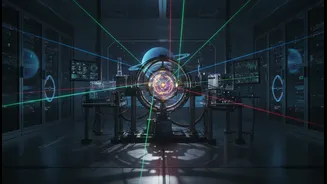
Since its installation in 2018, this remotely operated facility has been using lasers and magnetic fields to chill clouds of atoms like rubidium and potassium to temperatures just a fraction of a degree above absolute zero, the point where all atomic motion is supposed to cease. The goal is to study the strange and wonderful world of quantum mechanics in an environment free from the disruptive pull of Earth's gravity. Recent upgrades, installed by astronauts in 2026, have made the lab even more powerful, allowing scientists to probe deeper into the nature of matter.
Creating a Fifth State of Matter
When atoms get this cold, they stop behaving like individual particles bouncing around and start acting in unison, like a single giant "super atom" or wave. This exotic state of matter is called a Bose-Einstein Condensate (BEC), and it's where the rules of the quantum world become visible on a macroscopic scale. On Earth, gravity quickly pulls these delicate condensates apart, giving scientists only fractions of a second to study them. But in the microgravity of the ISS, BECs can be maintained for much longer — over 10 seconds in some cases. This extended observation time is a game-changer, allowing researchers to watch how these quantum waves evolve and interact without the constant interference from gravity, leading to more precise measurements and new discoveries.
The Quantum Sensing Revolution
This fundamental research into the behaviour of ultra-cold atoms is a critical pathfinder for a new class of technology: quantum sensors. These devices harness the peculiar properties of quantum mechanics—like superposition and entanglement—to measure quantities like time, gravity, and magnetic fields with unprecedented accuracy. Atom interferometers, a key type of quantum sensor, work by splitting and recombining atom waves. The way these waves interfere with each other is incredibly sensitive to the forces they experience. By creating larger, longer-lasting, and colder atom waves in space, scientists on the CAL team are refining the techniques needed to build the next generation of these ultra-precise sensors.
From Orbit to Everyday Life
While this might sound like abstract science, the applications for better quantum sensors are remarkably down-to-earth. The most significant is navigation. Quantum inertial sensors could provide navigation that is completely independent of GPS, a crucial advantage for submarines, aircraft, and even future autonomous vehicles that need to operate in areas where satellite signals are jammed or unavailable. These sensors could also revolutionize resource management by mapping underground water reserves or mineral deposits from orbit with incredible precision. In healthcare, the principles behind quantum sensing could lead to new forms of medical imaging, potentially allowing doctors to view the structure of a single molecule and diagnose diseases like Alzheimer's earlier than ever before.