






Meet Eka Robotics
Founded by MIT professor Pulkit Agrawal and former Google DeepMind researcher Tuomas Haarnoja, Eka Robotics is not just another automation company. The startup, based in Cambridge, Massachusetts, is on a mission to solve one of the most stubborn challenges
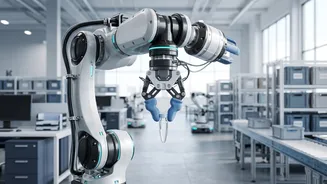
in robotics: dexterous manipulation. While industrial robots have been excellent at repetitive tasks in structured environments for decades, they falter when things are unpredictable. Eka is developing general-purpose robots designed to handle the variability of the real world, from picking delicate fruit to assembling complex electronics, with superhuman speed and reliability.
The Vision-Force-Action Breakthrough
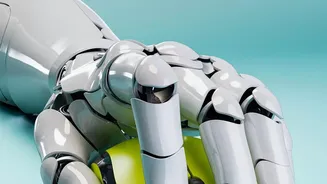
Eka's key innovation is its 'Vision-Force-Action' (VFA) model. Most robotic systems rely heavily on cameras (vision) to understand their environment. Eka's robots add a crucial third sense: force. By integrating highly sensitive force sensors into their grippers, the robots can feel how they are interacting with an object. This allows them to know if a grip is slipping, if an object is fragile, or how to apply pressure to insert a wire correctly. Co-founder Pulkit Agrawal explains that vision gets you close, but the 'last millimeter problem' is solved by feeling the physical interaction. This approach enables their robots to handle unfamiliar objects without needing to be retrained, a significant leap in flexibility.
Training Robots in Simulation
Instead of relying on humans to demonstrate tasks, Eka trains its AI models using reinforcement learning within a physics simulator. This allows the company to generate thousands of hours of robotic experience in just minutes, exposing the AI to millions of variations in objects, environments, and potential failures. This method of trial and error in a virtual world helps the robots build a kind of physical intuition. When this learned intelligence is transferred to a real-world robot, it can perform tasks with remarkable efficiency, reportedly picking up to 1,500 objects an hour with over 95% accuracy, more than double the rate of a human worker.
Why These Investors Matter
The $150 million Series A funding round was co-led by Andreessen Horowitz (often called a16z) and F-Prime Capital, the venture arm linked to Fidelity Investments. This isn't just any investment. Andreessen Horowitz is a legendary Silicon Valley firm known for early bets on companies like Facebook and Airbnb. Their backing is a powerful signal of a startup's potential. F-Prime Capital has a dedicated focus on robotics, publishing annual reports on the state of investment in the sector. Their portfolio includes other innovative robotics companies like RightHand Robotics and Burro. For both firms to lead the investment in Eka underscores a belief that the company has a truly transformative technology in a sector poised for explosive growth.
The Next Frontier for AI
This investment, which values Eka Robotics at $1.45 billion, marks a pivotal moment for 'physical AI'. While much of the recent focus in artificial intelligence has been on software like large language models, investors are now turning their attention to AI that can interact with the physical world. The new capital will allow Eka to scale its technology, expand the range of tasks its robots can perform, and accelerate deployment to industrial customers. Confidential pilot programs are already underway, with Eka's robots tackling tasks like picking and packing items and handling wires.