




More Than a Test Flight
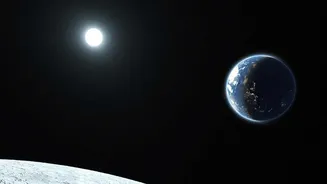
While the primary goal of Artemis II was to test the Orion spacecraft’s life-support, navigation, and communication systems with a human crew for the first time, the mission was also a significant scientific endeavour. The four-person crew had specific
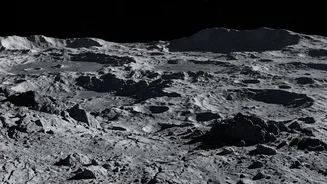
geological observation targets, using handheld cameras and the craft's external sensors to capture high-resolution imagery and data. Unlike robotic probes, the astronauts provided real-time descriptions of surface textures and colours, adding a crucial layer of human interpretation to the data. Their observations of features like ancient lava flows and impact craters will help scientists better understand the geological processes that have shaped the Moon over billions of years.
A New Look at an Ancient Giant
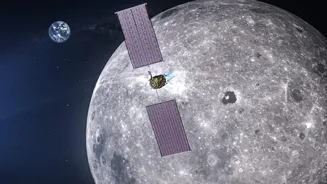
A key focus was the South Pole-Aitken (SPA) basin, one of the largest and oldest impact craters in the entire solar system. Stretching over 2,500 kilometres on the far side, it's a place of immense scientific interest because the colossal impact that created it may have dredged up material from the Moon's mantle. The imagery from Artemis II offers a fresh, detailed perspective on the composition and structure of this massive feature. Scientists are analysing this data to better understand the basin's makeup, which appears to be richer in iron and titanium than other parts of the Moon. This information complements recent analyses of lunar meteorites believed to have originated from the basin, which have dated the impact to a staggering 4.3 billion years ago. Understanding the SPA helps us piece together the violent early history of the solar system.
The Far Side's Enduring Mysteries
The far side of the Moon looks strikingly different from the near side we see from Earth. It is more heavily cratered, has a thicker crust, and lacks the large, dark volcanic plains, or 'maria', that are so prominent on the near side. For decades, scientists have debated why this is. One leading theory is that the thicker crust prevented magma from rising to the surface. Artemis II's observations of the far side's topography provide new data points to test this hypothesis. By studying the shape, depth, and distribution of craters without the volcanic resurfacing seen on the near side, scientists can build a more accurate timeline of the bombardment the Moon—and by extension, the early Earth—endured.
A Global Effort for a Lunar Future
The insights from Artemis II are not just for NASA; they are part of a global push in space exploration. India, which signed the Artemis Accords in 2023, is a key partner in this new era of lunar discovery. NASA has invited ISRO to participate in its Moon Base program, building on the success of missions like Chandrayaan and the collaborative spirit of the Accords. The data gathered by Artemis II, particularly regarding the far side and polar regions, will be vital for planning future missions, including India’s own ambitious Chandrayaan program and potential contributions to a sustained human presence on the Moon. The mission reinforces the idea that the future of space exploration is collaborative, with each new piece of knowledge benefiting all spacefaring nations.