






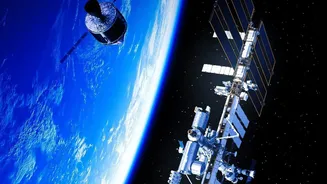
A Successful Spacewalk
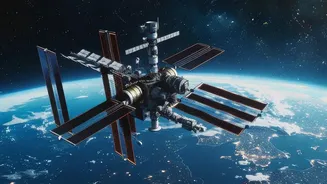
On Tuesday, August 25, NASA astronaut Anil Menon and European Space Agency (ESA) astronaut Sophie Adenot of France ventured outside the International Space Station (ISS) for a spacewalk lasting six and a half hours. Their primary mission was to install
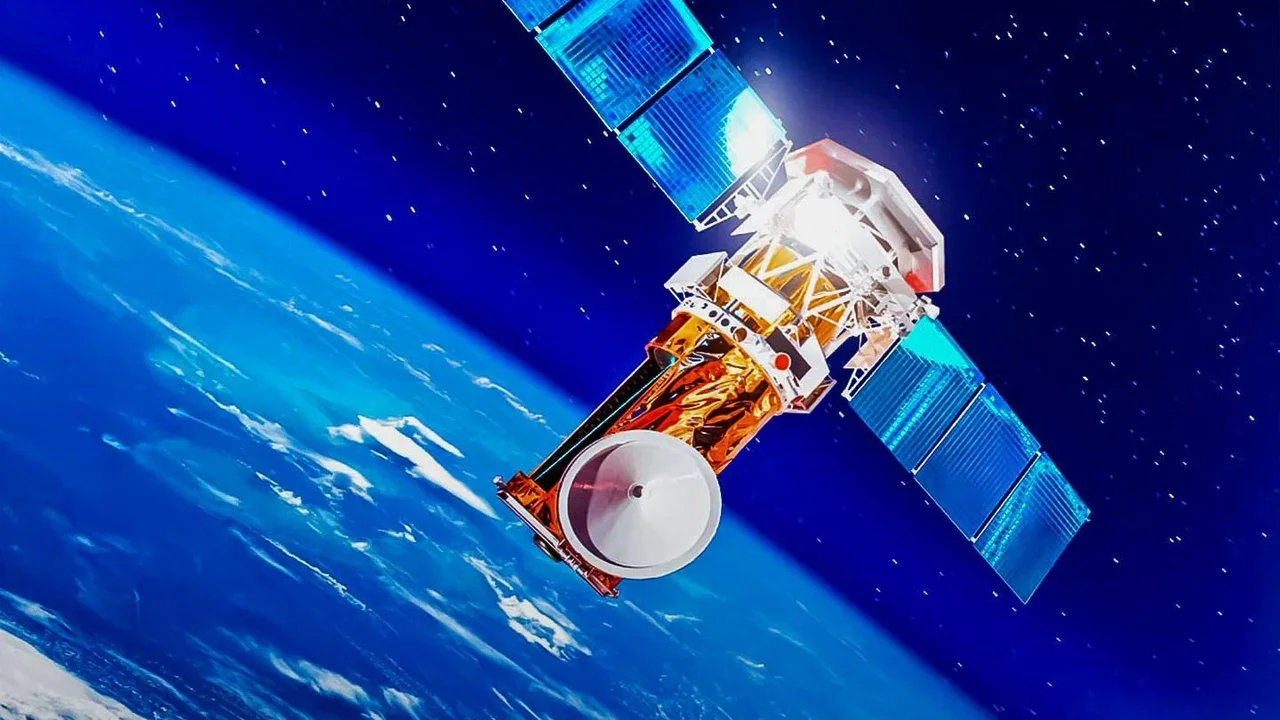
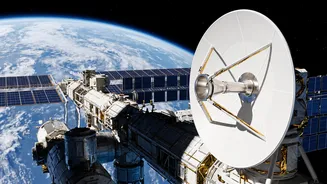
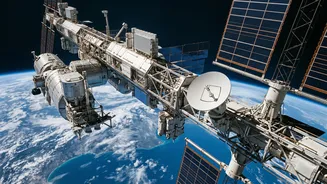
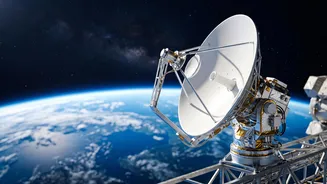
a new Space-to-Ground antenna, a vital piece of hardware for high-speed communication. This task was a continuation of a previous spacewalk on August 18, where the duo successfully removed the faulty antenna but ran out of time to install its replacement. The second attempt was a complete success, with the astronauts not only installing the new unit but also securing the failed antenna to a spare-parts platform on the station's main truss. Initial checks from Mission Control in Houston confirmed that the new antenna was receiving power and transmitting data, restoring full redundancy to the station's communication system.
What is the New Equipment?
The newly installed hardware is a replacement Space-to-Ground antenna that operates in the Ka-band frequency range. This isn't just a simple replacement; it represents a significant technological boost. This antenna, and others like the Columbus Ka-band (ColKa) terminal installed on the ESA's Columbus module, are part of an ongoing effort to modernize the ISS's data infrastructure. While the station's original systems were designed over two decades ago, the volume and complexity of scientific data have grown exponentially. These newer Ka-band systems allow for much higher bandwidth, essentially giving the orbiting laboratory a broadband-speed connection. They link with a network of relay satellites, such as NASA's Tracking and Data Relay Satellites (TDRS) and the European Data Relay System (EDRS), which then beam the information to ground stations.
A Game-Changer for Science in Orbit
Why is a faster connection so important? For the hundreds of experiments running on the ISS at any given time, the ability to send large amounts of data to Earth quickly is transformative. Previously, some data had to be physically stored on hard drives and returned to Earth on a capsule, a process that could take months. With the upgraded systems, researchers can get high-definition video and complex datasets almost in real-time. This allows scientists to monitor their experiments, make adjustments on the fly, and analyze results faster than ever before. For fields like materials science, human biology, and Earth observation, this accelerated feedback loop can dramatically speed up the pace of discovery. The recent upgrade ensures that the station’s communication capabilities can keep up with the demands of modern science.
Strengthening International Collaboration
This spacewalk was a clear demonstration of the international partnership that underpins the ISS. The operation involved an American astronaut from NASA and a French astronaut from ESA working in tandem, guided by a global team on the ground. Furthermore, the installation of hardware like the ColKa terminal gives ESA and its partner research institutions a sovereign, independent link to the Columbus laboratory. This reduces reliance on NASA's network and provides European scientists with dedicated, high-speed access to their experiments. This strengthening of distinct communication channels enhances the operational flexibility of the entire station, allowing more researchers and flight controllers across the globe to benefit from the unique research platform.