




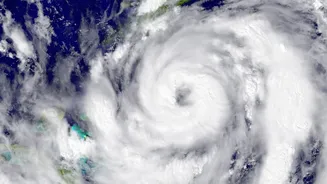


With Very Severe Cyclonic Storm Arnab making landfall on India's eastern coast, a massive mobilization is underway. Coastal states are on high alert, activating a well-rehearsed strategy of evacuations and preparedness aimed at a single goal: zero casualties.
The Storm's Arrival and Path
Cyclone Arnab, the first cyclonic storm of 2026 in the North Indian Ocean, completed its landfall process on the morning of October 28. The India Meteorological Department (IMD) confirmed that the 'very severe' cyclonic storm crossed the Andhra Pradesh and Yanam coasts between Bapatla and Visakhapatnam. At its peak during landfall, the system brought maximum sustained wind speeds of 125-135 kmph, with gusts reaching up to 150 kmph. After moving inland, the cyclone began to weaken into a 'severe' cyclonic storm and is expected to weaken further into a deep depression as it moves northwest. Extremely heavy rainfall warnings remain in effect for coastal Andhra Pradesh and southern Odisha.
States on High Alert
Andhra Pradesh and Odisha are bearing the brunt of the storm's immediate impact, with authorities placing coastal districts on the highest alert. Andhra Pradesh has seen widespread preparations, with a red alert issued for seven districts, including Kakinada, East Godavari, and Visakhapatnam, which are expected to see extremely heavy rainfall. In Odisha, southern districts like Malkangiri, Koraput, and Rayagada are bracing for heavy rainfall and strong winds as the system moves inland. The preparedness extends to other states as well, with alerts and precautionary measures activated in Telangana, Chhattisgarh, and West Bengal, as the storm's remnants are forecast to travel across central and northern India.
A Network of Shelters and Evacuations
The core of the government's response has been a massive evacuation effort, moving tens of thousands of people from low-lying and vulnerable areas to safety. Across Andhra Pradesh and Odisha, nearly 4,000 cyclone shelters have been made ready to house evacuees. Odisha alone prepared over 1,700 shelters, including 135 permanent structures and over 1,600 temporary safe locations. In Andhra Pradesh, officials worked to evacuate at least 89,000 people. Special attention is being given to vulnerable populations; officials in Andhra Pradesh identified 4,711 pregnant women to be shifted to safer healthcare facilities, while Odisha is monitoring the health of roughly 3,000 pregnant women.
Boots on the Ground: NDRF and a 'Zero Casualty' Goal
The response is guided by India's established 'zero casualty' policy for natural disasters, a strategy that has evolved significantly since the 1999 Odisha super cyclone. This proactive approach prioritizes preparedness and risk reduction over post-disaster relief. A multi-agency force has been deployed to manage the crisis. The National Disaster Response Force (NDRF) has deployed 31 teams across Andhra Pradesh, Odisha, Telangana, and Chhattisgarh. These are supported by dozens of State Disaster Response Force (SDRF) teams, fire services personnel, and local police. The Army, Navy, Air Force, and Indian Coast Guard also have rescue and relief teams on standby. These teams are equipped for road clearance, search and rescue, and restoring essential services once the storm passes.
Widespread Disruptions and Public Advisories
The cyclone has caused significant disruption to daily life. As a precaution, Indian Railways cancelled at least 50 trains in the region, and several flights were also cancelled. Authorities have imposed traffic restrictions on coastal roads and urged the public to postpone non_essential travel. Fishermen were ordered to return from the sea and secure their boats days in advance of the landfall. Officials are using a range of methods to keep the public informed, including SMS alerts and public announcements, urging residents to follow official advisories and cooperate with evacuation measures. In Andhra Pradesh, officials reported no loss of life in the initial hours after landfall, crediting the coordinated efforts of over 32,000 officials and staff.