


The Problem of Forward Contamination
Every time humans venture into space, we unintentionally bring along trillions of microscopic passengers. These microbes live on our skin, in our equipment, and even inside our spacecraft. The unavoidable transfer of life from Earth to another celestial
body is known as "forward contamination." While the vacuum of space is incredibly harsh, recent studies have raised concerns that some of our planet's hardiest organisms could survive the trip. This isn't just a hypothetical problem; it poses a direct threat to the integrity of scientific research on the Moon and, eventually, Mars. If we are searching for signs of past or present life, finding microbes we brought ourselves would be a monumental error, muddying the scientific record for generations.
Why the Lunar South Pole Is a Special Case
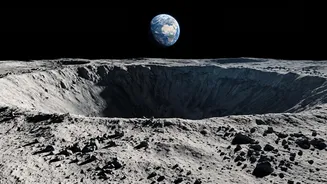
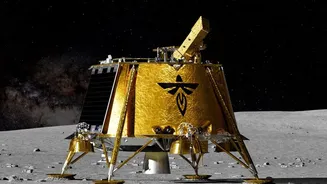
The focus of this concern is the Moon's south pole, the target destination for upcoming Artemis missions. Unlike the equatorial regions visited by the Apollo astronauts, the south pole is a land of extreme light and shadow. Due to the Moon's slight axial tilt, the sun barely peeks over the horizon, creating what are known as Permanently Shadowed Regions (PSRs). These are craters and depressions that haven't seen direct sunlight in billions of years. Scientists believe these ultra-cold traps could hold pristine water ice and a preserved chemical record of the early solar system. These PSRs are incredibly valuable scientific sites, but their unique, sheltered conditions are also the very reason they might offer a survivable niche for Earth's microbes, protecting them from lethal radiation and extreme temperatures.
Earth's Toughest Travelers
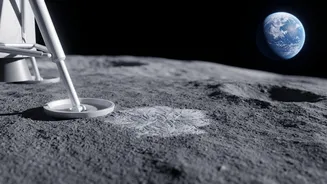
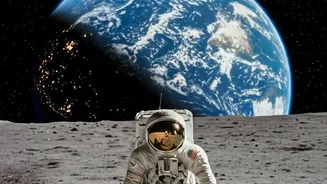
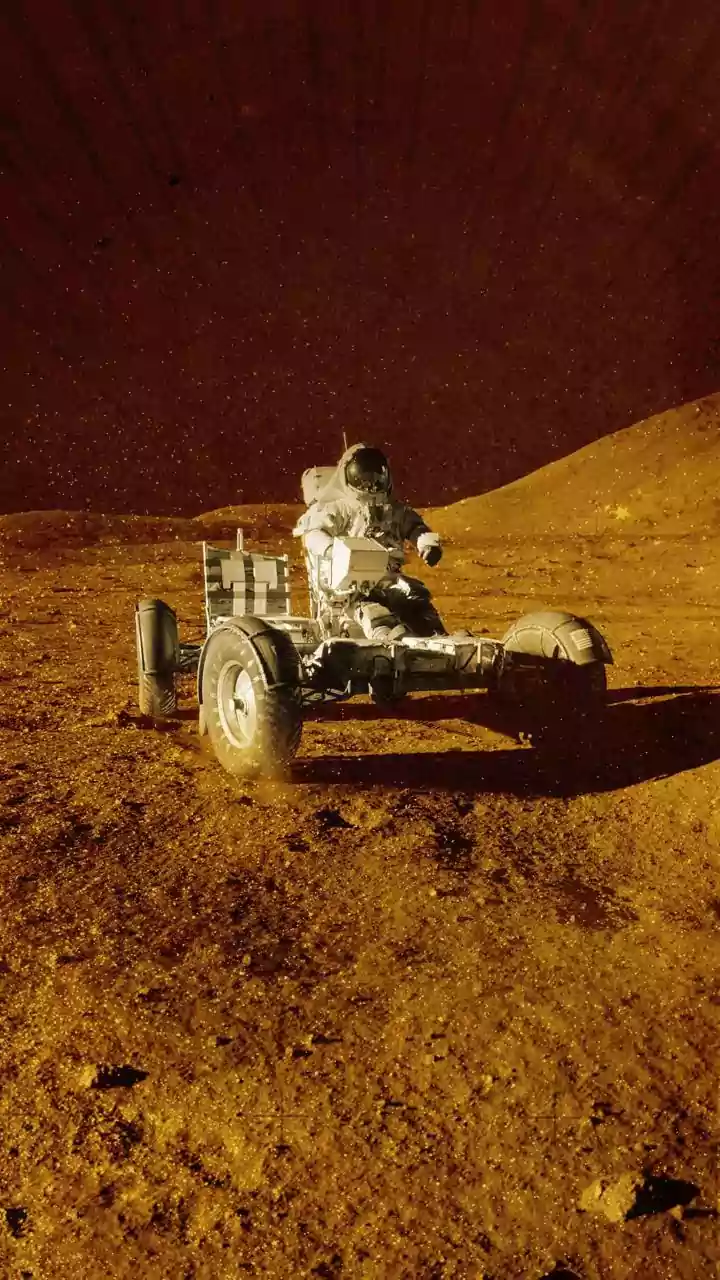
So, what kind of life could survive such an extreme journey? Researchers have identified several candidates, including bacteria and fungi commonly found in spacecraft environments or on human skin. A recent NASA-led study published in Science Advances modeled the survival chances for microbes like Aspergillus niger (a common fungus) and Deinococcus radiodurans (a famously radiation-resistant bacterium). The simulations showed that while these organisms are unlikely to grow or thrive, they could enter a dormant state and survive, especially within the PSRs. In some cases, microbes could remain viable for weeks or even months. Even an astronaut's bootprint could create a small, shaded refuge, potentially harboring these hitchhikers.
The High Stakes for Science
The primary risk is a false positive in the search for extraterrestrial life. If future missions detect organic molecules or dormant microbes, it would be incredibly difficult to prove they are truly lunar in origin and not just contamination from a previous mission. This could derail one of the most profound scientific quests in human history. It's not just about finding life; scientists also want to study the unique chemistry of the lunar soil, or regolith, to understand the history of the Moon and the solar system. Earth-based contamination could alter this pristine environment before we even have a chance to study it properly. The concern extends beyond the Moon, serving as a crucial lesson for future crewed missions to Mars, where the potential for finding life is considered even higher.
Planetary Protection Protocols
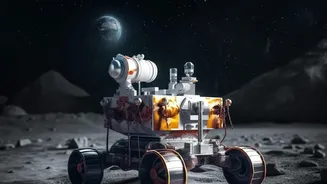
Space agencies like NASA have long been aware of this risk and operate under strict "Planetary Protection" policies. Robotic spacecraft sent to sensitive locations like Mars are often sterilized by baking them at high temperatures. However, this isn't possible for crewed missions. For the Moon, the international body COSPAR has designated the polar regions as scientifically sensitive, requiring missions to document their full organic inventory. This means carefully tracking everything brought to the surface. As we increase the frequency of missions with both national agencies and commercial partners, preventing contamination becomes a more complex operational challenge, requiring stringent cleaning protocols, advanced sterilization methods like Vapor Hydrogen Peroxide, and a new level of diligence to protect these unique lunar environments for future discovery.