





The Calorie Question
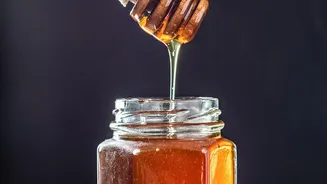
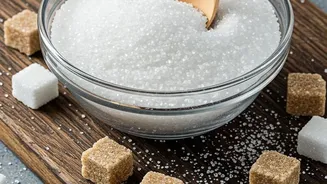
A glance at the numbers shows that, tablespoon for tablespoon, honey is more calorie-dense than granulated sugar. A tablespoon of honey contains about 64 calories, while the same amount of white sugar has around 49 calories. This difference is primarily
because honey is denser. However, honey is also sweeter than sugar due to its higher fructose content. This means you might use less of it to achieve the same level of sweetness, which could potentially balance out the calorie difference in practice.
A Different Kind of Sweetness
The main difference between the two lies in their chemical structure. Table sugar, or sucrose, is a disaccharide made of 50% glucose and 50% fructose bonded together. Your body must break this bond during digestion before it can use the energy. Honey, on the other hand, is a mix of separate monosaccharides—primarily fructose (around 40%) and glucose (around 30%), along with water and small amounts of other sugars. Because these sugars are already separate, they are more readily absorbed by the body.
Impact on Blood Sugar
The Glycemic Index (GI) measures how quickly a food raises blood sugar levels. Table sugar (sucrose) has a GI of around 65. The GI of honey varies depending on the type, but it generally falls in a lower to similar range, with an average around 58. This means honey may raise blood sugar slightly more slowly than table sugar. The effect is due to its higher fructose content; fructose is metabolized by the liver and doesn't cause the same immediate spike in blood glucose as pure glucose does. However, for anyone monitoring their sugar intake, both will impact blood sugar levels.
Beyond Just Sugar: Micronutrients
This is where honey has a slight edge. Refined table sugar is often called 'empty calories' because it offers no additional nutrients. Raw, unprocessed honey, however, contains trace amounts of vitamins, minerals, enzymes, and amino acids. It also contains antioxidants like flavonoids. It's important to keep this in perspective; the amounts are very small, and honey cannot be considered a significant source of these nutrients. Processing honey with heat (pasteurisation) can also reduce or destroy some of these beneficial compounds, like enzymes and antioxidants.
How to Read the Label in India
On an Indian food label, both honey and sugar fall under 'Total Sugars'. The crucial line to check is 'Added Sugars'. For a product like pure honey, the total sugar and added sugar values will be the same, as it is considered an added sugar when used as an ingredient. When reading an ingredient list, remember that sugar has many names: sucrose, glucose, fructose, corn syrup, maltodextrin, and, of course, honey are all forms of sugar. Ingredients are listed by weight, so if honey or sugar appears as one of the first three ingredients, it makes up a significant portion of the product.
The Verdict: Natural vs. Refined
While honey, especially raw honey, offers marginal benefits over refined sugar—such as a slightly lower GI and trace amounts of nutrients and antioxidants—it is still, fundamentally, a sugar. Your body metabolises the fructose and glucose in honey much like it does the fructose and glucose from table sugar. Excessive consumption of any added sugar, including honey, can contribute to health issues like weight gain, type 2 diabetes, and heart disease. The biggest difference comes down not to the type of sugar, but the total amount consumed. Moderation remains the most important factor for both.