


The Sun's Violent Outbursts
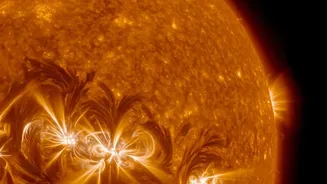
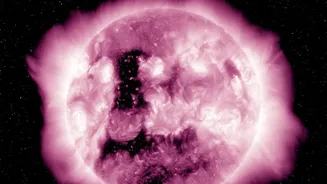
The Sun is not always the calm, steady presence it appears to be. It periodically unleashes solar storms, the most powerful of which are called Coronal Mass Ejections (CMEs). A CME is a massive eruption of magnetised plasma from the Sun's outer atmosphere,
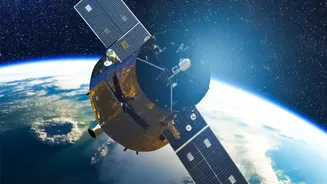
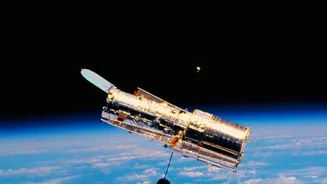
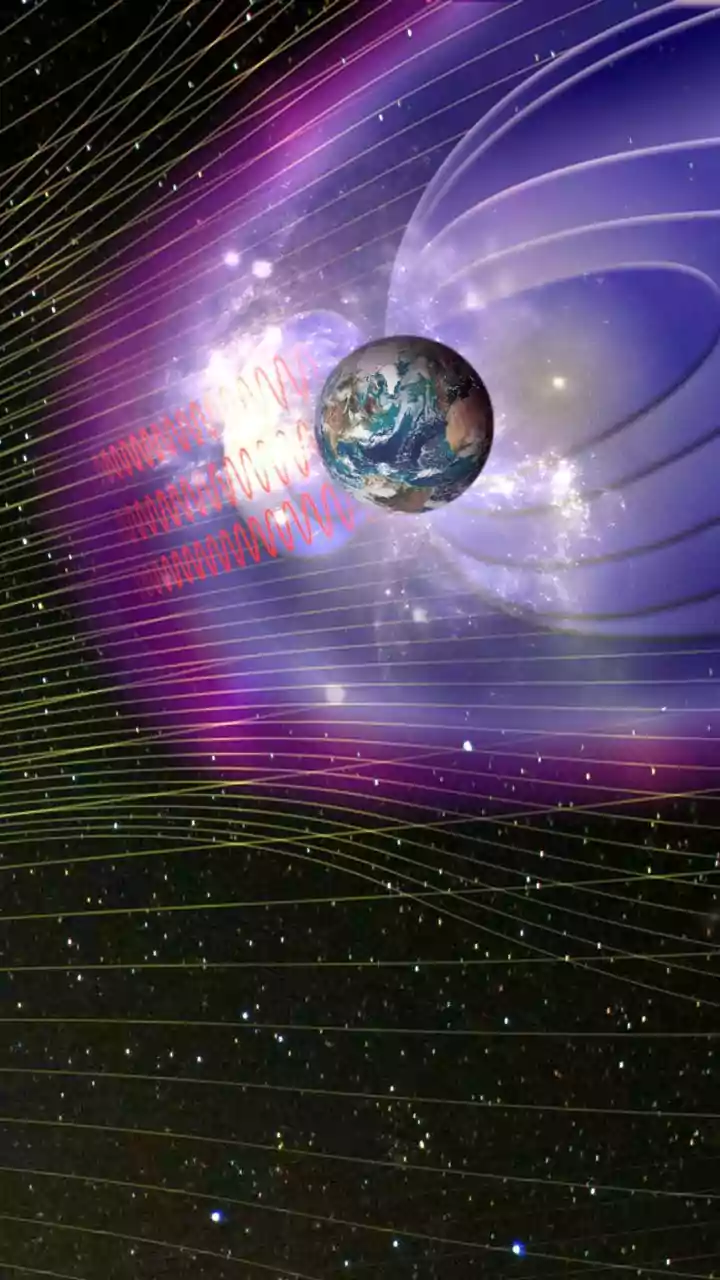
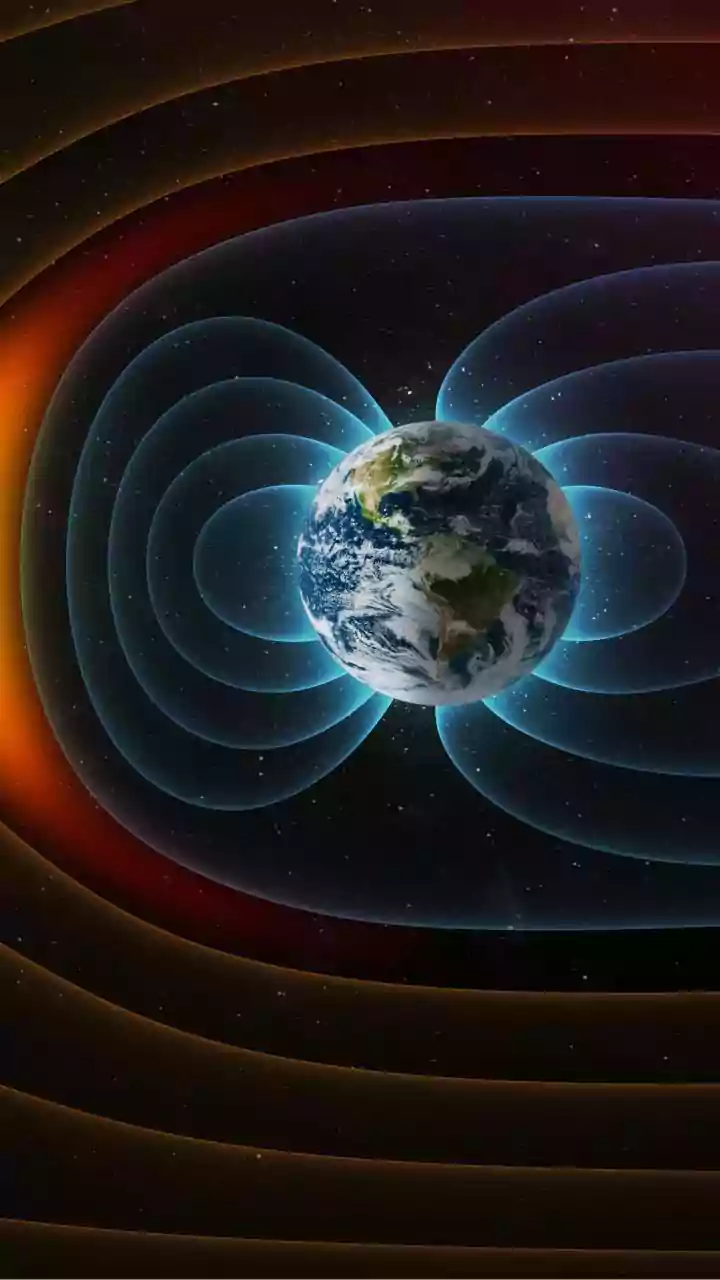
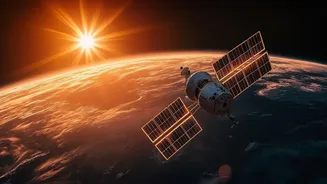
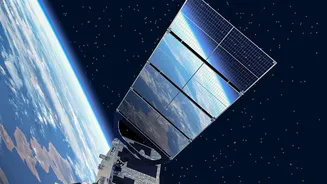
the corona. These billion-tonne clouds of charged particles are hurled into space at speeds that can exceed two million miles per hour. If one of these storms is aimed at Earth, it can have serious consequences. While our planet’s magnetic field and atmosphere protect us on the ground, assets in space are far more vulnerable. For satellites, this can mean anything from degraded solar panels and scrambled electronics to being pushed off-orbit. For astronauts, especially those outside Earth's protective magnetic field on missions to the Moon or Mars, the radiation from a CME can be extremely dangerous.
The Challenge of Staring at the Sun
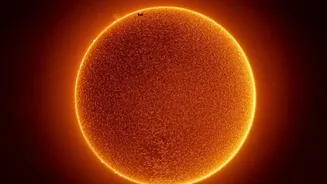
Detecting a CME before it's too late presents a fundamental problem: they originate in the Sun's corona, a region of the solar atmosphere that is about a million times fainter than the Sun's bright surface, or photosphere. Trying to spot a faint CME leaving the Sun is like trying to see a firefly next to a powerful searchlight. The overwhelming glare of the photosphere makes direct observation of the much dimmer corona impossible under normal circumstances. The only time the corona is visible from Earth with the naked eye is during a total solar eclipse, when the Moon perfectly blocks the Sun's bright face. But waiting for a natural eclipse to happen is not a practical strategy for space weather forecasting.
The Coronagraph: An Artificial Eclipse
To solve this problem, scientists developed the coronagraph, first invented by Bernard Lyot in 1931. A coronagraph is a special telescopic instrument designed to create an artificial eclipse. It uses a precisely positioned opaque disc, called an occulting disk, to block the direct light from the Sun's photosphere. This is conceptually similar to holding your thumb up to block the Sun's glare to see something in the sky next to it. By blocking the central bright light, the coronagraph allows the much fainter light of the corona to be seen and imaged. Modern space-based coronagraphs, like those on the joint NASA/ESA SOHO satellite and newer instruments like NOAA's CCOR, are our primary tools for spotting CMEs.
From Detection to Early Warning
When a satellite-based coronagraph observes a CME billowing out from the Sun, it doesn't just see the event; it captures a sequence of images. Forecasters at agencies like NOAA's Space Weather Prediction Center (SWPC) analyse this imagery to determine the CME's size, speed, and direction. This analysis is critical to determine if the storm is headed towards Earth. Because the CME's particles travel significantly slower than the speed of light, seeing the eruption gives us a crucial head start. The light from the event reaches the satellite's camera almost instantly, while the particle cloud itself can take anywhere from one to five days to travel to Earth. This time gap provides a vital warning window, allowing for preparations to be made. Some satellites closer to Earth, like the DSCOVR satellite, can provide a more imminent warning of 15 to 60 minutes when the shockwave arrives.
Taking Protective Action
Once an Earth-directed CME is detected and a warning is issued, satellite operators and space agencies can take action to mitigate the potential damage. For crucial and expensive satellites, operators can put them into a protective 'safe mode,' shutting down non-essential and sensitive electronics to prevent them from being fried by electrical surges or radiation damage. For astronauts, particularly those on missions beyond low Earth orbit, this warning is a literal lifesaver. Upon receiving a solar storm alert, the crew can retreat to specially designated 'storm shelters' within their spacecraft. These areas are fortified with extra shielding—often using materials already on board like water containers and supplies, as hydrogen-rich materials are effective at blocking solar particles—to minimise their radiation exposure.
India's Eye on the Sun: Aditya-L1
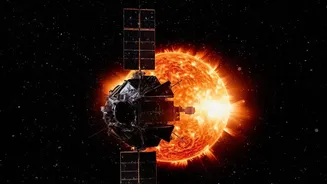
India has become a key player in this global effort with its Aditya-L1 mission. Launched by ISRO in 2023, Aditya-L1 is the nation's first dedicated solar observatory, positioned 1.5 million kilometres from Earth at the Sun-Earth Lagrange point 1 (L1). This unique vantage point allows for a continuous, uninterrupted view of the Sun. A primary instrument on board is the Visible Emission Line Coronagraph (VELC), which observes the corona and CMEs, contributing vital data to the global network of solar observatories. By studying the dynamics of the corona and the initiation of CMEs, Aditya-L1 not only enhances our fundamental understanding of the Sun but also improves our space weather forecasting capabilities.