





India’s Audacious Lunar Roadmap
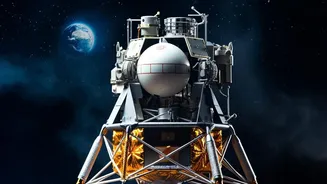
The Indian Space Research Organisation (ISRO) has its sights set firmly on the Moon. Fresh off the success of its Chandrayaan-3 mission, which made India the first nation to land a craft near the lunar south pole in 2023, the agency has laid out an ambitious
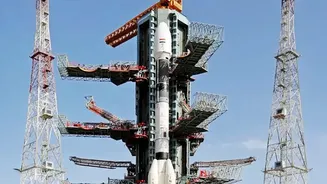
long-term vision. This roadmap includes landing an Indian astronaut on the Moon by 2040 and, around the same timeframe, constructing a lunar-orbiting space station. The ultimate goal is to establish a permanent surface base before 2050. These plans are not just aspirational; they are being backed by a series of methodical precursor missions. This includes a robotic sample-return mission slated for the late 2020s to bring back materials from the Moon's polar regions and the continued development of the Gaganyaan program, which aims to send Indian astronauts into Earth orbit. While Gaganyaan has faced scheduling adjustments to ensure safety, its progress is steady, with the first crewed flight now targeted for 2027.
The American Connection: More Than Just Handshakes
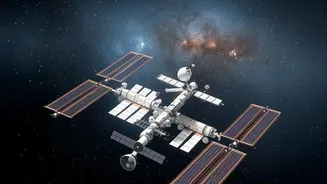
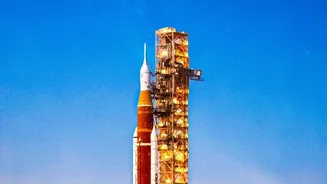
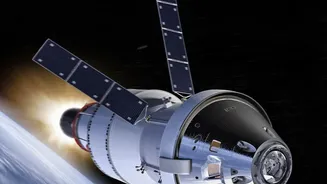
This lunar ambition is unfolding in lockstep with a rapidly expanding U.S.-India partnership. In early August 2026, during a joint working group meeting, NASA formally invited ISRO to participate in its own Moon Base program. This invitation is a cornerstone of the Artemis Accords, a U.S.-led framework for responsible space exploration, which India joined in 2023. The collaboration is already yielding tangible results. A joint mission called NISAR (NASA-ISRO Synthetic Aperture Radar) was launched in July 2025, representing a landmark cooperative Earth-observation project. More significantly, Indian astronauts have been training at NASA's Johnson Space Center for a joint mission to the International Space Station (ISS), facilitated by Axiom Space. This hands-on experience in human spaceflight is invaluable for ISRO as it develops its own crewed capabilities for future lunar missions. The partnership operates under a formal Strategic Framework for Human Spaceflight Cooperation, designed to ensure the two agencies can work together seamlessly.
A New Kind of Space Race
The tightening of the U.S.-India space alliance is about more than shared scientific curiosity; it’s a strategic move on the geopolitical chessboard. Space is increasingly seen as a domain of strategic competition, and the Artemis Accords are viewed by many as a U.S.-led coalition of like-minded, democratic nations. Notably, major space powers like China and Russia are not part of this framework. By partnering with India—a rising and proven space power—the U.S. strengthens a bloc committed to principles like transparency and interoperability. This cooperation is a key pillar of the broader U.S.-India Initiative on Critical and Emerging Technology (iCET), recently rebranded as TRUST (Transforming the Relationship Utilizing Strategic Technology), which aims to counter China's influence and build secure technology supply chains. For the U.S., a strong ISRO is a valuable partner in ensuring that the future rules of space are written by a coalition of democracies.
Challenges on the Horizon
Despite the momentum, the path to a moon base is fraught with immense technical and financial challenges. Building a permanent habitat on the lunar surface is an undertaking orders of magnitude more complex than a robotic landing. It requires heavy-lift launch vehicles, advanced life support systems, and a sustained budget that can weather political changes over decades. India, while excelling at cost-effective robotic missions, will need to scale its capabilities and investment significantly. Furthermore, India must navigate the complexities of international collaboration carefully. While joining the NASA-led moon base program offers access to technology and experience, some analysts in India caution that ISRO must protect its own strategic autonomy and not become locked into another nation's technology ecosystem. Balancing the benefits of partnership with the need to maintain an independent path will be crucial as India charts its course back to the Moon and beyond.