







The Cosmic Needle in a Haystack
Finding a potentially hazardous asteroid is a monumental task. These objects, known as Near-Earth Objects (NEOs), are often small, dark, and moving at incredible speeds. The ones that pose the greatest challenge are those with orbits that bring them towards
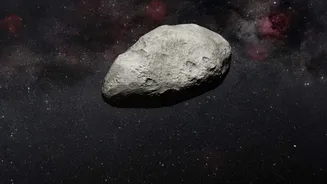
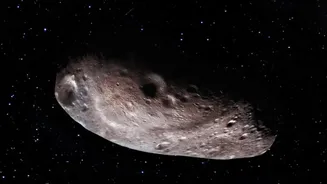
Earth from the direction of the Sun. Ground-based telescopes are blinded by the Sun's glare, making this a significant blind spot in our planetary defence network. Even for asteroids approaching from the night side, their detection depends on seeing the faint sunlight they reflect. Many asteroids are darker than coal, making them incredibly difficult to spot against the blackness of space. Furthermore, their trajectories can be highly elliptical, meaning they spend most of their time far away from Earth, only becoming visible when they make a close, fast approach. This combination of factors can shrink the warning time from years to mere weeks or days.
Today's Sky-Scanning Sentinels
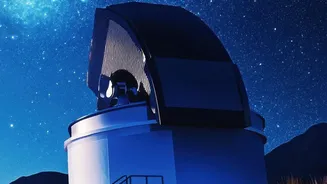
Currently, a global network of survey telescopes acts as our first line of defence. Projects like the Catalina Sky Survey and Pan-STARRS systematically scan the night sky, taking multiple images of the same patch minutes apart. By comparing these images, specialised software can identify points of light that have moved relative to the background stars. This is the classic method of asteroid hunting. Once a candidate is flagged, its position is sent to the Minor Planet Center, which coordinates follow-up observations from observatories around the world. These additional data points allow astronomers to refine the object's orbit and determine if it poses a threat. Systems like NASA's Scout software can quickly analyze these preliminary orbits to identify imminent impactors and prioritize them for further study.
A New Generation of Celestial Guards
To counter the limitations of ground-based observation, a new generation of asteroid hunters is being deployed. The Vera C. Rubin Observatory, with its enormous 8.4-meter mirror and the world's largest digital camera, is set to revolutionize the field. It will survey the entire southern sky every few nights, detecting objects far fainter and more distant than current systems can. Even in its preliminary testing phases, Rubin has already discovered thousands of previously unknown asteroids, demonstrating its immense potential. Looking ahead, NASA's NEO Surveyor space telescope, slated for launch no earlier than 2027, will be a game-changer. Positioned at a stable point between the Earth and the Sun, it will use heat-sensing infrared detectors to spot asteroids. This method is particularly effective because it can find dark asteroids that reflect little sunlight but glow with absorbed heat, and it can search in the direction of the Sun, closing a critical gap in our detection capabilities.
The Power of Algorithms and People
The sheer volume of data produced by modern sky surveys is too vast for humans to analyze alone. This is where artificial intelligence and machine learning are becoming indispensable. AI algorithms can sift through massive datasets in a fraction of the time it would take a person, identifying the faint streaks of light that indicate a moving asteroid. Programs with names like THOR (Tracklet-less Heliocentric Orbit Recovery) have successfully mined archival telescope images, uncovering tens of thousands of asteroids that were previously missed. These AI tools act as powerful assistants, flagging potential candidates for human astronomers to verify. This partnership between human expertise and machine efficiency is crucial. At the same time, a dedicated community of amateur astronomers also plays a vital role, conducting follow-up observations and sometimes even making their own discoveries, contributing to this global effort of planetary defence.