

The Gentle Spine Mobiliser: Cat-Cow Stretch
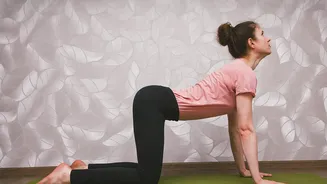
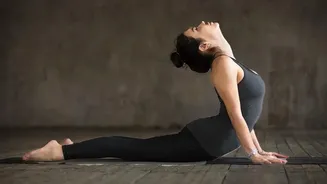
One of the best ways to wake up your spine and relieve back tension is the Cat-Cow stretch (Marjaryasana-Bitilasana). This gentle, flowing movement is perfect for starting your day or as a break from prolonged sitting. It helps increase spinal flexibility,
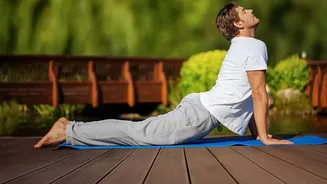
stretches the neck and back, and encourages a connection between movement and breath. To begin, position yourself on your hands and knees in a 'tabletop' position, with wrists under shoulders and knees under hips. As you inhale, drop your belly, lift your chest and chin, and look up, creating a gentle arch in your back (Cow Pose). As you exhale, round your spine toward the ceiling, tuck your chin to your chest, and press the floor away (Cat Pose). Repeating this fluid motion for 8-10 breaths can help prevent back pain and improve posture.
The Full-Body Rejuvenator: Downward-Facing Dog
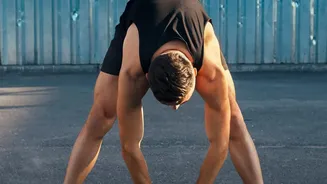
Downward-Facing Dog (Adho Mukha Svanasana) is a foundational yoga pose for good reason. It provides a comprehensive, full-body stretch that targets some of the most common areas of tightness: the hamstrings, calves, shoulders, and spine. To get into the pose, start on your hands and knees. Tuck your toes, and then lift your hips up and back, forming an inverted V-shape with your body. Spread your fingers wide and press firmly into your hands. For beginners, it's helpful to keep the knees slightly bent to focus on lengthening the spine. You can 'pedal' your feet by bending one knee and then the other to deepen the stretch in your calves and hamstrings. Hold for 30 seconds, breathing deeply to release tension.
The Ultimate Rest Position: Child's Pose
Child’s Pose (Balasana) is a deeply restorative posture that offers a gentle stretch for the hips, thighs, and lower back. It’s an excellent pose for calming the mind and relieving stress and fatigue. To practice it, start on your hands and knees. Bring your big toes to touch and spread your knees wide, then sit back on your heels. Fold forward, resting your torso between your thighs and your forehead on the floor. Your arms can be stretched out in front of you or rested alongside your body with palms facing up. Focus on your breathing, allowing your back to expand with each inhale and soften with each exhale. Stay here for at least 30 to 60 seconds to feel your muscles release.
The Hip-Flexor Release: Low Lunge
Hours of sitting can lead to incredibly tight hip flexors, which can contribute to lower back pain. The Low Lunge (Anjaneyasana) is a fantastic counter-pose to all that sitting. Starting from Downward-Facing Dog, step your right foot forward between your hands. Lower your left knee to the floor, making sure your right knee is stacked directly over your right ankle. You can keep your hands on the floor or bring them to your right knee for support. You should feel a stretch along the front of your left thigh and hip. Hold for about 30 seconds, breathing into the sensation, before switching to the other side. This pose is crucial for anyone who spends a lot of time in a chair.
The Deep Hip Opener: Seated Pigeon Pose
For a deeper hip stretch that targets the glutes and outer hips, the Seated Pigeon Pose is highly effective and can be more accessible for beginners than the full version. While sitting on a chair, place both feet flat on the floor. Cross your right ankle over your left thigh, just above the knee, creating a 'figure-four' shape. Keeping your spine straight, you can gently press on your right knee or lean forward from your hips to intensify the stretch. You will feel this in your right glute and hip. Hold for 15-30 seconds, then repeat on the other side. This simple modification makes a powerful hip-opening pose available anywhere, even at your desk.