



Understanding Autumn Aches
If your knees, hips, and other joints feel creakier on cool mornings, you're not imagining it. While the exact science is still debated, a leading theory points to changes in barometric pressure. When atmospheric pressure drops with cooler weather, the tissues
and muscles around your joints may expand slightly, creating a sensation of tightness. Cold temperatures also cause muscle tissue to contract and lose some elasticity. This can thicken the natural lubricating fluid in your joints, known as synovial fluid, leading to less smooth movement and that familiar stiff feeling. Reduced blood flow to your extremities in the cold can further contribute to stiffness in your muscles and joints.
The Non-Negotiable Warm-Up
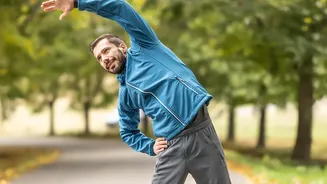
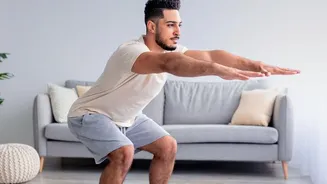
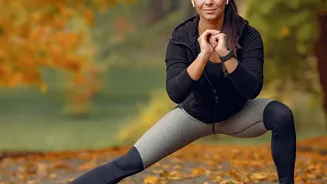
The single most important step to protect your joints in the cold is a proper warm-up. Cold muscles are tight muscles, making them more prone to injury. A good warm-up increases your body temperature, boosts blood flow to your muscles, and prepares your heart and lungs for the effort ahead. Skip the old-school static stretches where you hold a position. Instead, focus on dynamic stretching, which involves active movements that take your joints through their full range of motion. This is like a gentle rehearsal for your workout. Spend 5 to 10 minutes on movements like leg swings, arm circles, high knees, walking lunges with a torso twist, and side shuffles. If it's particularly chilly, consider doing your warm-up indoors before heading out.
Dress in Smart Layers
Dressing correctly is key to managing your body temperature and keeping joints warm. The goal is to trap heat without causing you to overheat and become drenched in sweat, which can make you cold as you cool down. Think in three layers. Your base layer, closest to your skin, should be made of a moisture-wicking synthetic fabric like polyester or a soft merino wool, not cotton, which holds moisture. Your middle layer should be for insulation, such as a fleece or a light insulated jacket. The outer layer should be a windproof and waterproof shell to protect you from the elements. You can always remove a layer as you warm up and tie it around your waist.
Hydrate for Joint Health
Hydration is often associated with summer heat, but it's just as crucial in the cold. You still lose fluid through sweat and your breath, and the dry autumn air can speed up evaporation, making it easy to become dehydrated without realising it. Dehydration can significantly impact your joints. The synovial fluid that lubricates and cushions your joints is primarily made of water. When you're dehydrated, this fluid can become less effective, increasing friction, stiffness, and discomfort. Proper hydration also helps flush out waste products that can contribute to inflammation. Be sure to drink water before, during, and after your workout to keep your joints moving smoothly.
Don't Skip the Cool-Down
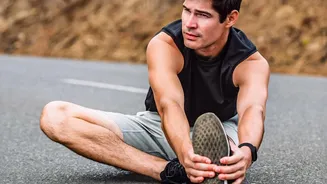
Just as you ease your body into a workout, you need to ease it out. Once you stop moving, the chill can set in quickly, but it's vital to complete your session with a cool-down. This helps transition your muscles back to a relaxed state and can reduce soreness later. This is the time for static stretching, where you hold a stretch for a set period. Performing these stretches while your muscles are still warm from the workout helps improve your long-term flexibility and keeps muscles from tightening up as they cool. Focus on the major muscle groups you used during your workout, holding each stretch for 20-30 seconds without bouncing.