





The Unseen Enemy: Space Radiation
Beyond the protective shield of Earth's magnetic field and atmosphere lies a harsh environment filled with radiation. This isn't a single threat, but two main types: Galactic Cosmic Rays (GCRs) and Solar Energetic Particles (SEPs). GCRs are high-energy
particles, remnants of distant supernovae, that are a constant, penetrating background presence. SEPs are bursts of lower-energy particles, mostly protons, unleashed by the Sun during unpredictable solar flares and coronal mass ejections. A trip to Mars means navigating through this constant shower of GCRs with the added risk of sudden, intense storms of SEPs, both of which can wreak havoc on technology and biology.
Robots on the Front Line
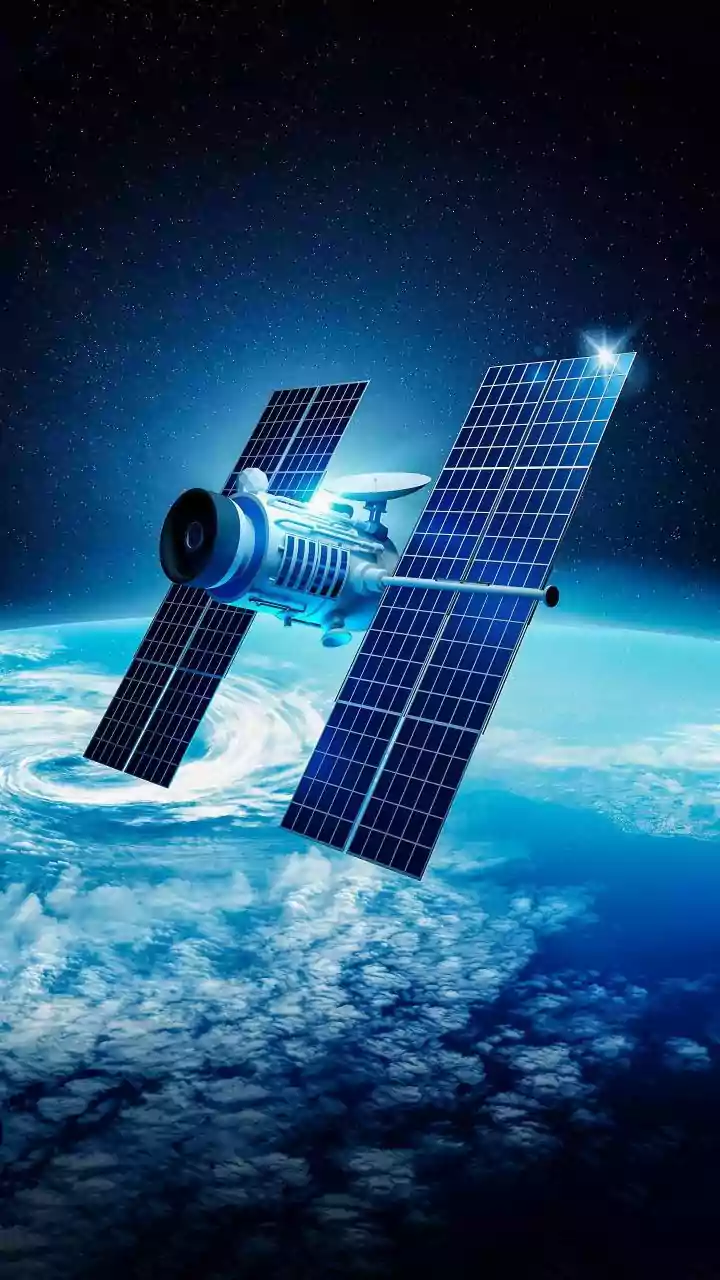
For robotic explorers like the Perseverance and Curiosity rovers, radiation is a persistent nuisance that can cause significant problems. High-energy particles can zip through standard electronics, corrupting data in memory, triggering false commands, or causing the onboard computers to crash and enter 'safe mode'. This is known as a single-event effect (SEE). Over the long term, the cumulative exposure, or total ionizing dose (TID), degrades electronic components, accelerating their aging process and potentially leading to permanent failure. While not immediately catastrophic in the same way it is for humans, a mission-critical system failure due to radiation could spell the end for a multi-billion dollar robotic endeavour.
Hardening the Machines
Engineers don't send consumer-grade electronics to Mars. Robotic missions rely on 'radiation-hardened' components. This involves several strategies. At the chip level, circuits are designed from the ground up to be more resistant to radiation damage. Another key technique is redundancy; for instance, using three identical circuits and a voting system, so that if one is hit by a particle and gives a wrong result, the other two can overrule it. Shielding with materials like aluminum is also used to physically block some of the radiation. The trade-off is often performance and cost; a rad-hardened processor like the RAD750 used on Perseverance is significantly slower than a modern smartphone chip, but its reliability is what matters millions of miles from home.
The Human Factor: A Biological Crisis
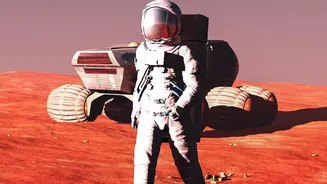
For humans, space radiation isn't a nuisance; it's a profound health threat. These high-energy particles pass through the body, breaking DNA strands and damaging cells. The risks are severe and varied, including a significantly increased lifetime risk of cancer, degenerative diseases affecting the heart and central nervous system, and a higher chance of developing cataracts. A single, large solar particle event could deliver a high enough dose in a short time to cause acute radiation sickness, which can be fatal without immediate medical care. Data from the journey to Mars showed an astronaut would be exposed to at least 60% of their entire career radiation limit just on the six-month trip. On the Martian surface, with its thin atmosphere and no global magnetic field, the dose is still many times higher than on Earth.
Shielding People: A Weighty Problem
Protecting astronauts is far more complex than hardening a circuit board. The same heavy shielding that might stop lower-energy SEPs can make the GCR problem worse. When high-energy GCRs strike dense materials like aluminum, they can create a secondary spray of even more radiation. Materials rich in hydrogen, like water or polyethylene, are more effective at blocking these particles without creating as much secondary radiation. The challenge is mass. Launching the sheer weight of shielding needed to adequately protect a crew for a multi-year Mars mission is a monumental engineering and financial hurdle. Other concepts being explored include active shielding using powerful magnetic fields to deflect particles, much like Earth's magnetosphere does, but these technologies are still in early development.
Different Threats, Different Solutions
Ultimately, while robots and humans face the same radiation environment, the problem is fundamentally different. For robots, radiation is an engineering challenge solved with clever design, redundancy, and specialized components. Failures can happen, but they are manageable risks to the mission's hardware. For humans, radiation is a non-negotiable biological limit. The damage is cumulative, complex, and potentially life-threatening. We can't simply reboot a human central nervous system or swap out a damaged organ. This makes the radiation problem the single biggest showstopper for sending people to Mars, a hurdle our robotic pioneers, for all their technical challenges, do not have to clear.