








The Brain-Gut Conversation
It takes about 20 minutes for your brain to get the message from your stomach that you are full. This communication happens through a complex system of hormones. When you eat, your digestive tract releases hormones like glucagon-like peptide-1 (GLP-1)
and peptide YY (PYY), which signal satiety to your brain. Simultaneously, levels of ghrelin, often called the 'hunger hormone', begin to decrease. When you eat too quickly, you can easily consume more food than your body needs before this signaling system has a chance to kick in. This overrides your body's natural fullness cues, often leading to that uncomfortable, overly stuffed feeling.
Speed, Calories, and Weight
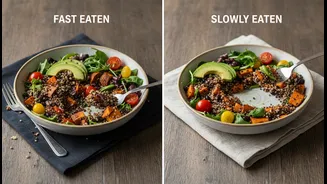
The link between eating speed and body weight is well-documented. Multiple studies show that people who eat quickly tend to consume more calories per meal and have a higher body mass index (BMI). One study found that normal-weight individuals consumed 88 fewer calories when they ate slowly compared to when they ate quickly. Over a year, this small change could lead to significant weight loss. Fast eating is a habit that disrupts the body's ability to self-regulate intake. By the time a fast eater receives the satiety signals, they may have already overeaten.
Long-Term Body Composition and Health Risks
The consequences of consistently eating too fast extend beyond simple weight gain; they can alter your body composition and increase health risks. Research has strongly linked fast eating with a higher likelihood of developing metabolic syndrome, a cluster of conditions that includes increased blood pressure, high blood sugar, excess body fat around the waist, and abnormal cholesterol levels. A five-year study in Japan found that the incidence of metabolic syndrome was 11.6% among fast eaters, compared to just 2.3% among slow eaters. Fast eating can cause larger fluctuations in blood glucose, which may lead to insulin resistance over time, a key driver of type 2 diabetes.
Your Toolkit for Mindful Eating
Slowing down is a skill that can be learned with practice. The goal is to be more mindful and present during your meals. One of the most effective techniques is to chew your food more thoroughly; aim for 20 to 30 chews per bite, depending on the food. Another simple but powerful trick is to put your fork or spoon down between each bite. This creates a natural pause, giving your body time to process. Try to eliminate distractions like watching TV or scrolling on your phone, as this can lead to mindless eating. Sipping water throughout your meal also helps you slow down and can contribute to feeling fuller.
Building a Sustainable Habit
Transforming your eating speed is not about another restrictive diet; it's about building a healthier and more enjoyable relationship with food. Start small by focusing on one meal a day. Use smaller plates or even smaller utensils, like a salad fork or a teaspoon, to naturally reduce your bite size and pace. Pay attention to the flavours, textures, and smells of your food. This practice of mindful eating helps you tune into your body's true hunger and fullness cues, allowing you to stop when you are satisfied, not stuffed. Over time, this conscious habit can become second nature, leading to better digestion, improved weight management, and a greater appreciation for the food you eat.