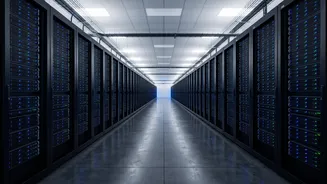








India is in the middle of a data centre gold rush, with capacity expected to grow five-fold by 2030. But as a recent CRISIL Ratings report highlights, this digital ambition is running into a major physical barrier: an adequate power supply.
An Unprecedented Digital Boom
India's data
centre industry is experiencing an investment super-cycle, driven by the explosive growth of generative artificial intelligence (GenAI), widespread enterprise digitalisation, and massive data consumption. According to CRISIL, the country's installed data centre capacity is projected to surge to approximately 7.5 gigawatts (GW) by March 2030, attracting over ₹3 lakh crore in investments. This expansion is essential for powering everything from cloud computing and 5G services to the AI applications that are reshaping industries. Global technology giants and domestic conglomerates are pouring billions into building these digital hubs, encouraged by India's lower development costs and growing market. However, building the digital backbone of a nation is not just about servers and real estate; it is fundamentally about energy.
The Billion-Watt Problem
Data centres are immensely power-intensive. They operate 24/7 and require an uninterrupted, high-quality electricity supply not just for the servers but for the vast cooling systems needed to prevent them from overheating. The planned expansion is set to create what CRISIL calls a 'power infrastructure bottleneck'. The report highlights a significant concentration of this new capacity, with about three-fourths, or 6 GW, planned for just three cities: Visakhapatnam, Mumbai, and Hyderabad. By 2030, this new data centre load could equal a staggering 80% of Visakhapatnam's and 60% of Mumbai's entire current peak power demand. This raises a critical question: can the local power grids in these hubs handle such a massive and sudden increase in demand? The challenge has shifted from simply acquiring land to securing a reliable and scalable power source.
Grid Reliability Meets Green Demands
The power challenge is twofold. First is the issue of grid stability and connectivity. Data centre operators need more than just power; they need 'firm' power, which means it must be constant and without fluctuations that could damage sensitive IT equipment. Timely grid connections and upgrading transmission infrastructure are now critical hurdles for project execution. The second challenge is the growing demand for green energy. Hyperscalers like Google, Amazon, and Microsoft, which are expected to lease up to 80% of India's data centre capacity by 2030, have global commitments to sustainability. They are increasingly demanding that the facilities they use are powered by renewable sources. This puts pressure on data centre developers to not only secure massive amounts of power but to ensure a significant portion of it is clean, further complicating the energy puzzle in a country still heavily reliant on coal.
Forging Paths to a Powered Future
To overcome these challenges, data centre operators are becoming increasingly innovative in their energy strategies. Many are moving beyond simple reliance on the public grid and are exploring longterm Power Purchase Agreements (PPAs) with renewable energy producers. These agreements, often spanning 15–20 years, provide cost stability and help meet sustainability goals. Some are also developing captive power plants, essentially building their own dedicated energy generation facilities, often combining solar and wind power with battery storage to ensure a round–the–clock supply. Furthermore, there is a strong focus on efficiency, with new facilities being designed with advanced cooling technologies like liquid immersion cooling to reduce overall energy consumption. Success in this sector will no longer be measured just by megawatts of IT capacity, but by the ability to secure and manage the energy required to power it sustainably and reliably.