




A Discovery in Cosmic Dust
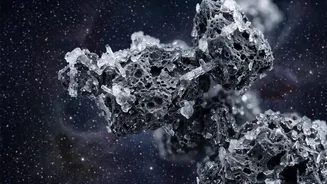
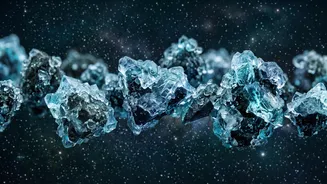
It sounds like science fiction, but our solar system is constantly shedding. An estimated 5,200 metric tons of cosmic dust rain down on Earth every year. A team of NASA-led researchers, headed by planetary scientist Lindsay Keller, analyzed twelve microscopic
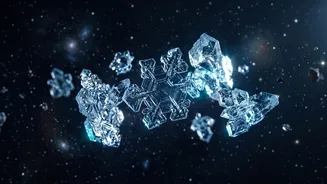
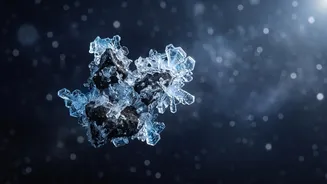
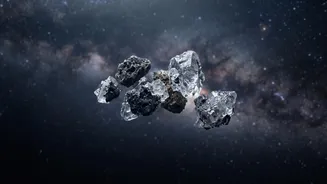
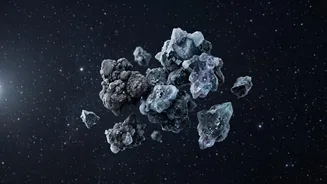
dust grains, each just 10 to 30 micrometers wide, collected by high-altitude aircraft in Earth's stratosphere. These aren't just any dust particles; they are interplanetary travellers. Their chemical makeup and signs of radiation damage revealed they had journeyed from the Kuiper Belt, the frigid ring of icy bodies orbiting the Sun beyond Neptune. Inside these grains, the team found minerals like clays that only form in the presence of liquid water, meaning the parent objects they broke off from once had liquid water inside them.
Why This Water Signature Is So 'Unusual'
Water isn't rare in the solar system, but this water is different. Its 'signature' lies in its oxygen. Oxygen comes in several forms, or isotopes, and the ratio of these isotopes acts as a fingerprint, telling scientists where in the solar system a material formed. The water signature found in the Kuiper Belt dust is exceptionally rich in heavy oxygen isotopes. This composition is distinctly different from the water found in meteorites that originated closer to the Sun. The finding provides compelling evidence that the outer solar system, beyond the giant gas planets, contained a huge, separate reservoir of water that was chemically unique. This reservoir remained pristine and largely isolated, untouched by the chaotic mixing of materials that shaped the inner solar system billions of years ago.
A Glimpse of the Solar System's Dawn
The Kuiper Belt is considered a time capsule of our solar system's formation 4.5 billion years ago. Its icy rocks and comets are some of the most unchanged remnants from that era. Because it's so far away and difficult to reach, sending probes to collect samples is currently out of the question. These dust grains, therefore, are free samples delivered right to our doorstep. The discovery of this unique water helps confirm a long-held theory that the water ice at the solar system's edge had a different chemical makeup. It suggests a 'pressure bump' created by a young Saturn may have acted as a barrier, preventing this outer-system water from mixing with inner-system materials and preserving its primordial signature. This offers a clearer picture of the distinct chemical zones that existed as planets like Earth were just beginning to form.
What It Means for the Story of Water on Earth
Understanding the origin of Earth's oceans is one of the biggest questions in planetary science. We know water was likely delivered by comets and asteroids, but from where? This discovery complicates the story in a fascinating way. It reveals that there were at least two distinct 'flavors' of water in the early solar system. While this specific 'heavy' water from the Kuiper Belt doesn't match Earth's oceans, its existence helps scientists refine their models. By understanding the different reservoirs that were available, they can better trace the path of the specific comets and asteroids that brought the life-giving water to our young planet. It's a crucial piece of the puzzle of our own origins, showing how the ingredients for life were distributed across our cosmic neighbourhood.