






A Deluge of Climate Data
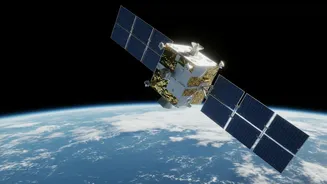
Modern climate science is drowning in data. Information pours in from a dizzying array of sources: satellites monitoring polar ice and deforestation, ocean buoys tracking temperature and currents, and ground sensors measuring atmospheric conditions. Added
to this is the output from complex computer simulations that model future climate scenarios. Processing and making sense of these massive, intricate datasets is a monumental task that can slow down the pace of discovery. This is where artificial intelligence, particularly machine learning, is proving to be a game-changer. By training algorithms on vast quantities of information, AI can identify subtle patterns and correlations that might take human researchers years to uncover.
Sharpening Predictions and Models
One of AI’s most significant contributions is its ability to improve the accuracy and speed of climate predictions. Traditional climate models are incredibly complex and require enormous computational power, often taking weeks or months to run a single simulation. AI models, once trained on historical data, can generate forecasts much faster. For example, AI is being used to provide more accurate short-term weather forecasts, predict extreme events like hurricanes and heatwaves, and even estimate how much solar energy will be available for a power grid based on cloud cover. These AI-enhanced forecasts can help communities better prepare for droughts, coastal flooding, and storms, and enable more efficient management of renewable energy sources.
Monitoring Our Planet in Real-Time
Beyond forecasting, AI is a powerful monitoring tool. Machine learning algorithms can analyze satellite imagery to automatically detect environmental changes with remarkable speed and precision. This technology is being used to track deforestation in the Amazon, identify illegal mining operations, monitor the health of coral reefs, and measure the retreat of glaciers. For example, NASA has partnered with tech companies to create AI models trained on satellite data that can quickly map burn scars from wildfires or delineate the extent of floodwaters. This provides crucial, near-real-time information for disaster response teams and policymakers, allowing for faster and more targeted interventions.
The Irreplaceable Role of the Scientist
Despite these impressive capabilities, AI is not poised to make climate scientists redundant. The technology is a powerful tool for analysis and prediction, but it operates as a 'black box' at times, identifying correlations in data without understanding the underlying causes. Human expertise is essential to guide the entire process. Scientists are needed to formulate the research questions, design the experiments, and critically interpret the results that AI generates. They provide the context, creativity, and ethical oversight that machines lack. An AI might spot a temperature anomaly, but it takes a scientist to investigate why it's happening and what it means for the broader climate system. Furthermore, issues like biases in training data require human supervision to ensure that AI-driven solutions don't perpetuate existing inequities.