





The Ocean's Thermostat
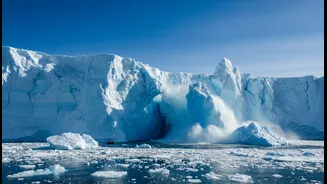
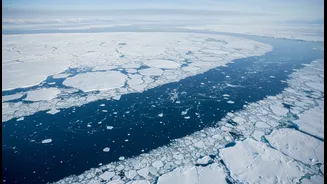
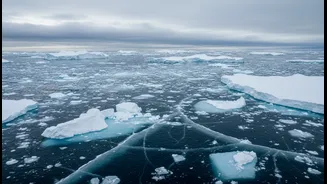
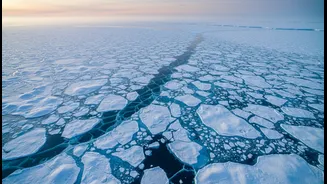
Antarctica is more than just a vast, frozen continent; it is a critical engine for the global climate. The extremely cold, salty water that forms around its coast is denser than the water around it, causing it to sink to the ocean floor. This process,
which creates what is known as Antarctic Bottom Water (AABW), drives a massive, slow-moving global conveyor belt of ocean currents. This circulation pattern regulates temperatures worldwide by moving heat around the planet, and the Southern Ocean plays a crucial role in absorbing excess heat and carbon dioxide from the atmosphere. However, recent studies show that this vital system is changing. The AABW has been getting warmer and less salty, and its volume has declined in recent decades, a trend that could slow this global circulation and have far-reaching effects on our climate.
Reading the Rings of History
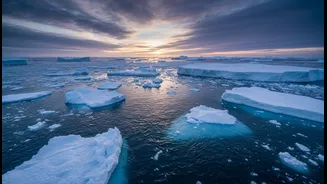
To understand where our climate is headed, scientists are drilling deep into the seabed beneath the Antarctic ice. The layers of mud and rock, known as sediment cores, are like a geological storybook, containing an archive of past environmental conditions. In a recent major breakthrough, an international project successfully drilled a record-breaking 228-metre sediment core from beneath the West Antarctic Ice Sheet, which may hold an unprecedented record of climate history stretching back millions of years. Within these layers, researchers find the fossilised remains of tiny marine organisms. The types of fossils and their chemical makeup can tell scientists about the ocean temperatures and atmospheric conditions of the distant past, including periods when global temperatures were much higher than they are today.
A Warning from the Past
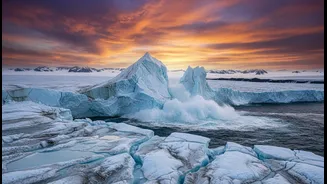
These clues from the deep past carry a stark warning. The sediment cores show that parts of the West Antarctic Ice Sheet have collapsed before, during periods of natural warming. These past events provide crucial insight into the ice sheet's sensitivity to rising temperatures. Scientists are particularly interested in how Antarctica responded during times when atmospheric carbon dioxide was higher and temperatures were similar to what we expect in the coming decades. The evidence suggests that the ice sheet can become unstable and retreat rapidly once a certain warming threshold is crossed, a point some models suggest was hit about one million years ago, making the continent far more sensitive to climate shifts. If the entire West Antarctic Ice Sheet were to melt, it holds enough water to raise global sea levels by four to five metres.
Why the Antarctic Matters to India
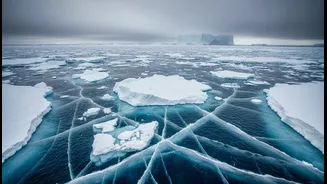
What happens in Antarctica does not stay in Antarctica. For India, a country with over 7,500 kilometres of coastline, the melting of polar ice is a direct and pressing concern. The complete melting of Antarctica's ice could eventually lead to a sea-level rise of about 60 metres, which would submerge coastal cities worldwide. While such a complete meltdown would take millennia, even a partial collapse of the West Antarctic ice sheet could have devastating consequences sooner. Furthermore, studies have shown that melting ice in the polar regions can disrupt global ocean circulation, which in turn can influence weather patterns like the Indian monsoon, affecting its reliability and intensity. The increased freshwater flowing into the ocean alters salinity and temperature, which can impact the currents that regulate our climate system. As the head of India's National Centre for Polar and Ocean Research has warned, the actual rise in sea level is often higher in tropical regions like India's due to a variety of compounding factors.