








Choose Fabrics Wisely
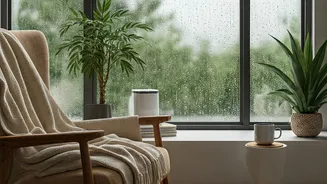
The single biggest change you can make is with your textiles. High humidity means heavy fabrics like velvet, thick jacquard, and dense wool will absorb moisture, leading to a musty smell and slow drying times. Instead, opt for lightweight, breathable
materials. Sheer or semi-sheer cotton, linen, and khadi are excellent choices for curtains, as they allow maximum light to filter through on overcast days while still providing privacy. For bedsheets, cushion covers, and throws, light cotton and linen blends are ideal because they dry quickly and don't trap moisture, keeping your space feeling fresh and airy. It’s a good idea to roll up and store heavy carpets, which can become breeding grounds for mould, and replace them with light cotton dhurries or bamboo mats.
Light Up the Gloomy Days
With grey, overcast skies reducing natural light, your home can start to feel dreary. The solution is to layer your lighting. Instead of relying solely on a single harsh overhead light, create a warm and inviting atmosphere with multiple light sources. Use warm-white LED bulbs in floor lamps and table lamps to cast a soft, golden glow in the evenings. Placing lamps in corners, near windows, or beside seating areas adds depth and banishes shadows. You can also hang fairy lights around window frames or shelves for a whimsical touch. Strategically placed mirrors are another great trick; they reflect both natural and artificial light, making rooms feel brighter and more spacious.
Protect Your Furniture
The high moisture content in the air can be harsh on wooden furniture, causing it to swell, warp, and even develop fungus. To protect your valuable pieces, move them a few inches away from damp external walls to allow for better air circulation. Applying a fresh coat of varnish or lacquer before the season starts can create a protective barrier against moisture. For regular cleaning, avoid using a wet cloth; a dry, soft cloth is sufficient. For outdoor spaces like balconies, furniture made from weatherproof materials like waterproof wicker, metal, or plastic is a smart investment that will endure the season without damage.
Bring the Greenery Indoors
Indoor plants are a perfect way to embrace the lushness of the monsoon while improving your home's environment. Many plants thrive in high humidity and act as natural air purifiers. Species like ferns, peace lilies, monstera, and snake plants are well-suited to Indian monsoon conditions. They not only add a vibrant splash of green that counters the outdoor gloom but also help regulate indoor air quality. Grouping a few pots in a corner or placing them on a plant stand can create a refreshing, tropical feel that perfectly complements the season.
Combat Mustiness with Fragrance
One of the most common complaints during the monsoon is the persistent damp or musty smell that can permeate a home. You can combat this by introducing pleasant fragrances. Scented candles, especially with fresh scents like lemongrass, sandalwood, or jasmine, are excellent for creating a cosy ambience. Aroma diffusers with essential oils are another effective option. For a more traditional and natural approach, you can place bowls of rock salt, camphor, or dried neem leaves in corners and cupboards to absorb excess moisture and act as a natural insect repellent.
Create a Functional Entryway
Preventing water and mud from being tracked through your home starts at the front door. Designate a specific area as a 'monsoon station'. A highly absorbent coir doormat is essential for trapping dirt and water at the entrance. Place a stylish umbrella stand or a large basket to hold wet umbrellas, preventing water from dripping all over your floors. It is also wise to have a dedicated shoe rack or tray for muddy footwear, keeping the rest of your home clean and dry. A little organisation at the entrance goes a long way in managing monsoon mess.