








The Urban Oven Effect
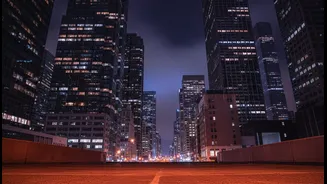
Our cities are covered in dark, dense materials like asphalt and concrete. These surfaces are excellent at absorbing and storing the sun's energy. During the day, they soak up vast amounts of solar radiation, and long after the sun sets, they continue
to release this stored heat back into the air. This phenomenon turns our urban cores into 'heat islands', where temperatures can be significantly warmer than in surrounding rural areas, especially at night. This isn't just a matter of comfort; the persistent heat increases energy demand for air conditioning, worsens air quality by accelerating the formation of smog, and poses health risks to vulnerable populations.
Fighting Heat with Reflective Roads
One of the most promising solutions is 'cool pavement', and its simplest form works by being more reflective. Traditional dark asphalt absorbs up to 95% of the sunlight that hits it. In contrast, cool pavements use lighter-coloured materials or special coatings that reflect a higher portion of sunlight. This property, known as albedo, means the surface absorbs less heat throughout the day. Studies have shown that these reflective pavements can have surface temperatures up to 12 degrees Fahrenheit lower than traditional asphalt in the afternoon. Because they store less heat, they have less to radiate after sundown, allowing the surrounding air to cool down faster after midnight and leading to lower nighttime air temperatures.
Letting the Pavement Breathe and Sweat
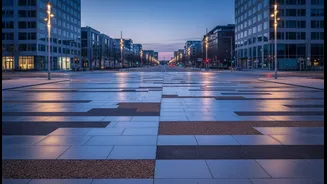
Another innovative approach is permeable pavement. As the name suggests, this type of surface allows water to pass through it instead of running off into storm drains. Porous asphalt, pervious concrete, and interlocking pavers create a surface with tiny voids. When it rains, water seeps into the ground below, which helps in two ways. Firstly, it replenishes groundwater and reduces the burden on stormwater systems. Secondly, the water retained within the pavement structure evaporates over time, creating a cooling effect, much like how sweating cools our skin. This process of evaporative cooling helps lower both the pavement surface temperature and the ambient air temperature, providing relief during hot spells.
The Next Frontier: Smart Pavements
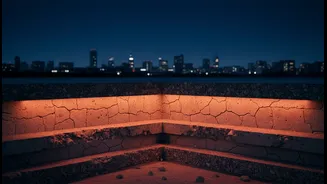
The innovation doesn't stop there. Researchers are developing even more advanced materials to combat urban heat. One exciting area is the use of 'phase-change materials' (PCMs) within asphalt. These are substances that absorb heat as they melt during the day and release it as they solidify at night. By integrating PCMs into pavement, the surface temperature can be actively regulated, delaying and reducing the peak heat. Other futuristic concepts include thermochromic pavements that change colour to become more reflective as temperatures rise, and even photovoltaic pavements that generate solar energy while providing a cooler surface.
The Road Ahead for India
For rapidly urbanising Indian cities grappling with extreme heat, these solutions hold immense potential. However, implementation faces hurdles. The initial cost can be higher than conventional materials, and long-term durability and maintenance in diverse Indian climates need to be thoroughly tested. Factors like dust and traffic can reduce the reflectivity of cool pavements over time, requiring regular cleaning. Furthermore, successful adoption will require supportive government policies, localised research to find the right solutions for different cities, and coordination between urban planners and engineers. Integrating these technologies into larger 'cool corridor' strategies that also include trees and green spaces will be key to maximising their impact.