



What is the New Requirement?
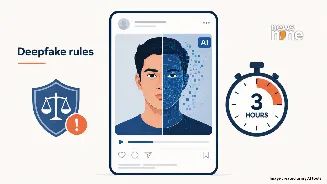
A significant new transparency rule, part of the EU's landmark AI Act, took effect on August 2, 2026. Under Article 50 of the act, content that is generated or manipulated by AI and is designed to look authentic must be clearly labelled. This applies
to images, audio, video, and even text on matters of public interest that haven't had human editorial oversight. The rules affect any business or creator operating in or targeting the EU, compelling them to disclose when you're interacting with a chatbot or viewing a deepfake. While the EU is taking a major step, it's part of a broader global trend, with various US states like California also implementing their own AI transparency laws around the same time. These regulations typically require either visible labels or embedded digital watermarks to signify artificial origins.
Why Now? The Flood of Synthetic Media
These regulations are a direct response to the explosion of sophisticated, AI-generated content, often called synthetic media or deepfakes. In recent years, fake audio and video have been used to create misleading narratives about public figures, attempt to influence elections, and spread disinformation. The viral image of Pope Francis in a designer puffer jacket, which fooled millions, was an early, relatively harmless example of how convincing AI creations can be. Regulators are trying to get ahead of a future where it's nearly impossible to tell fact from fiction, aiming to protect not just consumers, but the democratic process itself. The goal is to provide a crucial piece of context, allowing people to make more informed decisions about the media they consume.
The Limits of Labelling
While labelling is a crucial first step, it is not a silver bullet. For one, enforcement is a major challenge. The rules often apply to new AI systems, with grace periods for older ones. There are also exemptions for content that is clearly artistic or satirical. Furthermore, not all AI-generated content will require a label; the obligation often depends on the context and whether a person might mistake the content for being authentic. Malicious actors who want to spread disinformation are unlikely to voluntarily label their own deepfakes. And even with watermarking technology like Google's SynthID, determined individuals can find ways to degrade or remove these markers. This reality puts a new, significant burden on the end-user.
The User's Burden: Source Verification
The new labelling laws fundamentally shift responsibility. While they hold creators and platforms accountable, they implicitly ask consumers to become more active participants in verifying information. An "AI-Generated" label is a warning sign, but the absence of one doesn't guarantee authenticity. This makes source verification—the practice of confirming the origin and accuracy of information—more important than ever. It's a skill once primarily reserved for journalists and academics, but is now a necessary component of digital literacy for everyone. Relying on AI without checking its work can lead to serious errors, as seen in a famous case where lawyers submitted a legal brief with completely fabricated case citations generated by an AI.
How to Verify What You See
Practicing source verification doesn't have to be complicated. Start by questioning the origin of the content. Is it from a reputable news organization or a random account? Cross-reference the information by searching for other sources reporting the same story. For images, you can use reverse image search tools. For AI-generated content, look for tell-tale signs: unnaturally smooth surfaces, strange patterns, or logical inconsistencies in the scene. Finally, be deeply skeptical of content that provokes a strong emotional reaction, as this is a common tactic of disinformation. A healthy dose of skepticism and a few simple checks can be your best defense against being misled.