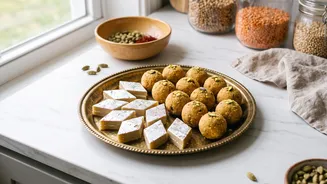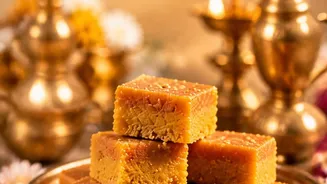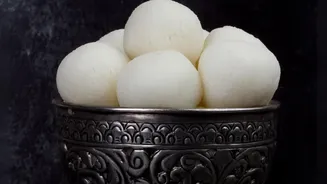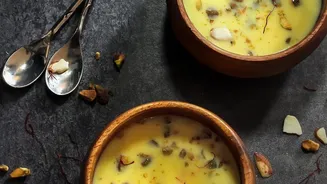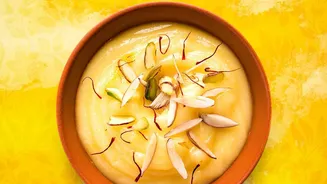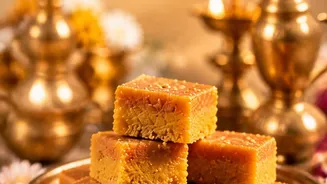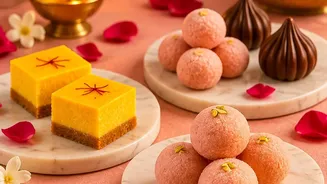



The flickering diyas have dimmed, but the mountain of mithai remains. While Diwali is a time for indulgence, the aftermath often leaves us with a sweet dilemma: how do you keep those ladoos, barfis, and katlis fresh and safe to eat?
The First Rule: Know Your Mithai
Not all Indian sweets
are created equal, and their shelf life depends almost entirely on their ingredients. The three main categories to consider are milk-based (khoya/mawa), ghee- and flour-based, and dry fruit-based sweets. As a general rule, the higher the moisture and milk content, the shorter the shelf life. Before you begin storing, separate your sweets into these groups. Never store different types together in the same container, as this can cause flavours to mix and moisture to transfer, spoiling them faster. Always use clean, dry, and airtight containers, preferably made of glass or stainless steel, as they don't absorb odours.
Milk-Based Sweets: Handle with Care
Mithai made from milk solids (khoya/mawa), paneer, or fresh milk—like peda, kalakand, milk cake, and most barfis—are the most perishable. These sweets have high moisture content, making them a prime breeding ground for bacteria. They should never be left at room temperature for more than a few hours. For best results, place them in an airtight container and refrigerate immediately. Even when chilled, their quality declines quickly. Aim to consume them within two to four days for the best taste and texture. If you have syrupy sweets like rasgulla or gulab jamun, store them in the refrigerator completely submerged in their syrup to maintain their soft, spongy texture.
Ghee, Flour, and Nut-Based Sweets: The Stable Stars
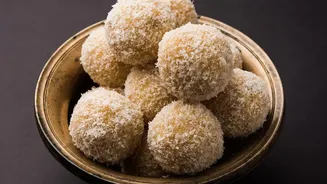
Sweets where ghee, flour, or nuts are the hero ingredients have a naturally longer shelf life. This category includes favourites like besan ladoo, motichoor ladoo, kaju katli, mysore pak, and various nut-based barfis. The low moisture content and preservative qualities of ghee and sugar help them stay fresh for longer. These can typically be stored at room temperature in a cool, dark, and dry place for about a week to ten days, as long as they are in a sealed, airtight container. For even longer storage, refrigeration can extend their life to three or four weeks, but be aware that chilling can harden the ghee. To restore their texture, simply let them sit at room temperature for about 15-30 minutes before serving.
To Freeze or Not to Freeze?
Freezing is an excellent option for extending the life of many sweets, but it doesn’t work for everything. Ghee and dry nut-based sweets like ladoos and most barfis freeze remarkably well. To do this correctly, wrap each piece individually in plastic wrap or parchment paper, then place them in a freezer-safe airtight container or a ziplock bag. This prevents freezer burn and keeps them fresh for up to two or three months. However, avoid freezing delicate milk_based sweets like rasgulla or syrupy sweets like jalebi, as the freezing process destroys their texture, making them tough or rubbery upon thawing. When you’re ready to enjoy your frozen treats, thaw them slowly in the refrigerator overnight, not on the counter or in the microwave.
How to Spot a Spoiled Sweet
Your senses are the best tool for identifying spoiled mithai. The first sign is usually the smell; if a milk_based sweet has a sour or sharp, cheesy odour, it's time to discard it. For other sweets, look for changes in appearance. A dull, discoloured surface, tackiness, or unusual hardness can indicate staleness. If the syrup on sweets like gulab jamun appears cloudy or stringy, it has gone bad. And any visible sign of mould, no matter how small, means the entire batch in that container should be thrown away, as spores can spread quickly. When it comes to food safety, the golden rule is simple: when in doubt, throw it out.