


Beyond the Crater's Edge
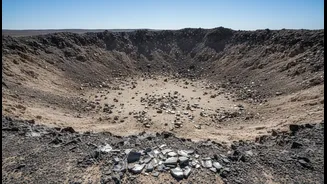
When we think of a meteorite impact, we often picture a single, dramatic crater. While large impacts certainly leave these impressive scars on the landscape, the story doesn't end there. The term "impact area" is much broader than the hole in the ground.
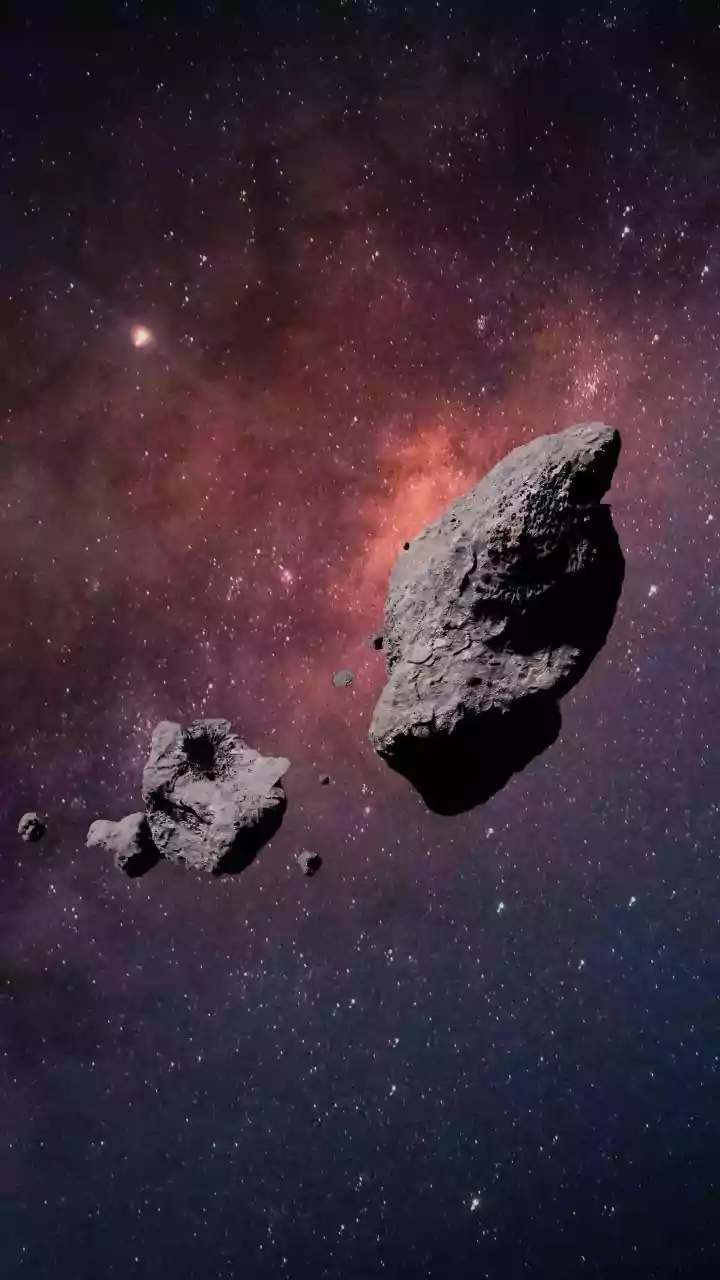
It refers to the entire region where pieces of the incoming space rock are scattered. This area, known to scientists as a "strewn field," is often a long, elliptical zone that can stretch for tens or even hundreds of kilometres. The shape and size of this field are determined by the meteoroid's angle of entry, its speed, and how it broke apart in the atmosphere. The largest fragments, being heavier and less affected by air resistance, travel the farthest, while smaller, lighter pieces land earlier along the flight path.
A Trail of Cosmic Breadcrumbs
A meteoroid rarely survives its fiery plunge through Earth's atmosphere intact. The immense pressure and heat cause it to fracture, sometimes explosively, in an event called an airburst. This breakup creates a shower of smaller rocks that rain down over a wide area. The 2013 Chelyabinsk event in Russia, for instance, created a strewn field nearly 100 kilometres long. These scattered fragments are the cosmic breadcrumbs that lead scientists back to the original object. Finding them is a meticulous process. Researchers and enthusiasts, often called meteorite hunters, use everything from visual searches and metal detectors to sophisticated tools like ground-penetrating radar and analysis of weather data to predict where the fragments may have landed. Each piece, no matter how small, is a part of a giant astronomical puzzle.
The Scientific Value in Dust and Debris
Why go to all the trouble of mapping and collecting these tiny fragments? Because they are time capsules from the dawn of our solar system. Many meteorites are over 4.5 billion years old, making them older than any rock native to Earth. They are pristine samples of the material that formed the planets, including our own. By studying their composition, scientists can unlock secrets about the solar system's formation. Some rare types, like carbonaceous chondrites, contain water, organic compounds, and amino acids—the fundamental building blocks of life. The discovery of these compounds supports the theory that asteroids and comets may have delivered essential ingredients for life to early Earth. The value isn't just academic; some rare meteorites can be worth more than their weight in gold due to their scientific importance and scarcity.
A High-Tech Treasure Hunt
Mapping a strewn field is a blend of old-fashioned detective work and modern technology. After a fireball is reported, scientists can use video footage from various angles to triangulate the meteor's trajectory through the atmosphere. Weather radar can sometimes pick up the cloud of falling fragments, giving searchers a crucial starting point. Once on the ground, the hunt begins. In areas like the Gold Basin in Arizona, where a meteorite fell thousands of years ago, fragments are often buried and can only be located with metal detectors. For freshly fallen meteorites, speed is critical. A quick recovery prevents the sample from being contaminated by Earth's environment, preserving its delicate chemical and mineralogical information. This allows for more accurate analysis of its original state, offering a cleaner window into its cosmic origins.
From Ancient History to Future Threats
Studying past impacts isn't just about understanding history; it's also crucial for protecting our future. By analysing how different types of meteoroids break up in the atmosphere, scientists can create better models to predict the behaviour of future incoming asteroids. Understanding the fracture mechanics of these space rocks helps us gauge the potential threat—whether an object will burn up harmlessly, explode in the air, or strike the ground. Each mapped strewn field provides valuable data points that refine these models. It tells a story of the object's strength, composition, and interaction with our atmosphere. This knowledge is fundamental to the field of planetary defense, helping agencies around the world develop strategies to mitigate the risk of a hazardous impact.