

The Grand Rajasthani Thali
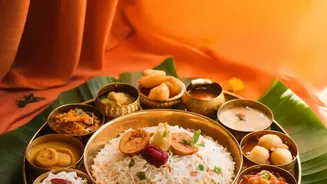
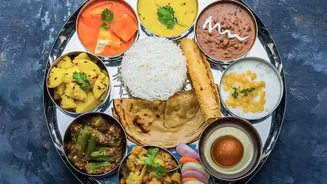
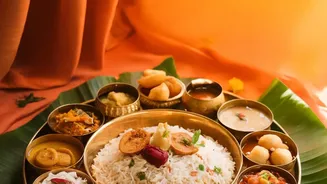
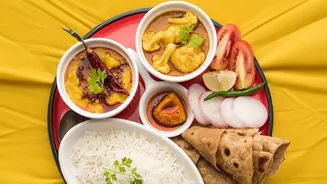
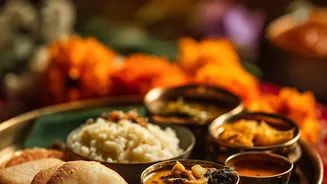
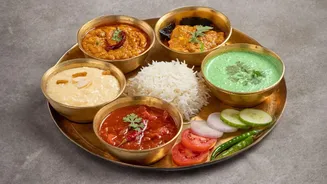
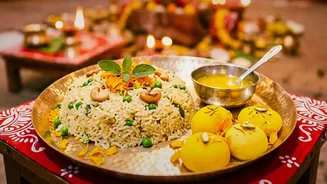
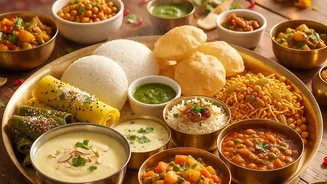
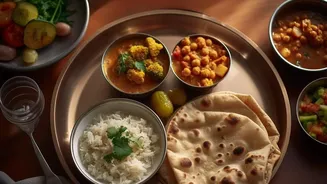
The Rajasthani thali is not just a meal; it is a grand culinary ceremony served on a single platter. It represents a balanced and complete gastronomic journey, showcasing the region's most iconic dishes in a colourful mosaic of small bowls. At its heart
lies the celebrated trio of Dal Baati Churma. Baatis are hard, unleavened wheat rolls, traditionally baked over coals and then crumbled and drenched in ghee. They are served alongside a spicy panchmel dal, a curry made from a mix of five different lentils. The final component, churma, is a sweet dish made by crushing the baked baati and mixing it with jaggery and ghee, providing a perfect counterpoint to the savoury and spicy elements. This dish, with origins as a wartime meal for Rajput soldiers, has evolved into a symbol of Rajasthani hospitality.
A Symphony of Unique Sabzis
Beyond the dal, a Rajasthani thali is adorned with a variety of sabzis (vegetable dishes) that are ingeniously adapted to the desert climate. Gatte ki Sabzi is a prime example; it features steamed and fried gram flour (besan) dumplings simmered in a tangy yoghurt-based gravy. This dish was born out of the need to create satisfying meals without relying on fresh vegetables, which were often scarce. Another desert speciality is Ker Sangri, a distinctive dry curry made from native ker berries and sangri beans. These ingredients, grown in the Thar Desert, are sun-dried and can be stored for long periods. When cooked with spices, the dish offers a unique tangy and peppery flavour that is quintessentially Rajasthani.
The Essential Role of Chutneys
No Rajasthani meal is complete without an assortment of chutneys that elevate every bite with a burst of flavour. The most famous is Lehsun ki Chutney, a fiery and pungent condiment made from garlic and red chillies. This bright red chutney is a staple in every household and provides a sharp, spicy kick that cuts through the richness of ghee-laden dishes. It pairs perfectly with the subtle taste of bajra ki roti (pearl millet flatbread). Another popular accompaniment is Imli ki Chutney, a sweet and tangy sauce made from tamarind, jaggery, and a hint of spices like cumin. This chutney is often served with street snacks, adding a layer of sweet and sour complexity.
Savouring the Street Snacks
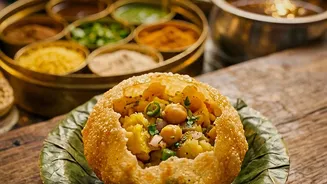
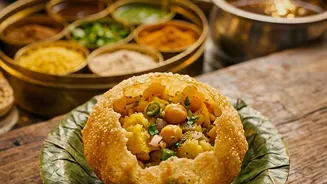
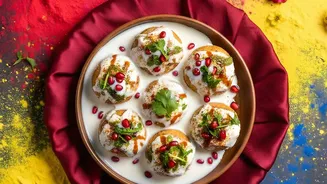
The culinary treasures of Rajasthan extend from palace kitchens to the bustling street corners. Here, you will find some of India's most beloved snacks, perfect for enjoying during a monsoon shower or as a quick, flavourful bite. Pyaaz Kachori is a deep-fried pastry filled with a spicy and aromatic onion mixture. This flaky, golden-brown delicacy is crispy on the outside with a soft, savoury filling that is incredibly satisfying. Equally famous is the Mirchi Vada, a large green chilli stuffed with a spiced potato filling, coated in gram flour batter, and deep-fried to perfection. Both snacks are often served with a side of tamarind or mint chutney, creating a delightful explosion of taste and texture.
Sweet, Indulgent Endings
Rajasthan's dessert offerings are as rich and decadent as its savoury dishes. Ghevar is a disc-shaped sweet with a honeycomb-like texture, made from flour and soaked in sugar syrup. Often prepared during festivals like Teej and Raksha Bandhan, it is garnished with rabri (thickened sweet milk) and nuts. Another beloved sweet is Moong Dal Halwa, a rich and comforting dessert made from roasted moong lentils, ghee, sugar, and milk. Known for its indulgent texture and fragrant aroma, it's a winter favourite that provides warmth and sweetness in every spoonful. These desserts are a testament to the Rajasthani love for all things sweet and celebratory.