






Rajasthan: The Desert Feast of Dal Baati Churma
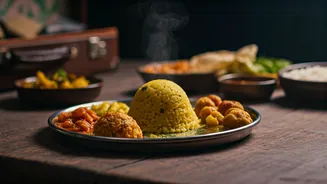
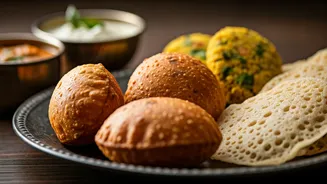
Imagine the arid landscapes of Rajasthan, where resources are scarce and life is resilient. From this very environment comes Dal Baati Churma, a dish that is as much about history as it is about flavour. The 'baati' are hard, unleavened bread balls, traditionally
baked in underground ovens or amidst hot cow-dung cakes, giving them a smoky, crisp exterior and a soft inside. This method was perfect for nomadic warriors who needed food that would last for days. The baati is crumbled and drenched in 'dal', a fragrant lentil curry rich with ghee, garlic, and spices. The 'churma', a sweet, crumbly dessert made from crushed baati, jaggery, and ghee, completes this holy trinity of Rajasthani cuisine. Eating this dish in Jaipur or Jodhpur isn't just a meal; it's a taste of the region's hardy, royal past.
Kerala: The Communal Harmony of Sadya
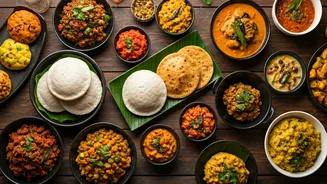
Down in the lush, coconut-fringed south, Kerala offers a culinary experience that is a feast for the eyes and the palate. The 'Sadya' is not a single dish but a banquet served on a fresh banana leaf, featuring up to 28 different vegetarian preparations. It’s a symphony of flavours—sour, salty, sweet, and spicy—all coexisting in perfect harmony. You’ll find 'avial' (vegetables in a coconut-yoghurt gravy), 'thoran' (stir-fried vegetables with grated coconut), tangy 'pachadi', and sharp pickles, all served with a mound of red rice. Typically prepared for celebrations like Onam and weddings, the Sadya embodies the spirit of community and abundance. Each item has its designated spot on the leaf, and eating it is an art in itself. It’s a testament to how the state’s natural bounty—coconuts, rice, spices, and vegetables—is woven into its cultural fabric.
Kashmir: The Royal Aroma of Rogan Josh
Travel to the heavenly valleys of Kashmir and you'll be greeted by the intoxicating aroma of Rogan Josh. This iconic lamb curry is a cornerstone of Kashmiri Wazwan, the multi-course celebratory meal. With Persian origins, the dish was adapted to the local palate and ingredients. The name itself hints at its character: 'Rogan' means oil or fat in Persian, and 'Josh' means heat or passion. The fiery red colour comes not from aggressive chillies, but from the dried flowers of the cockscomb plant, known locally as 'mawal'. The tender lamb is slow-cooked in a gravy infused with aromatic spices like fennel, cardamom, and cloves, and given a slight tang from yoghurt. It's a rich, warming dish that feels like a hug on a cold mountain evening, perfectly encapsulating the grandeur and complex history of the region.
West Bengal: The Soulful Simplicity of Macher Jhol
For a Bengali, life without fish is almost unimaginable. 'Macher Jhol' (fish curry) is the quintessential comfort food, a daily staple that represents the heart of Bengali cuisine. It’s a light, flavourful stew, a world away from the heavy, cream-based curries of the north. The genius of Macher Jhol lies in its simplicity. Freshwater fish like 'rohu' or 'catla' are lightly fried in pungent mustard oil and then simmered in a broth seasoned with ginger, turmeric, and cumin. Depending on the season, vegetables like potatoes, cauliflower, or eggplant are added. Each family has its own subtle variation, but the core idea remains the same: a nourishing, soulful dish that celebrates the region's riverine geography and its deep love affair with fish.
Punjab: The Hearty Embrace of Sarson da Saag
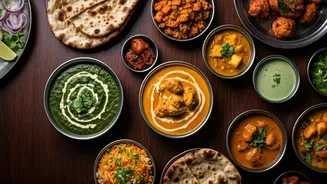
When winter arrives in the fertile plains of Punjab, it brings with it the season of 'Sarson da Saag' and 'Makki di Roti'. This isn't just food; it's a cultural phenomenon. The 'saag' is a vibrant green curry made from mustard leaves, spinach, and other leafy greens, slow-cooked for hours until it becomes a creamy, rustic puree. It’s finished with a tempering of onions, ginger, and garlic, and a generous dollop of white butter or ghee. This earthy, slightly bitter curry is always paired with 'Makki di Roti', a flatbread made from cornflour. This combination speaks of Punjab’s agricultural heartland—wholesome, robust, and deeply satisfying. It’s the food of farmers, meant to provide energy for a hard day's work, and it tastes best when eaten in a village dhaba on a chilly afternoon.