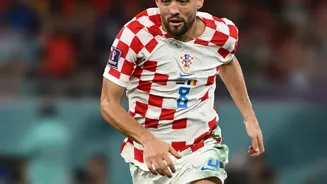

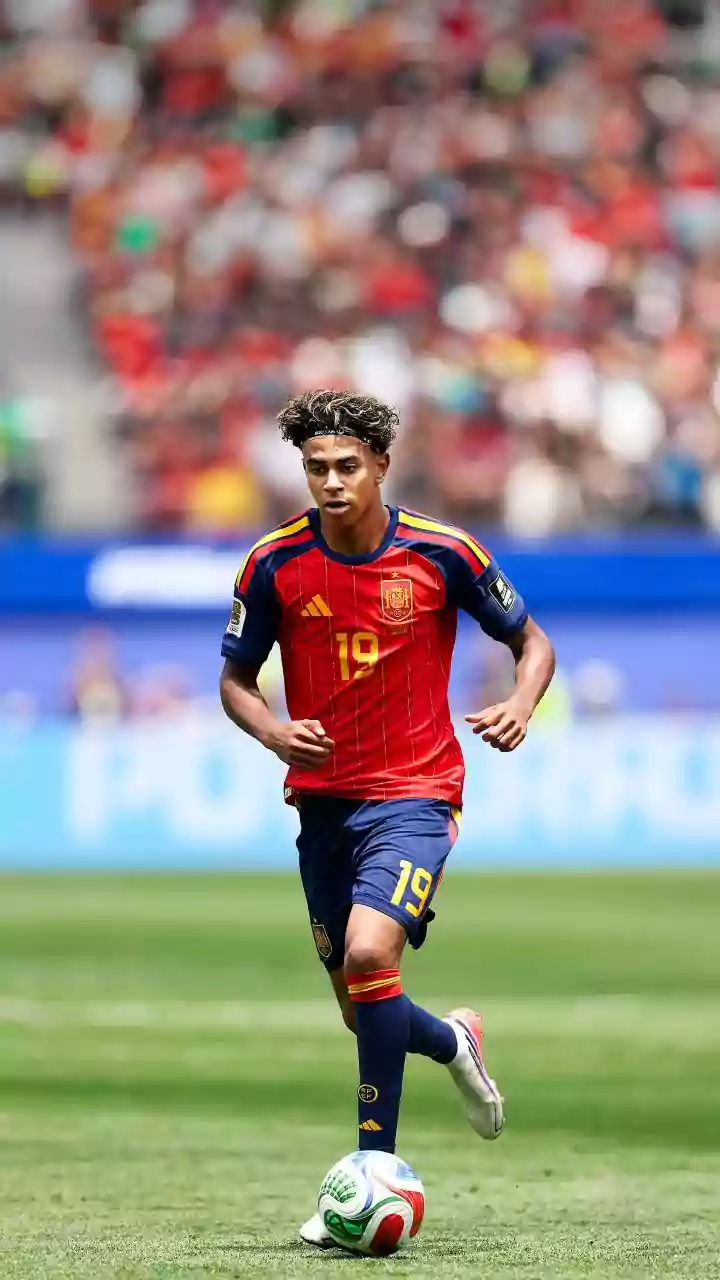


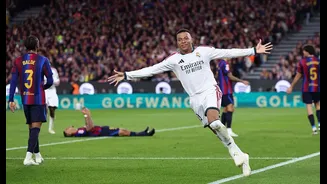
Picking the five greatest midfielders is an impossible task, a debate that rages on forever. But these players were more than just cogs in a machine; they were the engine, the artist, and the brain of their teams, defining eras with their genius.
Zinedine Zidane: The Maestro
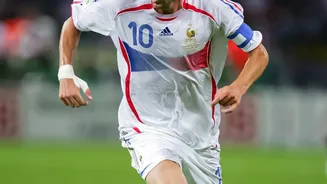
Zinedine
Zidane played football as if he were conducting a symphony. 'Zizou' was the epitome of big-game brilliance, a player whose elegance and vision made the chaotic sport look like ballet. The French icon's legacy is defined by his almost supernatural ball control, his pirouettes that left defenders bewildered, and his unerring ability to deliver on the grandest stages. He scored two headers in the 1998 World Cup final to deliver France its first title and a stunning volley in the 2002 Champions League final for Real Madrid. Zidane was named FIFA World Player of the Year three times, a testament to a career built on making the incredibly difficult look beautifully simple. He was a true artist whose canvas was the centre of the pitch.
Diego Maradona: The Rebel Genius
While some might label him a forward, Diego Maradona was the quintessential 'Number 10'—an attacking midfielder who carried the entire creative and scoring burden of his teams. The Argentine was a force of nature. His low centre of gravity, combined with peerless dribbling ability, allowed him to slalom through entire defences. His performance at the 1986 World Cup is the stuff of legend; he captained Argentina to victory, scoring both the infamous 'Hand of God' goal and the 'Goal of the Century' in the same match against England. At Napoli, he transformed a provincial club into two-time Italian champions, a feat that cemented his god-like status in the city. Maradona was pure, unfiltered genius.
Johan Cruyff: The Revolutionary
Few players have fundamentally changed how football is played and understood like Johan Cruyff. The Dutch master was the on-field conductor of the 'Total Football' philosophy, a fluid system where any player could take over the role of any other. Nominally a centre-forward, Cruyff dropped deep into midfield to dictate play, his spatial awareness and intelligence architecting his team's every move. He guided Ajax to three consecutive European Cups and later implemented his revolutionary ideas as a manager at Barcelona, laying the foundation for the club's modern identity. Cruyff's influence is immeasurable, visible today in the pressing, positional play, and tactical flexibility of the world's best teams.
Andrés Iniesta: The Modern Master
Andrés Iniesta was the silent orchestrator at the heart of the allconquering Barcelona and Spain teams of the late 2000s and 2010s. He wasn't known for blistering pace or powerful shots, but for a sublime footballing brain and feet that seemed to have the ball glued to them. Iniesta’s ability to glide through the tightest of spaces, his perfect balance, and his precise passing made him the ultimate pressresistant midfielder. Part of a legendary trio with Xavi and Sergio Busquets, he won everything, including four Champions League titles. For Spain, he scored the single most important goal in the nation's history: the winner in the 2010 World Cup final. He was the master of creating time and space where none existed.
Lothar Matthäus: The Complete Engine
Perhaps the most complete and versatile midfielder in history, Lothar Matthäus could do it all. He started as a dynamic boxtobox midfielder with a thunderous shot and impeccable tackling, and later in his career, he evolved into a worldclass sweeper, reading the game with supreme intelligence. The German legend captained West Germany to victory at the 1990 World Cup and was so dominant that year he won the Ballon dOr. In 1991, he was named the inaugural FIFA World Player of the Year. His incredible career saw him play in five World Cups. Diego Maradona himself called Matthäus 'the best rival I've ever had', a fitting tribute to a player who combined power, technique, and tactical genius like no other.