





The Lingering Language Barrier
Every year, lakhs of aspiring doctors, engineers, and civil servants pour their hearts into preparing for high-stakes exams like NEET, JEE, and UPSC. For decades, the most sought-after coaching materials, top tutors, and preparatory content have been
predominantly available in English. This creates a significant disadvantage for students from vernacular-medium schools, who are often just as brilliant but must first overcome the hurdle of learning complex scientific and mathematical concepts in a second language. While national testing bodies have made strides by offering exams in multiple regional languages, the ecosystem of high-quality coaching has been slower to adapt, leaving a critical gap.
Enter the AI-Powered Guru
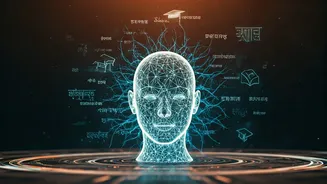
A virtual AI tutor is far more than a simple repository of video lectures or PDF notes. Think of it as a personal, 24/7 mentor that understands your learning style and speaks your language. Using sophisticated technologies like Natural Language Processing (NLP) and machine learning, these platforms can interact with students, answer their questions in real-time, and create a customised study plan. The AI analyses a student's performance on practice questions and mock tests to pinpoint specific areas of weakness. If you consistently struggle with thermodynamics in Marathi or organic chemistry in Tamil, the AI tutor will identify this and provide targeted explanations, additional problems, and video lessons on that very topic until you achieve mastery.
More Than Just Translation
The true innovation of these platforms lies in moving beyond literal, word-for-word translation. Effective learning requires understanding concepts in a culturally and linguistically relevant context. The best AI tutors are being developed with the help of subject matter experts and linguists to ensure that explanations are not just translated, but 'transcreated'. This means the pedagogy itself is adapted for the target language. A complex physics problem is explained using analogies that resonate in Hindi, Bengali, or Kannada, making the learning process intuitive rather than a memory-based chore. This ensures that students are not just learning to pass an exam, but are genuinely understanding the fundamental principles in the language they think and dream in.
Personalised Pathways to Success
In a traditional coaching class of 50 or 100 students, it's impossible for a teacher to give individual attention to everyone. The class moves at a set pace, which might be too fast for some and too slow for others. AI tutors solve this problem with adaptive learning. The platform creates a unique 'learning path' for every single user. If you master a chapter quickly, it moves you ahead. If you're stuck, it offers foundational-level content to strengthen your basics before proceeding. This hyper-personalisation ensures that study time is always efficient and effective, focusing effort where it's needed most. It's like having a private tutor who knows your exact strengths and weaknesses, available on demand.
A Reality Check and The Road Ahead
While the promise is immense, it's important to approach this technology with a dose of realism. The quality of AI tutors can vary significantly between platforms, and not all subjects or languages are covered with the same depth. Access to reliable internet and a suitable device remains a challenge in many parts of the country. Furthermore, AI cannot completely replace the motivational and mentorship role of a great human teacher. These tools are most effective when viewed as powerful supplements, not magic wands. They can democratise access to quality content, but the discipline and hard work must still come from the student.