





The Silence and the Stars
By day, India's magnificent forts are bustling hubs of tourism and history, echoing with the sounds of guides and footsteps. But after sunset, a profound transformation occurs. The stone walls, which have stood for centuries, seem to breathe a different
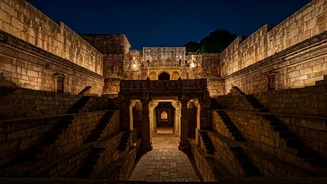
air. A midnight walk around these colossal structures, whether from a nearby viewpoint or during a special night tour, offers a connection to the past that is impossible during the day. It’s an intimate experience, where the grandeur of history feels both personal and infinite. This quiet, contemplative atmosphere is the secret ingredient that photographers seek to capture, using technology to translate a feeling into a visual masterpiece.
Painting with Light: The Long-Exposure Technique
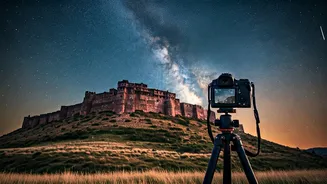
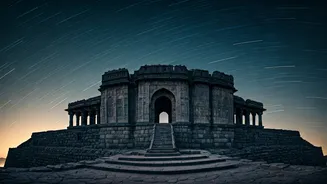
So, what makes these photos look so otherworldly? The magic lies in a photographic technique called long exposure. In simple terms, instead of taking a picture in a fraction of a second, the camera's shutter is left open for several seconds, or even minutes. This allows the camera’s sensor to 'collect' light over time. The faint glow of the moon, the distant glimmer of city lights, and the slow march of stars across the sky are all gathered and painted onto the image. This process can turn faint light sources into brilliant streaks and soft glows, smoothing over water and clouds, and revealing details in the shadows that the human eye would miss. It’s less about capturing a moment and more about capturing the passage of time itself.
When Ancient Walls Come Alive
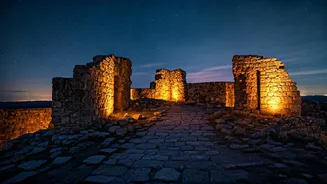
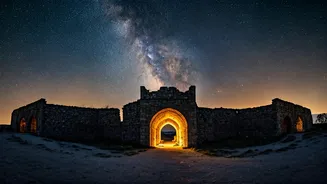
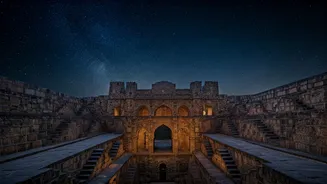
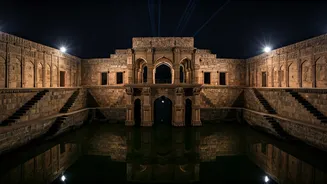
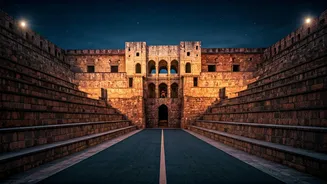
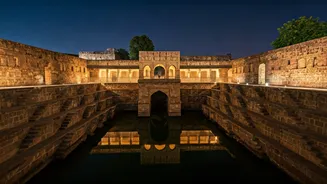
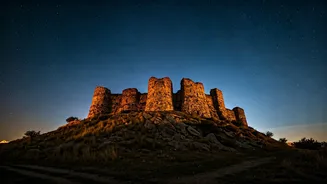
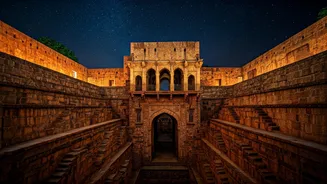
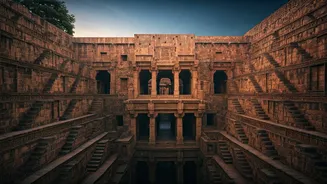
Applied to the rugged, intricate architecture of an Indian fort, this technique is transformative. The harsh lines of ramparts soften into majestic curves under the moonlight. The textured stone of a bastion, weathered by centuries of sun and monsoon, reveals every crack and crevice. Light trails from a passing vehicle on a distant road might snake around the base of the fort like a mythical serpent. The stars, instead of being static points, can appear to swirl around a central turret or gateway, creating a dizzying, hypnotic effect. Elements like 'jharokhas' (overhanging balconies) and 'chhatris' (domed pavilions) are no longer just stone structures; they become dramatic silhouettes against a sea of celestial light, their historical importance amplified by a sense of cosmic scale.
India's Forts as Celestial Canvases
India is dotted with forts that are perfect subjects for this art form. The majestic Mehrangarh Fort in Jodhpur, perched on a sheer cliff, appears to float in the night sky when captured with a long exposure. In Jaipur, the warm glow of the illuminated Amer Fort offers a different kind of magic, reflecting in Maota Lake. The sprawling Chittorgarh Fort in Rajasthan, with its tales of valour, takes on a hauntingly beautiful quality under the stars. Even the ruins of Golconda Fort near Hyderabad, with their unique acoustic engineering, seem to whisper their secrets more clearly in the quiet of the night. Each fort provides a unique canvas, its specific geography and history informing the final, breathtaking image.
A Modern Meditation on History
Embarking on a midnight photo walk is more than just a technical pursuit. It requires patience, planning, and a deep appreciation for the subject. Setting up a tripod in the dark, carefully composing a shot, and waiting patiently as the camera does its work becomes a meditative act. It forces you to slow down, to observe, and to listen to the silence of a place steeped in history. You’re not just taking a photo; you’re engaging in a dialogue with the past, using a modern tool to interpret an ancient story. The resulting image is a souvenir of that unique, personal connection—a bridge between the digital age and the age of kings.