








What is an Indoor Pineapple Plant?
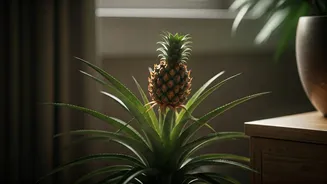
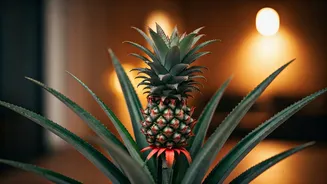
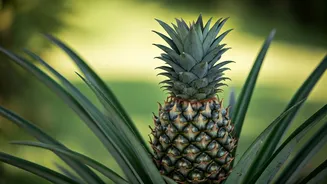
The pineapple plant, or Ananas comosus, is a tropical plant belonging to the bromeliad family. While you might associate them with vast fields in warm climates, several dwarf or ornamental varieties have become popular houseplants. These plants feature
a striking rosette of spiky, sword-like leaves, and under the right conditions, they produce a single, often miniature, pineapple right from the centre. Historically a symbol of hospitality and luxury, bringing one into your home adds more than just greenery; it adds a story.
Finding the Perfect Spot
Pineapple plants are sun-worshippers. To thrive, they need at least six hours of bright, direct sunlight each day. This makes a south-facing windowsill, a sunny conservatory, or a bright kitchen the perfect home for your tropical friend. If your home lacks sufficient natural light, you can supplement with a full-spectrum grow light to keep it happy. They also prefer warmth, so keep them in a room that stays consistently between 18°C and 29°C and away from cold draughts.
The Right Way to Water
One of the most common mistakes with pineapple plants is overwatering. These plants are surprisingly drought-tolerant and hate having soggy roots, which can quickly lead to rot. The best approach is to water thoroughly only when the top inch or two of soil is dry to the touch. In summer, this might be once a week, while in winter you'll water much less frequently. Like many bromeliads, you can also put a small amount of water in the central cup (or 'tank') formed by the leaves, but be sure to flush it out every few weeks to prevent stagnation.
Soil, Potting, and Feeding
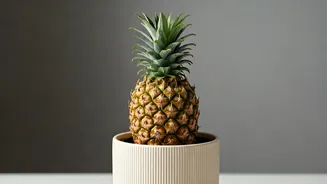
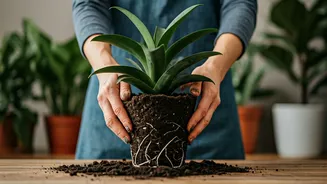
Proper drainage is non-negotiable. Use a fast-draining potting mix, such as one designed for cacti and succulents, or a blend of potting soil with perlite or sand. Ensure your pot has plenty of drainage holes. During the spring and summer growing season, feed your plant every few weeks with a balanced liquid fertiliser diluted to half-strength to support its growth. Once the plant is mature, you can reduce feeding.
The Fruiting Finale
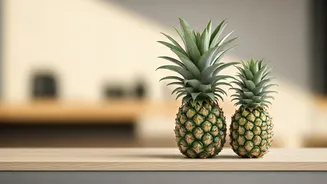
Patience is key when it comes to seeing your pineapple plant fruit. A healthy, mature plant may take two to three years to produce a flower stalk, which will eventually develop into a pineapple. The fruit takes about six months to ripen on the plant. While the pineapples from ornamental indoor varieties are often smaller and may not be as sweet as their store-bought cousins, they are typically edible and always a delightful reward for your efforts. After fruiting, the main mother plant will slowly decline, but it will produce offshoots, or 'pups', at its base that you can repot to start the process all over again.
DIY from a Grocery Store Pineapple
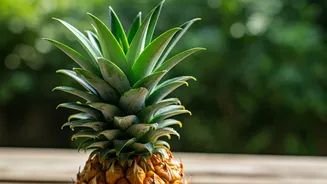
For a fun project, you can even grow a new plant from the top of a pineapple you buy at the store. Simply twist the leafy crown off the fruit, remove a few of the lower leaves to expose about an inch of the stem, and let it dry for a couple of days to prevent rot. You can then root the crown by placing the bare stem in a glass of water for a few weeks until roots appear, or by planting it directly into well-draining soil. It’s a slow but incredibly rewarding process that turns a kitchen scrap into a living sculpture.