





A New Martian Delivery Service
For decades, a mission to Mars meant a bespoke, multibillion-dollar project managed entirely by NASA. Now, the agency is embracing a new approach: public-private partnerships. Instead of owning the entire process, NASA will act as a customer, providing
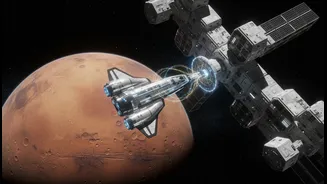
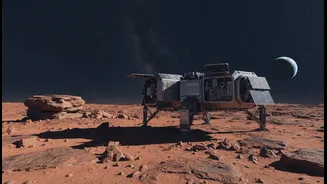
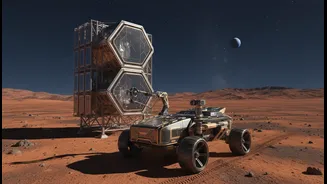
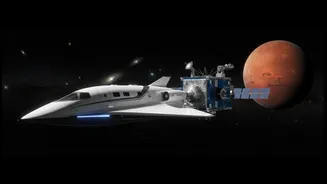
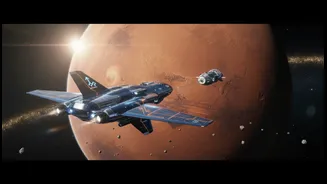
the scientific instruments while a commercial partner handles the rocket, spacecraft, and mission operations. This model aims to create a new commercial ecosystem for Mars, making trips to the Red Planet more frequent and affordable. The first of these missions, a partnership with Relativity Space announced in June 2026, will send a suite of atmospheric instruments called Aeolus to Mars in 2028.
Learning from the Moon
This Martian strategy isn't coming out of nowhere; it's heavily inspired by the success of the Commercial Lunar Payload Services (CLPS) program. Through CLPS, NASA has been paying private companies like Intuitive Machines and Astrobotic to deliver science and technology to the lunar surface. The program has proven that a commercial services model can work, fostering innovation and creating a competitive marketplace for lunar access. While not every CLPS mission has been a perfect success, the approach has dramatically increased the cadence of lunar landings at a fraction of the cost of traditional missions, providing valuable data even from failures.
More Science, More Often
The primary goal of this new strategy is to ramp up the pace of scientific discovery. By offloading the engineering and launch services, NASA can focus its resources on developing cutting-edge scientific instruments. Administrator Jared Isaacman called the model a "force multiplier for science," enabling the agency to get more data into the hands of researchers faster. A higher frequency of smaller, lower-cost missions means more opportunities to answer critical questions about Mars, from its atmospheric dynamics to its potential for past life. The Aeolus mission, for example, will provide the first daily, global view of Martian weather, which is crucial for planning future robotic and human landings.
Fostering a Private Space Race to Mars
NASA's shift is a clear signal to the commercial space industry that Mars is open for business. The agency has already funded studies with multiple companies—including SpaceX, Blue Origin, Lockheed Martin, and ULA—to explore concepts for payload delivery, communications, and imaging services at Mars. While Relativity Space secured the first partnership, other players are developing their own capabilities. SpaceX has long-term plans for its Starship on Mars, and Blue Origin has proposed concepts for Martian communication satellites. This competitive environment is expected to drive down costs and accelerate technological development, much as it has for launches to Earth orbit and the Moon.
Understanding the Risks and Rewards
Embracing a commercial model also means accepting a different level of risk. Traditional NASA missions are subject to exhaustive oversight to minimize failure, which contributes to their high cost and long development times. The CLPS program has shown that commercial missions can have a higher failure rate. However, the trade-off is the ability to fly more often. Instead of one perfect mission every decade, NASA can attempt several lower-cost missions in the same timeframe. For Mars, where the thin atmosphere makes landing notoriously difficult, this high-cadence approach means more chances to learn and refine the technologies needed to safely land both robots and, eventually, humans on the surface.