




The Soul of Slow Travel
Before we embark, let's understand the concept. Slow travel isn’t about moving at a snail's pace; it’s about connection. It's choosing to absorb the landscape, culture, and atmosphere rather than rushing through a checklist of sights. It prioritises experiences
over itineraries and depth over distance. It’s the difference between flying over a country and truly seeing it from the ground up. In this philosophy, the mode of transport is as crucial as the destination, and there is perhaps no better vehicle for this than a train chugging along a scenic route.
India’s Coastal Masterpiece: The Konkan Railway
Running for approximately 741 kilometres from Roha, south of Mumbai, to Mangaluru in Karnataka, the Konkan Railway is not just a train line; it's a moving panorama of India's western coast. This route, which traverses Maharashtra, Goa, and Karnataka, is hailed as one of the most picturesque train journeys in the country. Unlike a flight that whisks you from one city to another, this journey is an unhurried exploration of the changing landscapes, from the fringes of a bustling metropolis to serene coastal villages and lush forests of the Western Ghats.
A Journey Through a Living Postcard
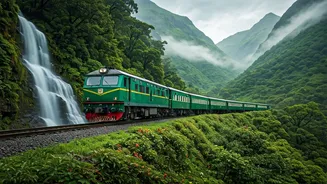
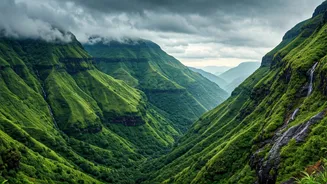
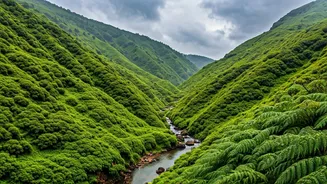
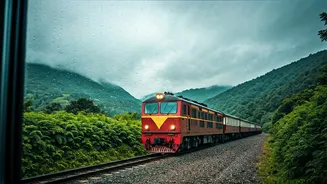
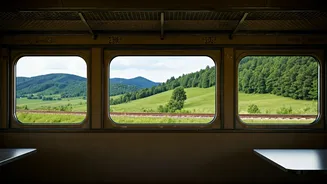
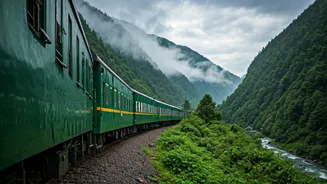
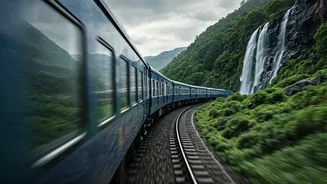
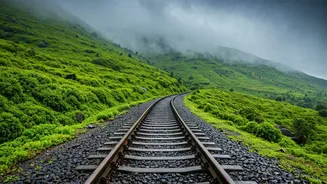
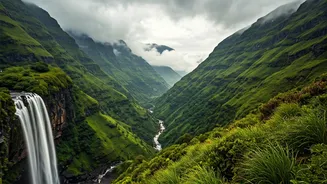
The true magic of the Konkan Railway lies in what you see from the window. The train snakes its way between the Sahyadri mountains on one side and the Arabian Sea on the other. During the monsoon season, from June to September, the journey is particularly breathtaking. The landscape transforms into a vibrant canvas of emerald green, with countless waterfalls cascading down hillsides and rivers swelling with life. The train crosses over 2,000 bridges and passes through more than 90 tunnels, each one revealing a new vista—be it a sweeping view of a river valley, a glimpse of a secluded beach, or a peek into a tiny village nestled among palm trees. One of the highlights is the view of the majestic Dudhsagar Falls, especially spectacular during the rains.
More Than Just a Pretty View
What elevates this route to 'peak slow travel energy' is the cultural tapestry it weaves. As the train crosses state borders, the languages, cuisines, and even the landscape subtly shift. You leave the Marathi-speaking heartland of Maharashtra, known for its historic forts and Alphonso mangoes in towns like Ratnagiri, and enter the laid-back, Portuguese-influenced charm of Goa. The journey then proceeds into the coastal plains of Karnataka, home to temple towns like Udupi and Gokarna. The train itself is a microcosm of this diversity. Conversations with fellow passengers, the aroma of local snacks sold at stations, and the ever-present call of the 'chai-wallah' make the journey an immersive cultural experience.
An Engineering Marvel in the Mountains
The existence of the Konkan Railway is a testament to incredible human ingenuity. Considered too difficult by British engineers, the project was brought to life by Indian engineers in just eight years and was inaugurated in 1998. They had to cut through challenging terrain of the Western Ghats, building the aforementioned tunnels and bridges across numerous rivers. Appreciating this feat of engineering adds another layer to the journey; you're not just travelling on a railway line but on a piece of post-independence Indian history that connected the west coast like never before.
How to Plan Your Journey
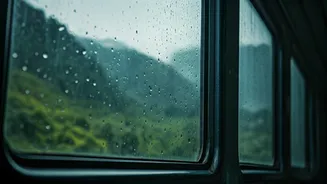
To fully embrace the slow travel ethos, opt for a daytime train like the Mandovi Express or Tejas Express for stunning views. While winter months offer pleasant weather, the monsoon season provides the most dramatic and green landscapes. Booking a seat by the window is, of course, essential. Don’t just pack a book; prepare to spend hours simply looking outside, as the scenery is the main entertainer. The journey between Mumbai and Goa is a popular and deeply scenic section, taking around 12 hours and offering a perfect slice of the full Konkan experience.